AI Fundamentals
Introduction to AI
What Is Artificial Intelligence?
Artificial intelligence, or AI, is the science of making machines that can think or act intelligently. The goal is to create systems that can perform tasks that normally require human intelligence. This includes things like learning, reasoning, problem-solving, understanding language, and perceiving the world around them.
At its core, AI is about building smart machines that can mimic or even surpass human cognitive abilities.
While the idea of artificial beings has been around for centuries in myths and stories, the scientific field of AI is much younger. It officially began in the summer of 1956 at a workshop at Dartmouth College, where the term “artificial intelligence” was first coined. Early researchers were incredibly optimistic, believing that a machine as intelligent as a human being would exist in just a few decades.
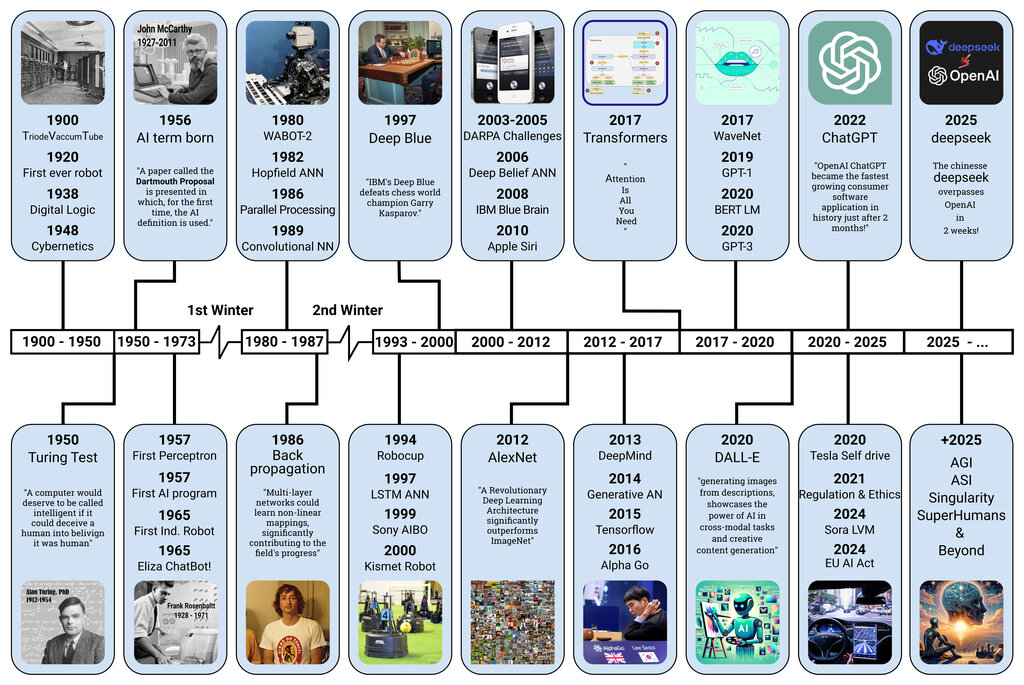
The path wasn't that simple. Progress was followed by periods of reduced funding and interest, known as “AI winters.” But recent breakthroughs, fueled by massive amounts of data and powerful computers, have brought AI back to the forefront. Today, it's one of the most transformative technologies of our time.
AI, Machine Learning, and Deep Learning
You've likely heard the terms artificial intelligence, machine learning, and deep learning used together, sometimes interchangeably. While they're related, they aren't the same thing. The easiest way to think about them is like Russian nesting dolls.
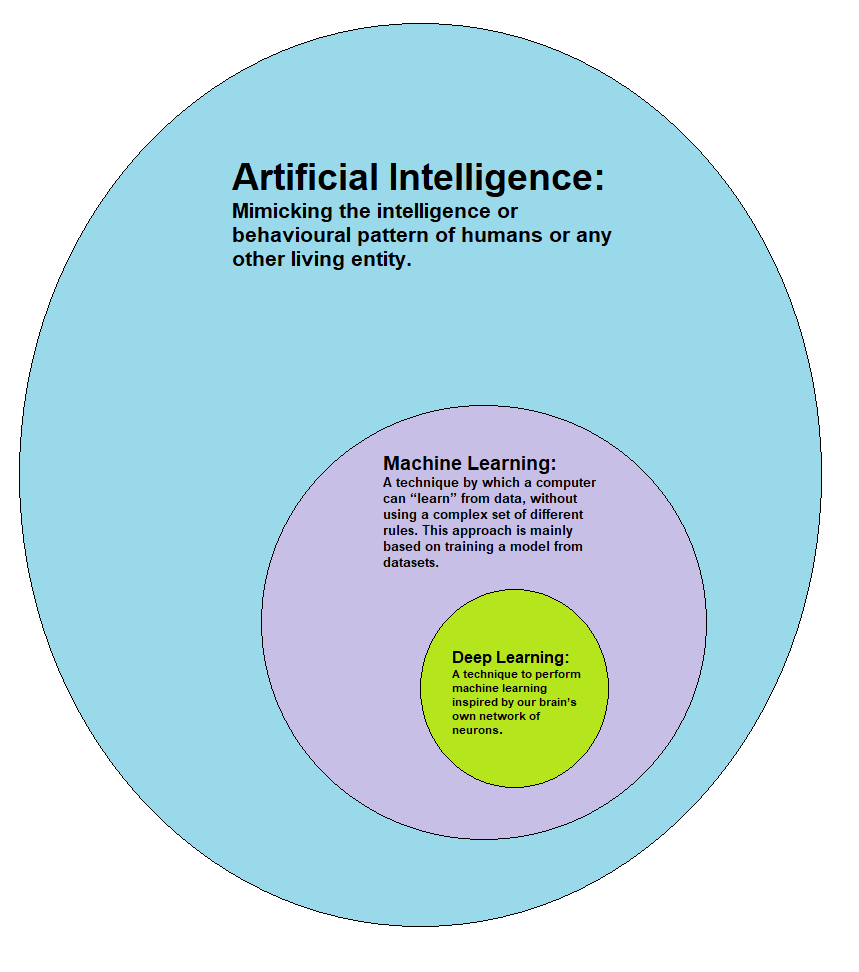
Artificial Intelligence (AI) is the largest doll, the all-encompassing concept of creating intelligent machines.
Machine Learning (ML) is the next doll inside. It's a subset of AI where systems learn from data to find patterns and make decisions on their own, without being explicitly programmed for every single task.
Deep Learning (DL) is the smallest doll. It's a specialized type of machine learning that uses complex, multi-layered neural networks—inspired by the human brain—to learn from vast amounts of data. Deep learning is the engine behind many of today's most advanced AI applications, like image recognition and natural language processing.
So, all deep learning is a form of machine learning, and all machine learning is a form of AI. But not all AI uses machine learning.
Two Main Types of AI
When we talk about AI systems, we can generally sort them into two categories based on their capabilities: narrow and general.
Artificial Narrow Intelligence
noun
AI that is designed and trained for one specific task. It operates under a limited, pre-defined range of functions.
This is often called “Weak AI,” but that doesn't mean it's not powerful. In fact, all the AI we use today is narrow AI. Your smart assistant, the recommendation engine on a streaming service, and even complex systems that help doctors diagnose diseases are all examples of ANI. They are experts in their one domain but cannot operate outside of it. You can't ask your spam filter to drive a car.
Artificial General Intelligence
noun
A theoretical form of AI where a machine would have an intelligence equal to humans. It would have a self-aware consciousness and the ability to solve problems, learn, and plan for the future.
Often called “Strong AI,” AGI is the type of AI you see in science fiction movies. It's a machine that could successfully perform any intellectual task that a human can. As of now, AGI does not exist. It remains a goal for some researchers, but building it presents enormous technical and conceptual challenges.
Big Questions and Responsibilities
Like any powerful technology, AI raises important questions about how we should use it. These ethical considerations are crucial for ensuring that AI is developed and deployed responsibly.
Key ethical issues include fairness, accountability, and transparency. How can we ensure AI systems don't perpetuate human biases? Who is responsible when an AI makes a mistake? And how can we understand the decisions made by complex AI models?
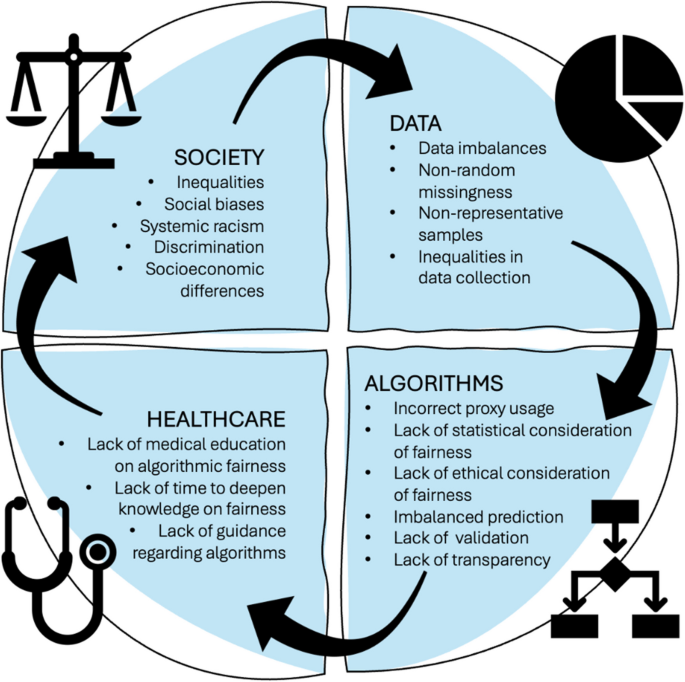
The societal impact of AI is already significant and will only continue to grow. It has the potential to solve some of the world's biggest challenges in areas like healthcare and climate change. At the same time, it brings concerns about job displacement, privacy, and the spread of misinformation.
Navigating these challenges requires careful thought and collaboration between developers, policymakers, and the public. As AI becomes more integrated into our lives, understanding its basic principles is the first step toward shaping its future for the better.
What is the primary goal of artificial intelligence (AI)?
Which statement accurately describes the relationship between Artificial Intelligence (AI), Machine Learning (ML), and Deep Learning (DL)?