AI for Your Career
Introduction to Artificial Intelligence
What Is Artificial Intelligence?
Artificial intelligence, or AI, is the science of making machines that can think and act like humans. The goal is to create systems that can learn, reason, perceive, and solve problems. Think of it less as creating a synthetic brain and more as teaching a computer to perform tasks that typically require human intelligence.
At its core, AI is about pattern recognition, learning from data, and making decisions to achieve a specific goal.
This could be anything from recognizing a cat in a photo to navigating a car through city streets or translating a conversation in real-time. It's a broad field that covers many different approaches and technologies, all aimed at creating more capable and intelligent machines.
A Brief History of AI
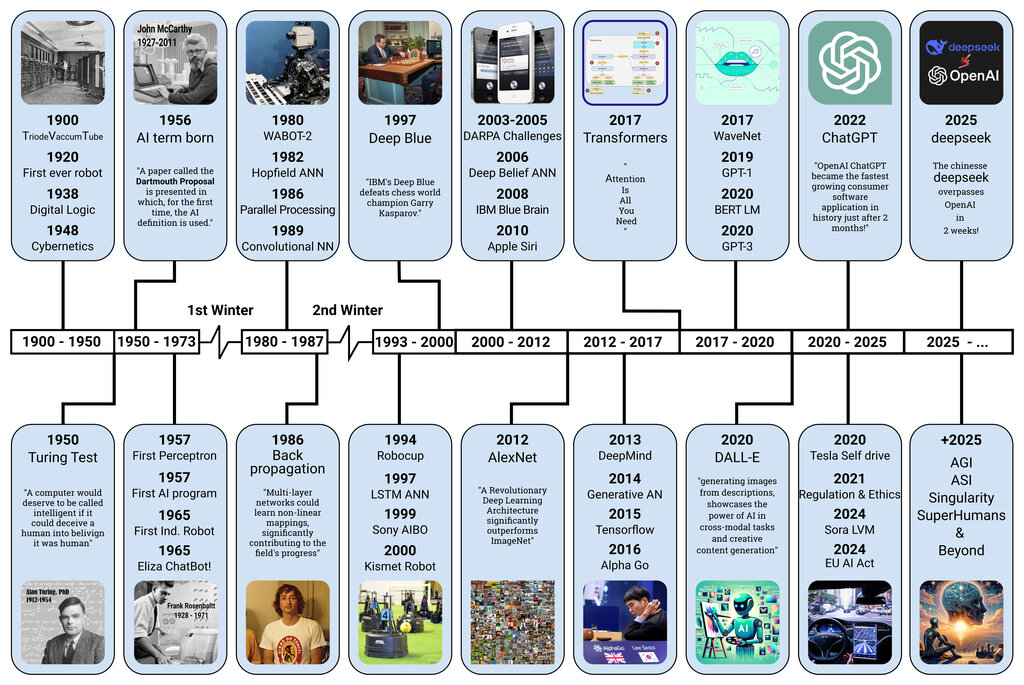
The idea of intelligent machines has been around for centuries, but the modern field of AI officially began in the summer of 1956 at a workshop at Dartmouth College. It was there that the term "artificial intelligence" was coined. Early researchers were incredibly optimistic, believing that a machine as intelligent as a human being was just a few decades away.
This initial excitement was followed by periods of disillusionment known as "AI winters," when funding dried up and progress stalled. However, breakthroughs continued to happen. In 1997, IBM's Deep Blue chess computer defeated world champion Garry Kasparov, a major milestone. In recent years, advances in computing power and the availability of massive amounts of data have led to a new boom, particularly in areas like machine learning and deep learning, which power today's most advanced AI systems.
Types of AI
When we talk about AI, we're usually talking about one of two types: Narrow AI or General AI.
Artificial Narrow Intelligence (ANI)
noun
Also known as Weak AI, this is AI that is designed and trained for a specific task. It operates within a limited, pre-defined range and cannot perform tasks beyond its designated purpose.
Virtually all the AI we use today is Narrow AI. Your smartphone's voice assistant, the software that detects credit card fraud, and the AI that helps doctors diagnose diseases are all examples of ANI. They are incredibly powerful at their specific jobs, but they can't suddenly decide to learn a new, unrelated skill.
Artificial General Intelligence (AGI)
noun
Also known as Strong AI, this is a theoretical form of AI where a machine would have an intellect equal to a human's. It would possess consciousness and the ability to learn, understand, and apply its intelligence to solve any problem.
AGI is the kind of AI you often see in science fiction. It's the ultimate goal for many researchers, but creating it remains a massive scientific challenge. We are not there yet, and it's unclear when or if we will be.
Societal Impacts and Ethics
As AI becomes more integrated into our lives, it raises important questions. The technology has the potential to solve some of the world's biggest problems, from curing diseases to combating climate change. It can make businesses more efficient, create new forms of entertainment, and personalize education.
However, it also presents challenges. One major concern is bias. If an AI system is trained on biased data, it will produce biased results, which can perpetuate and even amplify societal inequalities in areas like hiring or loan applications. Other issues include job displacement as AI automates tasks, privacy concerns related to data collection, and the question of who is responsible when an AI system makes a mistake.

Developing AI responsibly requires careful consideration of these ethical dimensions. It's not just about building smarter machines; it's about ensuring those machines are fair, transparent, and aligned with human values. This involves creating clear regulations, fostering public debate, and building systems that we can trust.
What is the primary goal of Artificial Intelligence?
The term "artificial intelligence" was officially coined at a workshop in 1956. Where was this workshop held?