AI for Young Learners
Introduction to AI
What Is AI, Really?
Artificial Intelligence sounds like something from a sci-fi movie, but it's already a part of your daily life. At its core, AI is about creating computer systems that can perform tasks that usually require human intelligence. This includes things like learning from experience, understanding language, recognizing patterns, and making decisions.
Artificial Intelligence
noun
The theory and development of computer systems able to perform tasks that normally require human intelligence, such as visual perception, speech recognition, decision-making, and translation between languages.
Think of it like teaching a computer, but instead of giving it step-by-step instructions for every single possibility, you give it a set of rules and a lot of examples. The computer then learns to handle new situations on its own. It's not about creating a machine that thinks exactly like a human; it's about building tools that can solve specific problems in an intelligent way.
The goal of AI is to create systems that can learn and adapt, finding solutions without being explicitly programmed for every scenario.
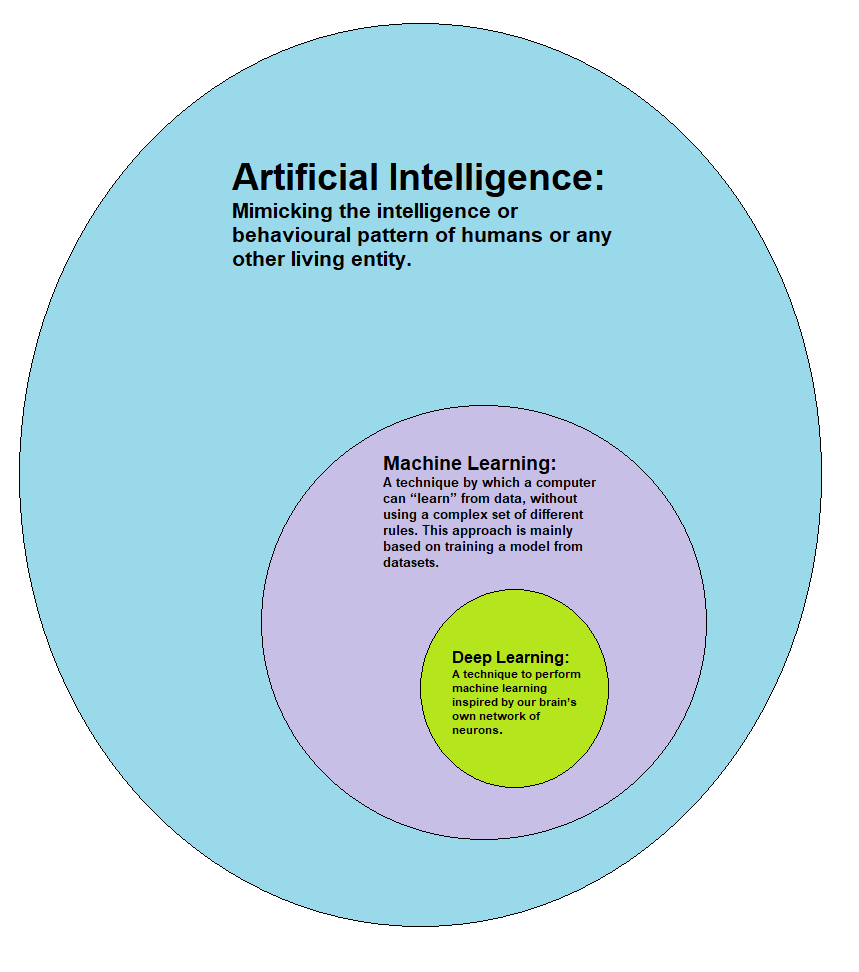
AI is a broad field. You might hear related terms like Machine Learning and Deep Learning. Machine Learning is a type of AI where systems learn from data to make predictions. Deep Learning is a more advanced type of Machine Learning that uses complex structures called neural networks, inspired by the human brain, to learn from huge amounts of data.
AI Is All Around You
You probably use AI every day without even realizing it. When Netflix suggests a movie you might like, that's AI analyzing your viewing habits and comparing them to millions of other users. When you ask Siri or Alexa for the weather, you're interacting with an AI that understands your voice and fetches the information you need.
Your email's spam filter is another great example. It learns to identify junk mail based on the content and source of countless messages, quietly protecting your inbox. Navigation apps like Google Maps or Waze use AI to analyze real-time traffic data, predict congestion, and suggest the fastest route to your destination.

Even your phone's camera uses AI. Features like portrait mode, which blurs the background to make your subject stand out, rely on AI to distinguish between the person and their surroundings. From online shopping recommendations to fraud detection alerts from your bank, AI is working behind the scenes to make services more personal and secure.
Why AI Literacy Matters
Understanding the basics of AI is becoming as essential as knowing how to use the internet. This knowledge, often called AI literacy, isn't just for tech experts. It helps you understand the world around you.
When you know what AI is and how it works, you can make more informed decisions about the technology you use and the data you share. You can better spot misinformation and understand the potential biases that can exist in AI systems. It also opens your eyes to new possibilities in your career, as AI is changing almost every industry.
Being AI literate means you can be an active and informed user of technology, not just a passive consumer.
As AI continues to evolve, having a foundational understanding will help you adapt to new tools and changes in society. You don't need to learn how to code an AI model, but knowing the core concepts is a powerful skill for the modern world.
What is the primary goal of Artificial Intelligence?
Which statement accurately describes the relationship between AI, Machine Learning (ML), and Deep Learning (DL)?