AI for Winning Grants
Introduction to Grant Writing
What's a Grant?
A grant is a sum of money given by an organization for a specific purpose. Unlike a loan, you don't have to pay it back. Think of it as an investment. A funder, like a foundation, corporation, or government agency, invests in your project because it aligns with their mission to make a positive impact.
The key is alignment. Funders want to support projects that help them achieve their own goals, whether that's advancing scientific research, supporting local arts, or improving community health.
Grants come in a few main flavors:
- Foundation Grants: These come from private, community, or corporate foundations. They often have very specific focus areas, like education in a particular city or environmental conservation.
- Government Grants: Offered by federal, state, or local governments. These are often larger and more complex, funding everything from infrastructure to public health initiatives.
- Corporate Grants: Given by companies as part of their corporate social responsibility (CSR) programs. They might fund projects in communities where they operate or support causes related to their industry.
Finding the Right Funder
Grant writing is often compared to matchmaking. You can have a brilliant project, but if you propose it to the wrong funder, it won't go anywhere. The goal is to find funders whose priorities match your project's goals. This research phase is critical and saves a lot of time later.
So where do you look?
- Grant Databases: Websites like Grants.gov (for U.S. federal grants) and Candid's Foundation Directory are powerful search engines for finding opportunities.
- Look at Similar Organizations: Who funds organizations like yours? Check the annual reports or websites of similar non-profits. They often list their major supporters. This is a great way to find funders already interested in your type of work.
- Network: Talk to people in your field. Attend conferences. Sometimes the best leads come from conversations with peers who can point you toward a foundation that might be a good fit.
The Anatomy of a Proposal
While every funder has slightly different guidelines, most grant proposals follow a standard structure. Each section builds on the one before it to tell a compelling story about your project and why it deserves funding.
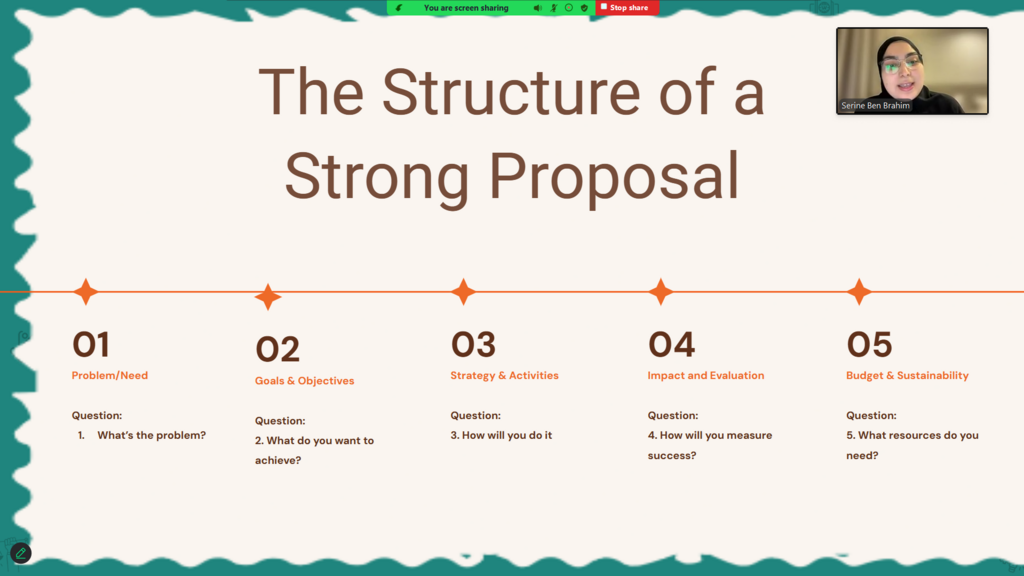
Let's break down the typical sections.
| Section | Purpose |
|---|---|
| Executive Summary | A brief, powerful overview of the entire proposal. Write this last, after you've clarified all the details. |
| Statement of Need | Explain the problem you are trying to solve. Use data and stories to show why this issue is important and urgent. |
| Project Description | Detail your solution. What are your goals and objectives? What activities will you undertake to meet them? |
| Evaluation Plan | How will you know if you're successful? Describe how you'll measure your project's impact and track your progress. |
| Organizational Information | Introduce your organization. What's your history? What's your mission? Why are you the right group to do this work? |
| Budget | Provide a detailed breakdown of all project expenses and justify them. Be realistic and transparent about the costs. |
Each piece connects to form a single, persuasive argument. Your statement of need sets the stage, your project description offers the solution, your evaluation plan proves you'll be accountable, and your budget shows you've thought through the financial details.
Now that you understand the basic building blocks, let's test your knowledge.
What is the primary characteristic that distinguishes a grant from a loan?
A large technology company offers funding for local STEM education programs in the cities where it has offices. What type of grant is this most likely to be?
Mastering these fundamentals is the first step. With a clear understanding of your project and the grant writing process, you're ready to start building a compelling case for your work.