AI for Startup Founders
Introduction to AI for Startups
What is AI, Really?
Artificial intelligence isn't just about robots and science fiction. At its core, AI is the science of making machines that can think and learn like humans. It’s about teaching a computer to recognize patterns, make decisions, and solve problems on its own.
Think of it like training a new employee. At first, you show them examples of good work and bad work. Over time, they learn to tell the difference and start making good decisions without your constant input. AI works in a similar way, but on a massive scale with data.
Artificial Intelligence
noun
A field of computer science dedicated to creating systems capable of performing tasks that typically require human intelligence, such as learning, reasoning, and problem-solving.
AI isn't a single technology but a broad field with several key branches. Understanding these branches helps you see where AI can fit into your business.
The Building Blocks of AI
Three main areas of AI are particularly relevant for startups: Machine Learning, Natural Language Processing, and Computer Vision. They are the engines that power most of the AI applications you see today.
Machine Learning (ML) is the most common form of AI. It's the process of training a system on large amounts of data to find patterns and make predictions. Your email's spam filter is a classic example. It learns from thousands of emails what looks like junk and what doesn't, automatically sorting your inbox.
Natural Language Processing (NLP) focuses on the interaction between computers and human language. If you've ever used a chatbot for customer service or a translation app, you've seen NLP in action. It gives machines the ability to read, understand, and generate human text and speech.
Computer Vision allows machines to interpret and understand information from images and videos. This is the technology that enables self-driving cars to identify pedestrians and traffic signs, or lets your phone's camera recognize faces to unlock the screen.
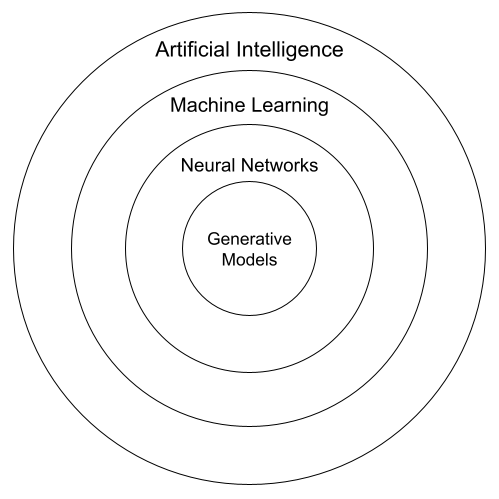
These technologies often work together. For instance, an AI tool might use computer vision to see a product, machine learning to identify it, and natural language processing to generate a description for an e-commerce site.
From Sci-Fi to Startup Staple
AI has been around as a concept since the 1950s, but for decades it remained mostly in academic labs. The journey wasn't smooth; it was marked by periods of great excitement followed by

So what changed? Two things: a massive increase in available data and a huge leap in computing power. Suddenly, training complex AI models became practical and affordable. This shift democratized AI, taking it from a tool for giant corporations to something a small startup can leverage.
Today, the trend is toward generative AI, which can create new content, and hyper-personalization, which tailors experiences to individual users. For startups, this means the barrier to entry for building sophisticated, AI-powered products is lower than ever.
Your New Competitive Edge
As a founder, you're always looking for an edge. AI can provide one in several key areas.
First, it drives innovation. AI can help you create products that were previously impossible, from an app that diagnoses plant diseases from a photo to a service that writes personalized marketing copy. It opens up new business models and markets.
Second, AI enhances decision-making. Instead of relying solely on gut feelings, you can use AI to analyze market trends, predict customer behavior, and optimize your pricing. This data-driven approach reduces risk and increases your chances of success.
Finally, it creates a competitive advantage. By automating routine tasks, you can free up your team to focus on creative, high-impact work. By offering personalized experiences, you can build deeper customer loyalty that competitors will find hard to replicate.
Startups leveraging AI are able to streamline processes, enhance decision-making, and create personalized user experiences at scale.
However, adopting AI isn't a magic bullet. It comes with its own set of challenges.
One of the biggest hurdles is data. AI models are hungry for data, and you need a good amount of clean, relevant data to train them effectively. For new startups, this can be a chicken-and-egg problem.
Another challenge is finding the right talent. While AI tools are more accessible now, building and managing custom AI systems still requires specialized skills. Finally, there's the risk of over-investing in a solution that doesn't solve a real customer problem. The key is to start with a clear business need, not just with the technology itself.
Let's check your understanding of these core concepts.
What is the core concept of Artificial Intelligence, as described in the text?
Which branch of AI is primarily concerned with enabling machines to read, understand, and generate human language?
Understanding the potential and the pitfalls of AI is the first step. By starting with a clear problem and a solid strategy, you can harness its power to build a stronger, more competitive startup.