AI for SRE and DevOps
Introduction to AI
What Is AI Anyway?
Artificial intelligence is about making computers smart. The goal is to create systems that can perform tasks that typically require human intelligence, like learning, reasoning, and problem-solving. But AI isn't a single technology. It's a broad field with many different branches and tools.
Think of it as a set of nested dolls. The largest doll is Artificial Intelligence, the general concept of intelligent machines. Inside that is Machine Learning, a specific approach to achieving AI. And inside that is Deep Learning, a specialized technique within Machine Learning.
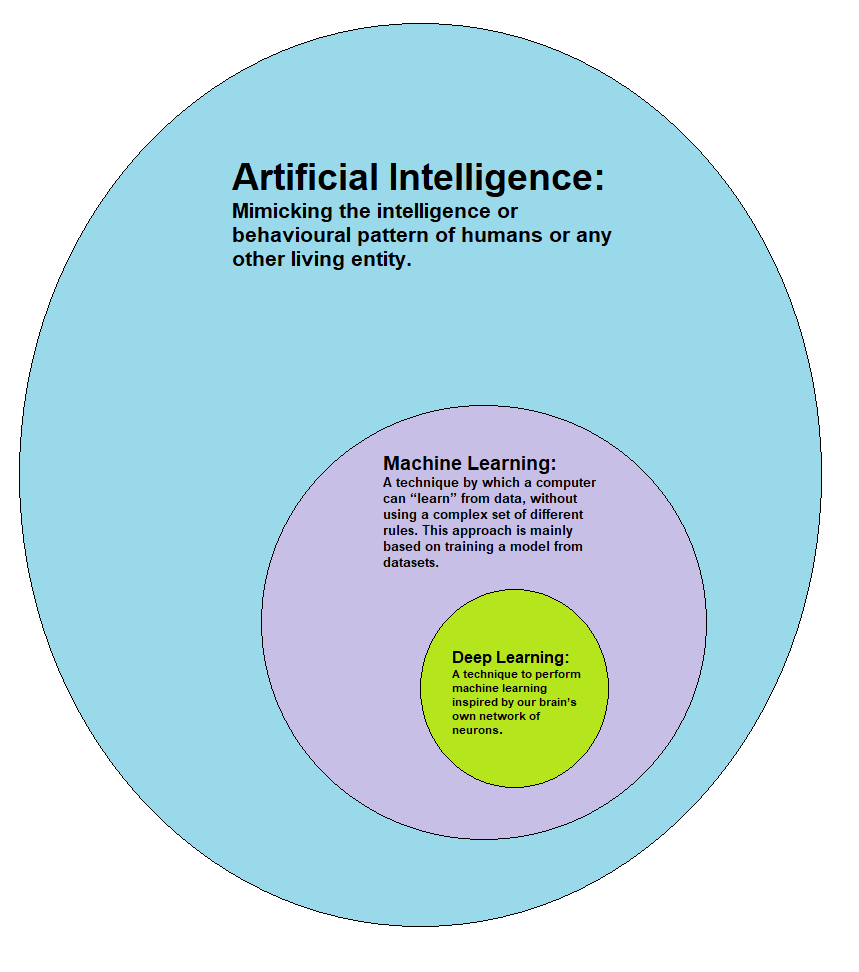
The Core Engines of AI
Three key areas of AI are particularly relevant for SRE and DevOps: Machine Learning, Deep Learning, and Natural Language Processing.
Machine Learning
noun
A type of AI that gives computers the ability to learn from data without being explicitly programmed. Instead of writing rules, you feed the system examples, and it learns the patterns on its own.
Deep Learning is a subset of machine learning. It uses complex structures called neural networks, which are loosely inspired by the human brain. This allows it to learn from massive amounts of data and recognize intricate patterns. It’s the powerhouse behind things like image recognition and self-driving cars.
Natural Language Processing (NLP) is focused on the interaction between computers and human language. It's how a machine can read, understand, interpret, and even generate text. If you've ever used a chatbot or seen an email automatically sorted into a folder, you've seen NLP at work.
AI in the Trenches
So how does this apply to keeping systems running smoothly? For SRE and DevOps teams, AI can be a powerful ally in managing complex, large-scale environments. It helps shift from reactive firefighting to proactive maintenance.
Here are a few key applications:
- Anomaly Detection: Instead of setting static thresholds for alerts, machine learning models can learn the normal behavior of a system. They can then flag any deviation from that baseline, catching subtle issues that a human might miss.
- Predictive Maintenance: By analyzing historical performance data, AI can predict when a component is likely to fail. This allows teams to address problems before they cause an outage.
- Automated Root Cause Analysis: When an incident occurs, AI can rapidly analyze logs, metrics, and traces from various sources to identify the likely cause, drastically reducing the mean time to resolution (MTTR).
- Intelligent Alerting: NLP can be used to reduce alert fatigue. It can group related alerts, add context from documentation, and even summarize incident reports, making it easier for on-call engineers to understand the situation.
Navigating the Challenges
Integrating AI isn't a magic bullet. It comes with its own set of challenges and ethical considerations. The decisions made by an AI are only as good as the data it's trained on. Biased or incomplete data can lead to skewed outcomes and poor decisions.
A key concern is the "black box" problem. Some complex AI models, especially in deep learning, can be difficult to interpret. Understanding why an AI made a particular recommendation is crucial for building trust and ensuring accountability.
Furthermore, there's the risk of over-reliance on automation. Human oversight remains critical. The goal of AI in SRE and DevOps is to augment human expertise, not replace it. Teams need to maintain the skills to intervene and troubleshoot when automated systems fall short.
Properly incorporating AI into development requires an engineer-in-the-loop approach: balancing automation with continuous human oversight, securing sensitive data, and reducing potential risks like AI hallucinations and prompt injections.
Ready to test your knowledge on these core concepts?
Which statement best describes the relationship between Artificial Intelligence (AI), Machine Learning (ML), and Deep Learning?
An SRE team is struggling with "alert fatigue" from too many notifications. Which area of AI is best suited to help by grouping related alerts and summarizing incident reports?
By understanding both the power and the pitfalls of AI, SRE and DevOps teams can leverage these technologies to build more resilient, efficient, and intelligent systems.