AI for SQL Mastery
Introduction to AI in SQL
AI Meets SQL
Think of artificial intelligence as a skilled assistant who’s an expert in SQL. This assistant can sit next to you while you work, helping you write, fix, and improve your database queries. That's the core idea behind integrating AI into SQL development. It’s not about robots taking over; it's about using smart tools to make your work easier and more effective.
Instead of just providing simple autocomplete, these AI tools understand the context of your database and the intent behind your questions. They act like a pair programmer, offering suggestions, catching mistakes, and finding more efficient ways to get the data you need.
Why Bother With AI?
The benefits of using AI in your SQL workflow are immediate and practical. First, it dramatically speeds up your work. Imagine describing the data you need in plain English and getting a well-structured SQL query in seconds. This is especially helpful for complex joins or lengthy statements, turning minutes of typing into a brief conversation.
Second, AI helps reduce errors. We all make typos or forget a comma, leading to frustrating syntax errors. AI tools can catch these simple mistakes in real-time. More importantly, they can spot potential logical flaws in your queries that a basic syntax checker would miss, saving you from inaccurate results down the line.
Finally, AI can boost performance. A query that works isn't always a query that works well. AI can analyze your code and suggest optimizations, like using a more efficient function or restructuring a JOIN to run faster. This helps keep your databases running smoothly, especially as they grow in size and complexity.
Faster code, fewer bugs, and better performance. AI acts as a powerful partner in the development process.
Your AI Toolkit for SQL
A variety of AI-powered tools are available to help with SQL tasks. While we won't dive deep into specific products here, they generally fall into a few key categories:
| Tool Type | What It Does |
|---|---|
| Code Generators | Creates SQL queries from natural language descriptions. |
| Intelligent Completion | Offers context-aware suggestions for functions and table names as you type. |
| Query Optimizers | Analyzes your finished query and suggests ways to make it run faster. |
| Debuggers | Helps identify why a query is failing or returning unexpected results. |
Many of these features are now being integrated directly into database management applications and popular code editors. You might already have access to some without realizing it.
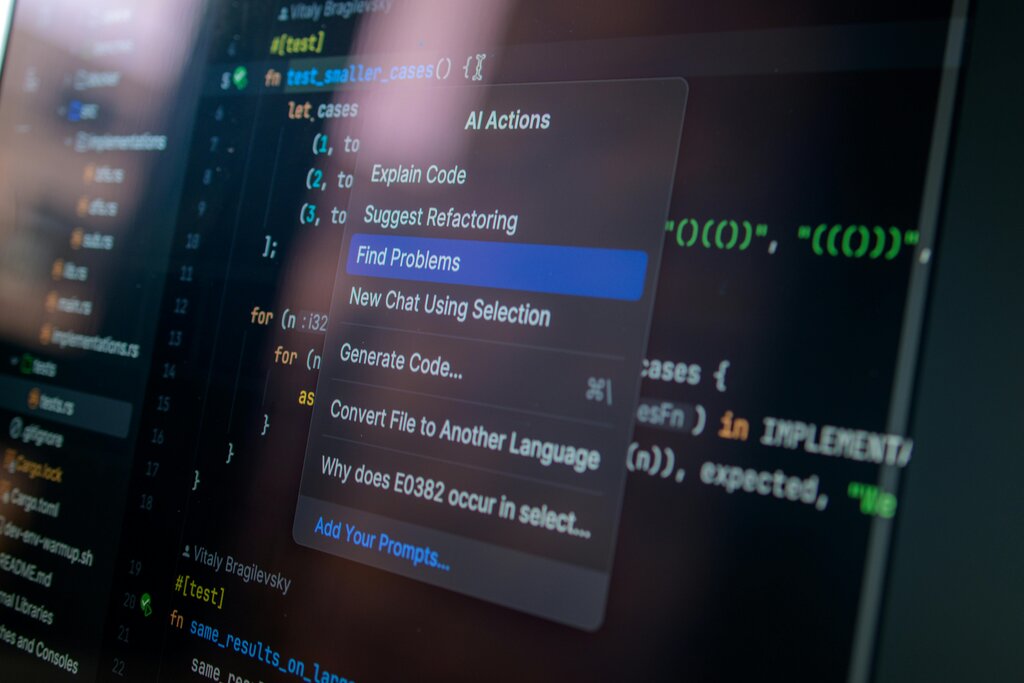
The goal of these tools is to augment your skills, not replace them. You are still the developer in charge. By handling the tedious parts of writing SQL, AI frees you up to focus on the more critical aspects of your work: understanding the data, asking the right questions, and interpreting the results.
What is the primary role of an AI assistant in a SQL workflow as described in the text?
According to the text, which of the following is NOT a primary benefit of using AI for SQL development?