AI for Software Development
Introduction to AI in Software Development
AI in Your Toolbox
Artificial intelligence isn't here to replace software developers. It's here to give them superpowers. Think of AI as the most advanced tool you've ever had, one that can help you write, test, and deploy code more efficiently than ever before.
At its core, AI in software development is about creating systems that can perform tasks that traditionally require human intelligence. This includes learning from data, recognizing patterns, and making predictions. While a normal program follows a fixed set of instructions, an AI-powered tool can adapt and offer intelligent suggestions based on the context of your work.
How Machines Learn
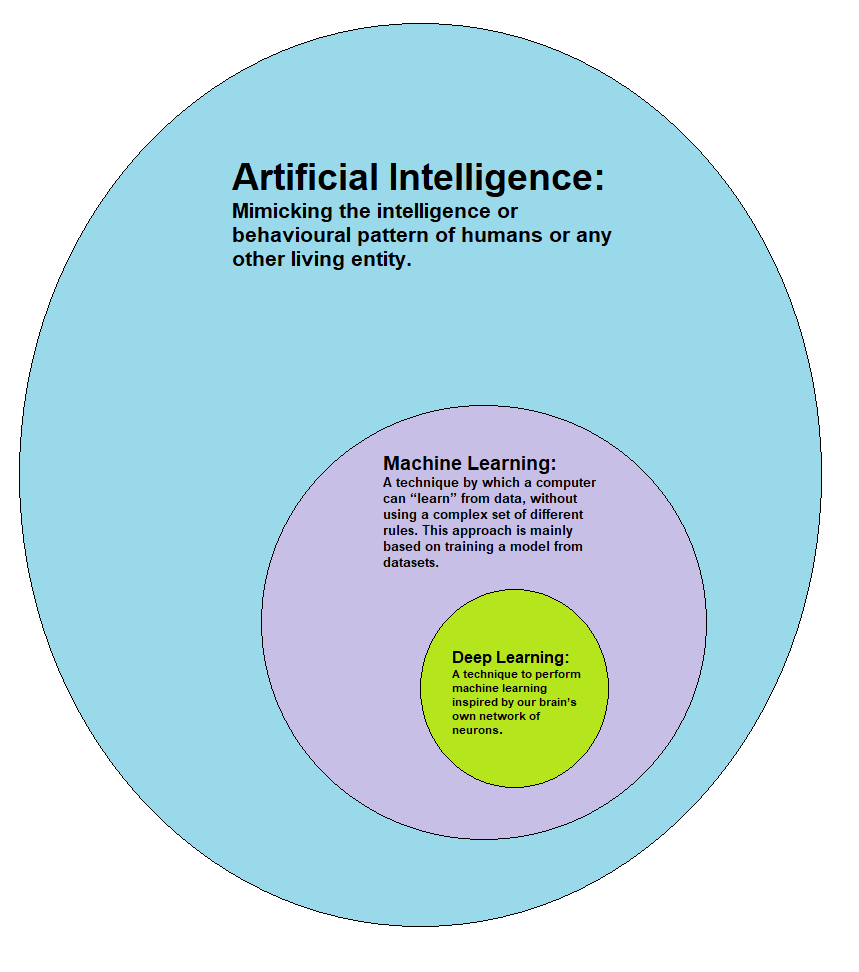
The magic behind most modern AI tools comes from a field called machine learning. Instead of writing explicit, step-by-step rules for every possible situation, we train a machine learning model by showing it vast amounts of data. The model learns to identify patterns and make decisions on its own.
For example, an email spam filter is a classic case of machine learning. You don't program it with a list of every spam keyword. Instead, you feed it thousands of examples of spam and non-spam emails, and it learns the characteristics of each to filter your inbox automatically.
A subset of machine learning, called deep learning, takes this a step further. Deep learning uses complex structures called neural networks, which are loosely inspired by the human brain. These networks are exceptionally good at finding intricate patterns in massive datasets, making them ideal for tasks like recognizing objects in an image or understanding the nuances of human language.
AI in the Development Cycle
AI tools can be integrated into nearly every phase of the software development lifecycle (SDLC), from initial planning to long-term maintenance. Their goal is to automate repetitive tasks, catch errors early, and free up developers to focus on the creative, problem-solving aspects of their jobs.
This integration means developers can spend less time on tedious, repetitive work. Instead of manually writing boilerplate code or poring over logs to find a bug, they can leverage AI to handle these tasks, freeing up mental energy for more complex challenges.
Practical AI in Coding
Let's look at some concrete examples of how AI is changing the day-to-day work of a developer.
Intelligent Code Completion: Tools like GitHub Copilot go far beyond suggesting a single variable name. They can analyze the context of your code and suggest entire functions or blocks of logic, often before you even know you need them.
Automated Testing: AI can analyze a codebase to automatically generate relevant test cases, ensuring better test coverage and catching bugs that a human might miss. It can identify edge cases and potential failure points, leading to more robust software.
Code Review and Refactoring: AI tools can scan your code for potential bugs, security vulnerabilities, and performance issues. They can also suggest ways to refactor your code to make it cleaner, more efficient, and easier to maintain.
Natural Language to Code: Some tools are beginning to allow developers to describe a function in plain English and have the AI generate the corresponding code. This can dramatically speed up prototyping and the development of common functionalities.
# A developer writes a function signature and a comment
# describing what it should do.

def calculate_distance(p1, p2):
    """Calculates the Euclidean distance between two points in a 2D space."""
    # AI assistant suggests the following implementation:
    import math
    return math.sqrt((p2[0] - p1[0])**2 + (p2[1] - p1[1])**2)

# The developer accepts the suggestion with a single keystroke.
By handling tasks like this, AI acts as a pair programmer that's available 24/7. It accelerates development, reduces human error, and helps developers learn new patterns and libraries.
What is the primary role of AI in software development, as described in the provided text?
Which AI application involves generating relevant test cases by analyzing a codebase to find edge cases and potential failure points?
These tools are constantly evolving, but their core purpose remains the same: to augment the skills of human developers, making the process of building great software faster, smarter, and more creative.