AI for Production Apps
Introduction to AI in Software Development
AI and Software Development
Building software has always followed a familiar rhythm called the Software Development Lifecycle, or SDLC. It’s a structured process that takes an idea from concept to reality, moving through stages like planning, coding, testing, and deployment. While effective, this process can be slow, expensive, and prone to human error. Now, Artificial Intelligence is rewriting the playbook for each of these stages.
Instead of just being another tool, AI is becoming a partner in the development process. It helps teams make smarter decisions, automate tedious tasks, and catch problems before they start. Let's look at how AI is transforming each phase of the SDLC, making the entire process faster, more efficient, and more creative.
Smarter Starts
Great software starts with a deep understanding of what users actually need. The requirement gathering phase is where this happens, but it can be messy. It often involves sifting through hundreds of pages of documents, customer interviews, and market analysis. This is a perfect job for AI.
Using Natural Language Processing (NLP), AI systems can read and understand vast amounts of text-based data. They can analyze feature requests, support tickets, and even social media chatter to identify key themes and user pain points. This helps teams define requirements with much greater accuracy and confidence, ensuring they build what people truly want.
Once the requirements are clear, the next step is design and planning. How should the software be built? What technology should be used? AI can act as an experienced consultant, suggesting proven architectural patterns based on the project's specific needs. It can also analyze the plan to identify potential risks or bottlenecks early on, helping teams create more realistic timelines and allocate resources more effectively.
Coding with a Copilot
The development phase, where code is written, is where AI's impact is most visible. AI tools are becoming powerful assistants for developers, almost like a second pair of eyes. They can suggest snippets of code, autocomplete entire functions, and even translate code from one programming language to another.
This isn't just about writing code faster. AI can also improve code quality by flagging potential bugs, security vulnerabilities, or inefficient logic in real-time. It helps developers adhere to best practices and write cleaner, more maintainable code from the start. This frees up developers to focus on the more complex, creative aspects of problem-solving rather than getting bogged down in routine syntax.
Responsible AI-assisted development: This is the practical and professional application of the concept. In this model, AI tools act as a powerful collaborator or "pair programmer." The user guides the AI but then reviews, tests, and understands the code it generates, taking full ownership of the final product.
Intelligent Quality Gates
Testing is critical for ensuring software works correctly, but it's often a bottleneck. Manually testing every feature is time-consuming and it's impossible to check every possible scenario. AI brings a new level of intelligence to quality assurance.
AI algorithms can analyze an application and automatically generate thousands of relevant test cases, covering scenarios a human tester might never consider. They can also predict which parts of the code are most likely to contain bugs based on recent changes, allowing testers to focus their efforts where they're needed most. This leads to more thorough testing in less time.
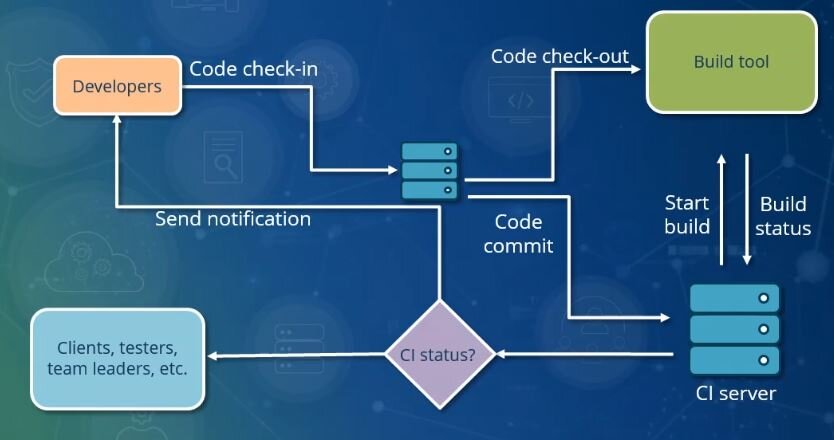
After testing, the software is ready for deployment. Modern deployment is often automated through pipelines known as CI/CD (Continuous Integration/Continuous Deployment). AI enhances these pipelines by adding a layer of intelligent monitoring. If an AI detects unusual behavior or a spike in errors after a new version is released, it can automatically halt the rollout or even trigger a rollback to the previous stable version. This acts as a safety net, preventing bad updates from affecting a large number of users.
Proactive Maintenance
The job isn't over once the software is deployed. The final phase of the SDLC is maintenance and support, which involves keeping the application running smoothly and helping users. AI excels at this by working around the clock.
AI systems can continuously monitor an application's performance, looking for signs of trouble. By analyzing patterns in data, they can often predict potential failures—like a server running out of memory—before they happen. When issues do occur, AI can instantly analyze system logs to pinpoint the root cause, drastically reducing troubleshooting time for developers.
On the user-facing side, intelligent chatbots can handle common support queries, providing instant answers and freeing up human support agents to tackle more complex problems. This not only improves the user experience but also provides valuable data on common issues, which feeds back into the requirement gathering phase for future updates.
Let's check your understanding of how AI is changing software development.
How does Natural Language Processing (NLP) primarily assist in the requirement gathering phase of the SDLC?
What is a primary benefit of using AI-powered tools during the development (coding) phase?
By weaving intelligence into every stage of the software development lifecycle, AI is not just making the process more efficient—it's enabling teams to build better, more reliable products.