AI for Product Managers
Introduction to AI in Product Management
AI Is Your New Co-Pilot
Artificial intelligence isn't just a buzzword; it's a powerful tool changing how we build products. As a product manager, you don't need to become a data scientist, but understanding the fundamentals is crucial. Think of AI as a new co-pilot that can help you analyze data, understand users, and make smarter decisions throughout the product lifecycle.
Artificial Intelligence (AI) is revolutionizing product management by automating routine tasks, providing actionable insights, and enabling data-driven decision-making.
Integrating AI means moving beyond just adding features. It's about fundamentally rethinking how to solve user problems and create value. Let's break down the core concepts you'll encounter.
The Building Blocks of AI
AI is a broad field, but for product management, you'll most often hear about a few key areas. These concepts are nested within each other, each a more specialized version of the last.
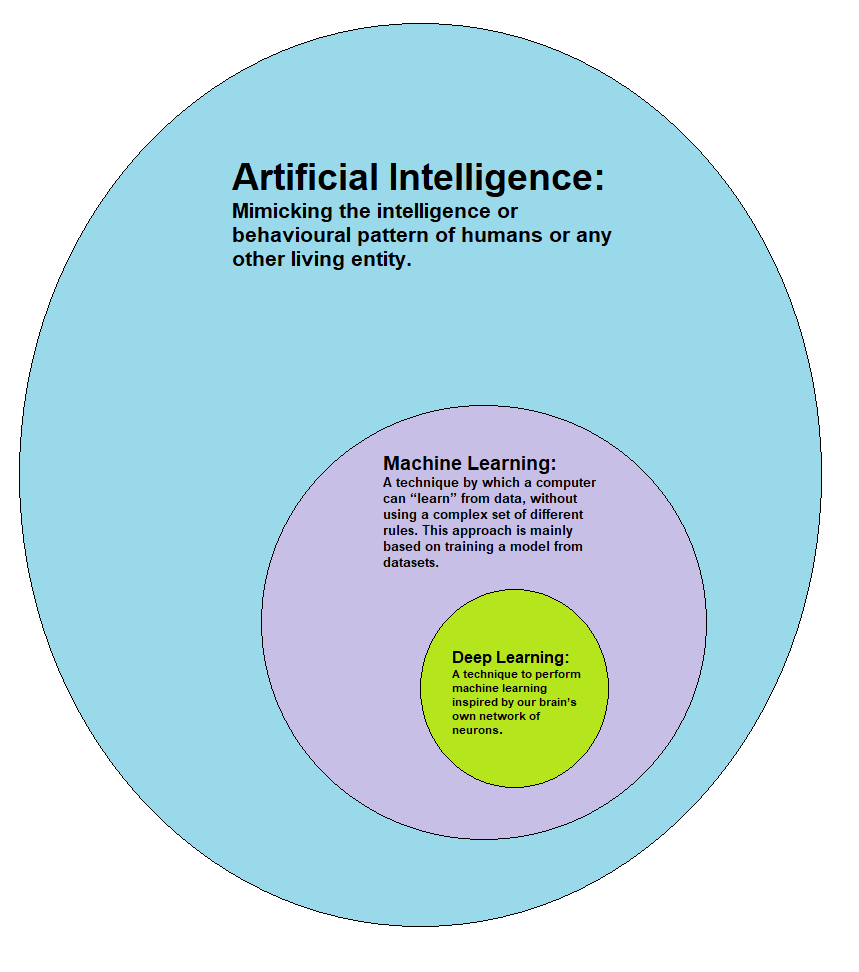
First, there's Machine Learning.
Machine Learning
noun
A subset of AI that gives computers the ability to learn from data without being explicitly programmed. Instead of writing rules, you feed it examples.
Think of it like teaching a child to recognize a cat. You don't list all the rules for what makes a cat. You just show them lots of pictures of cats. Eventually, they learn to identify one on their own. Machine learning models do the same with data.
A specialized type of machine learning is Deep Learning.
Deep Learning
noun
A subfield of machine learning that uses multi-layered neural networks, inspired by the human brain, to learn from vast amounts of data. It excels at finding complex patterns.
If machine learning is like a student, deep learning is like a specialist who can uncover incredibly subtle connections in the data, like identifying a specific person's face in a crowd or understanding the nuances of medical scans.
Finally, we have Natural Language Processing, which focuses on language.
Natural Language Processing
noun
A field of AI that helps computers understand, interpret, and generate human language. It's the bridge between human communication and computer understanding.
Every time you use a chatbot, a translation app, or a smart assistant, you're interacting with NLP.
AI in Action
So how do these technologies show up in actual products? AI can be leveraged across the entire product development process to create more intelligent, personalized, and efficient experiences.
For example, AI excels at personalization. Streaming services use machine learning to analyze your viewing habits and recommend what to watch next. E-commerce sites do the same, suggesting products you might like based on past purchases and browsing history. This moves beyond simple rules to create a unique experience for each user.
Automation is another huge application. Instead of making users search through long FAQs, companies use NLP-powered chatbots to answer common questions instantly. This frees up human support agents to handle more complex issues. AI can also automate internal processes, like sorting and prioritizing user feedback to spot trends faster.
By analyzing vast datasets, AI can uncover insights into user behavior, predict future trends, and identify opportunities for product improvement that would be nearly impossible to find manually.
This data-driven approach allows product managers to make more informed decisions, from prioritizing features on the roadmap to optimizing the user onboarding flow.
Navigating the Challenges
Integrating AI into a product isn't as simple as plugging in a new tool. It comes with a unique set of challenges and responsibilities.
First, AI is hungry for data. The quality of your AI features depends entirely on the quality and quantity of the data you feed them. If your data is incomplete, messy, or biased, your AI model will inherit those flaws. A common saying in the field is "garbage in, garbage out."
There are also ethical considerations to manage. AI models learn from historical data, which can contain societal biases. If a hiring tool is trained on biased data, it might unfairly penalize certain groups of candidates. As a product manager, you have a responsibility to understand and mitigate these risks.
Key ethical questions include: Where did our training data come from? Is it representative? How can we ensure our AI treats all users fairly? How transparent can we be about how the AI makes decisions?
Finally, implementing AI can be complex and resource-intensive. It requires specialized skills, significant computing power, and a process for ongoing monitoring and improvement. An AI feature isn't something you build once and forget; it needs to be maintained and retrained as new data becomes available.
Let's review what we've covered.
Which of the following is a specialized type of Machine Learning known for uncovering very subtle patterns in data, similar to how a specialist might identify a face in a crowd?
When an e-commerce site suggests products to you based on your past purchases and browsing history, what key AI application is at play?
Understanding these core ideas is the first step toward effectively leveraging AI to build better products.