AI for Product Managers
Introduction to AI
What Is AI?
Artificial intelligence is the science of making machines that can think like humans. It's not about creating conscious robots from science fiction. Instead, it's about building systems that can learn, reason, perceive, and understand language. The goal is to enable computers to perform tasks that typically require human intelligence, like recognizing a face in a photo or translating a conversation.
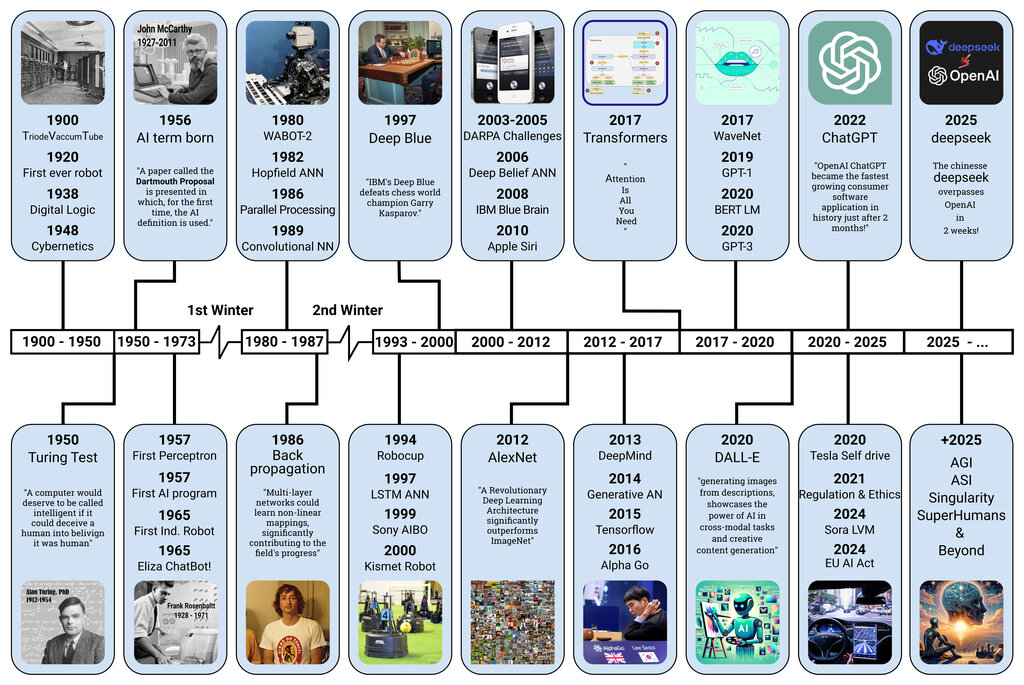
The idea of intelligent machines has been around for centuries, but the field of AI officially began in the mid-20th century. Early pioneers believed that a machine as intelligent as a human being would exist in a generation. This initial optimism was followed by periods of reduced funding and interest, known as "AI winters." However, breakthroughs in computing power and the availability of massive datasets have since fueled a resurgence, leading to the rapid advancements we see today.
The Core Concepts
To understand AI, you need to know a few key terms that are often used interchangeably, but have distinct meanings. These are the building blocks of modern AI systems.
Machine Learning
noun
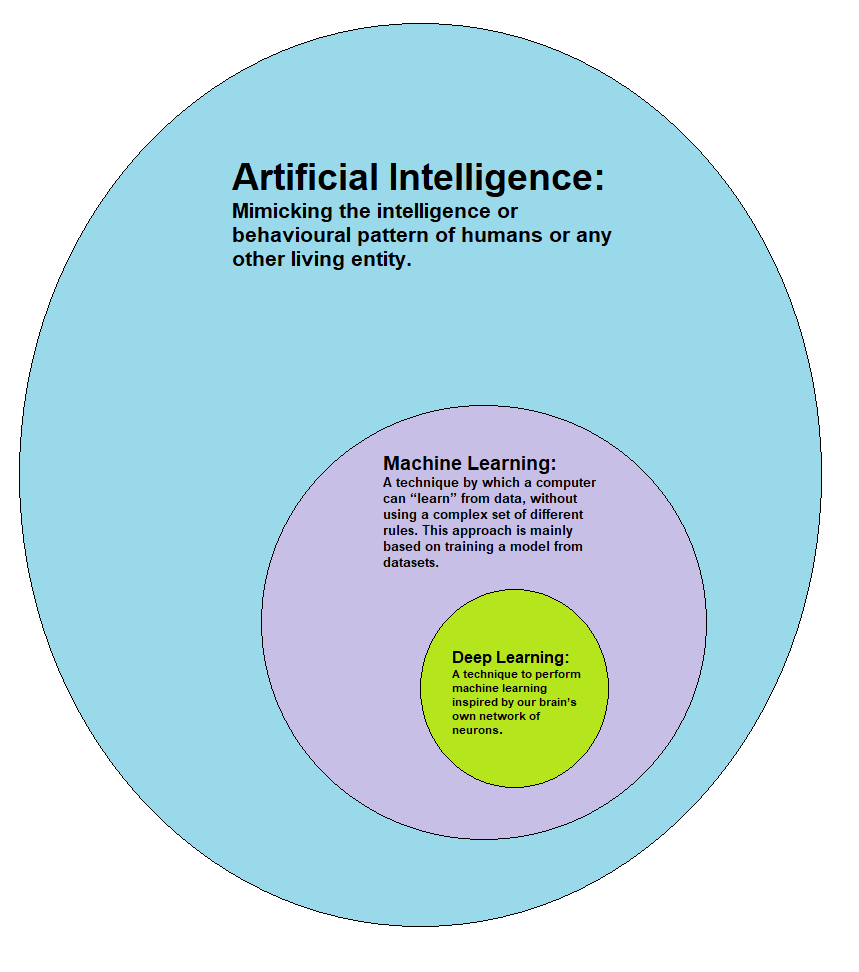
A subset of AI where systems learn and improve from experience without being explicitly programmed.
Think of machine learning like teaching a child to recognize a cat. You don't write a list of rules describing what a cat is. Instead, you show them pictures of cats. After seeing enough examples, they learn to identify a cat on their own. Machine learning algorithms do the same thing, but with data. They analyze vast amounts of data to find patterns and make predictions.
Deep learning is a specialized type of machine learning. It uses complex, multi-layered structures called neural networks, which are loosely inspired by the human brain. Each layer of the network learns to detect different features, from simple lines and edges to more complex concepts like faces or objects.
Deep learning is what powers many of today's most impressive AI achievements, including self-driving cars and voice assistants.
Another key concept is Natural Language Processing, or NLP. This is the branch of AI focused on enabling computers to understand, interpret, and generate human language. Whenever you use a translation app, talk to a chatbot, or see your email client suggest a reply, you're interacting with NLP.
Natural Language Processing
noun
A field of AI that helps computers understand, interpret, and manipulate human language.
The Three Types of AI
AI is often categorized based on its capabilities. Understanding these categories helps clarify what AI can do today and what it might do in the future.
The first and only type of AI we have achieved so far is Artificial Narrow Intelligence (ANI), also known as Weak AI. ANI is designed and trained for one specific task. It can be incredibly effective at that single task, often surpassing human ability, but it can't operate outside of its designated function.
Examples of ANI are all around us. The AI that recommends movies on streaming services, the software that recognizes faces to unlock your phone, and the system that filters spam from your inbox are all forms of narrow AI. They are experts in one domain but have no general understanding or consciousness.
The next level is Artificial General Intelligence (AGI), or Strong AI. This is the type of AI often depicted in movies. An AGI would possess the ability to understand, learn, and apply its intelligence to solve any problem, much like a human being. It could switch between tasks and contexts without needing to be retrained. Creating AGI is the long-term goal for many AI researchers, but it remains a monumental challenge.
Finally, there is the theoretical concept of Artificial Superintelligence (ASI). An ASI would surpass human intelligence in virtually every field, including scientific creativity, general wisdom, and social skills. The development of ASI raises profound questions about the future of humanity and is a topic of both excitement and serious debate among scientists and ethicists.
For now, all AI applications are based on narrow AI. While AGI and ASI remain theoretical, the ongoing progress in the field continues to expand the boundaries of what's possible.
Ready to check your understanding?
What is the primary goal of Artificial Intelligence as a field of science?
The type of AI that powers today's applications, like spam filters and movie recommendation engines, is known as ______.
With a solid grasp of these core ideas, you're well-equipped to explore the world of artificial intelligence and its impact on technology and society.