AI for Lifecycle Marketing Mastery
Introduction to AI in Marketing
The New Marketing Playbook
Marketing used to be a lot of guesswork. Companies would cast a wide net with TV commercials or billboard ads, hoping to catch the right customers. It was a one-to-many conversation, where the brand did all the talking.
Today, that model is obsolete. Customers expect to be treated as individuals, not as part of a faceless crowd. They want experiences tailored to their needs and interests. Artificial intelligence (AI) makes this possible, turning mass marketing into meaningful, one-to-one conversations.
Artificial Intelligence (AI) is revolutionizing the digital marketing landscape, allowing businesses to automate processes, analyze data more effectively, and create personalized customer experiences.
This shift didn't happen overnight. It’s been a gradual evolution from broad strokes to fine-tipped personalization.
From Mass Mail to Smart Messages
Think back to the early days of digital marketing. The big innovation was email. Instead of sending a physical catalog to every home, businesses could send a promotional email to a list of subscribers. It was cheaper and faster, but still largely a broadcast.
Then came segmentation. Marketers started dividing their audience into basic groups. Maybe they’d send one email to new customers and another to loyal ones. This was a step in the right direction, but the segments were still broad.
AI blew the doors off these limitations. Instead of a few large buckets, AI allows for segments of one. It analyzes vast amounts of data to understand each customer's unique journey and predict what they'll want next. This is the leap from talking at customers to having a conversation with them.
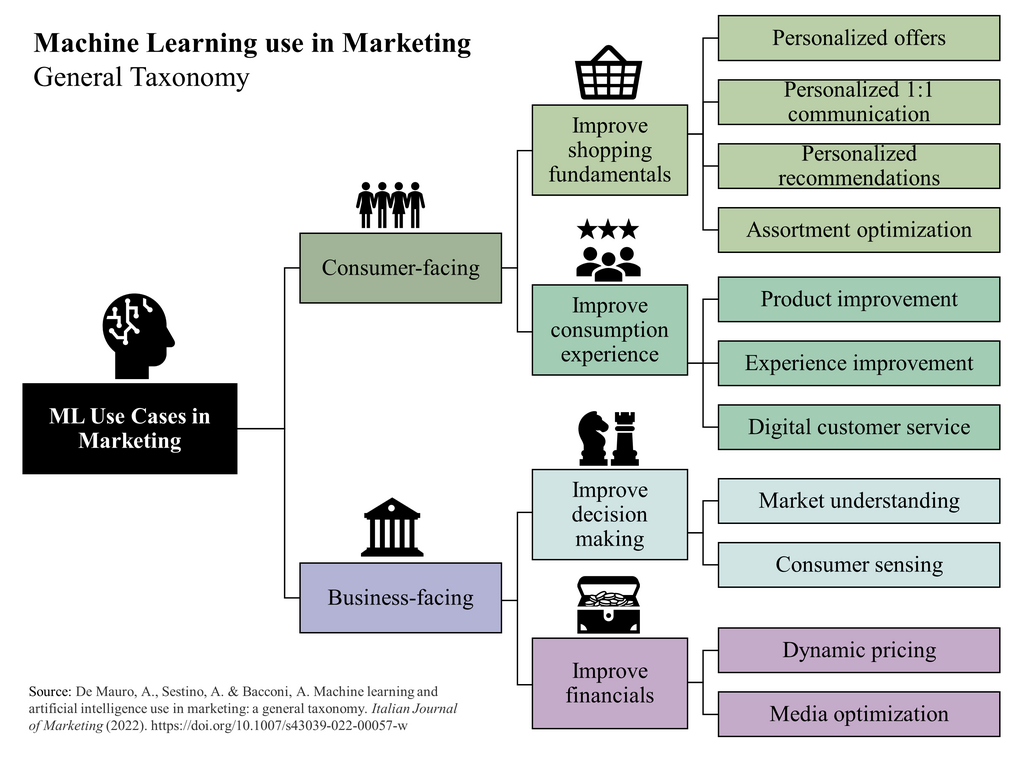
So, what are the core technologies driving this change? It mainly comes down to two powerful types of AI.
The Brains Behind the Operation
The first key technology is machine learning (ML). You can think of it like a personal shopper who gets to know your style. The first time you shop, they might show you a variety of things. But after a few visits, they notice you always gravitate toward blue shirts and comfortable shoes. Soon, they're pulling items they know you'll love before you even ask.
Machine learning algorithms do something similar. They sift through mountains of customer data—purchase history, browsing behavior, app usage—and identify patterns. They learn what different customers like and what they're likely to do next, all without being explicitly programmed for every scenario. This is what powers the uncanny accuracy of product recommendations and predictive analytics.
Machine Learning
noun
A type of artificial intelligence that enables a system to learn and improve from experience without being explicitly programmed.
The second key technology is natural language processing (NLP). This is how machines learn to understand and respond to human language. It’s the magic behind chatbots that can answer your questions and tools that can analyze customer reviews to gauge public sentiment.
NLP isn’t just about recognizing words; it's about understanding context, intent, and even emotion. It allows marketers to listen at scale, making sense of thousands of customer support tickets, social media comments, and survey responses to find out what people are really saying about their brand.
Together, machine learning and natural language processing give marketers superpowers. They can finally understand and engage customers on a truly personal level.
Putting AI to Work
The most powerful application of these technologies is personalization. AI analyzes everything it knows about a customer to deliver an experience that feels uniquely theirs. When you visit an e-commerce site and see a homepage curated just for you, that’s AI at work. When an airline app sends you a push notification about a fare sale to a city you’ve flown to before, that’s also AI.
This level of personalization builds stronger customer relationships. It shows customers that a brand understands their needs and values their time. Instead of irrelevant ads, they get helpful suggestions. This leads to higher engagement, loyalty, and ultimately, growth for the business.
AI also automates repetitive tasks, freeing up marketers to focus on strategy and creativity. It can automatically send welcome emails, schedule social media posts, and even optimize ad spend in real-time.
By handling the data analysis and routine tasks, AI acts as an invaluable assistant. It empowers marketers to make smarter decisions and build the kind of customer experiences that were once impossible.
According to the text, what is the primary shift in marketing philosophy driven by modern technology?
Which AI technology is compared to a personal shopper who learns a customer's style over time by analyzing their behavior?