AI for Knowledge and Content Creation
Understanding AI Basics
What Is Artificial Intelligence?
At its core, artificial intelligence is the science of making machines that can think or act like humans. The goal is to create systems that can perform tasks that typically require human intelligence, like learning, reasoning, problem-solving, and understanding language.
Artificial Intelligence
noun
A field of computer science dedicated to creating systems capable of performing tasks that normally require human intelligence.
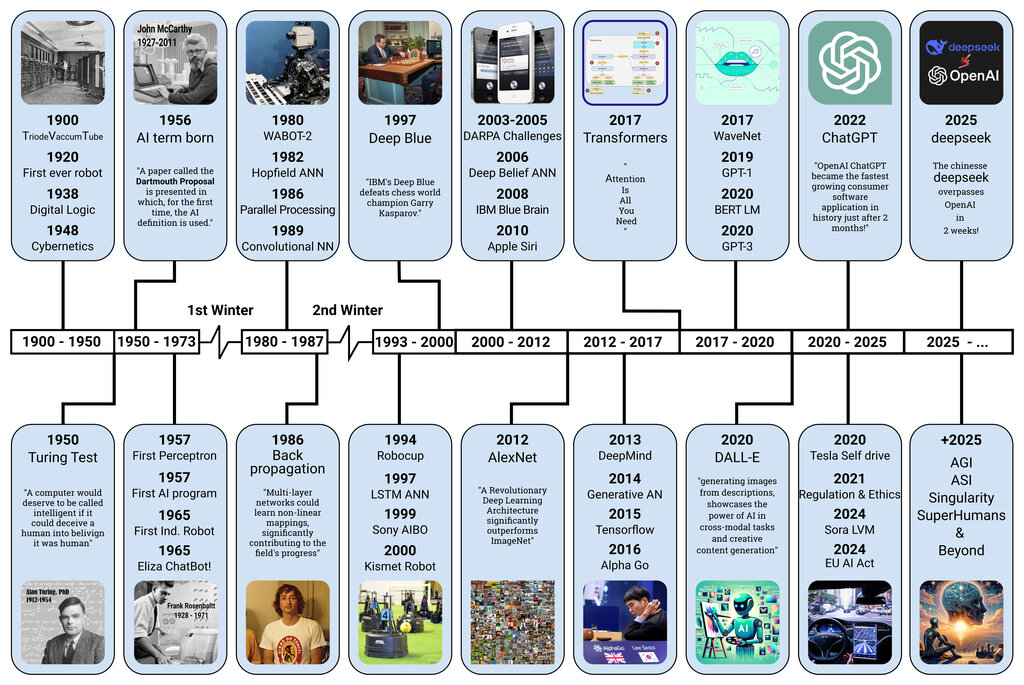
The idea isn't new. Philosophers have long imagined artificial beings. But the modern field of AI truly began in the 1950s. A small group of scientists at a workshop at Dartmouth College coined the term and set out on a mission to build thinking machines. The journey since has had its ups and downs, with periods of great excitement and funding followed by "AI winters" when progress stalled.
The Two Main Types of AI
When people talk about AI, they're usually referring to one of two broad categories. The distinction between them is crucial for understanding what AI can and can't do today.
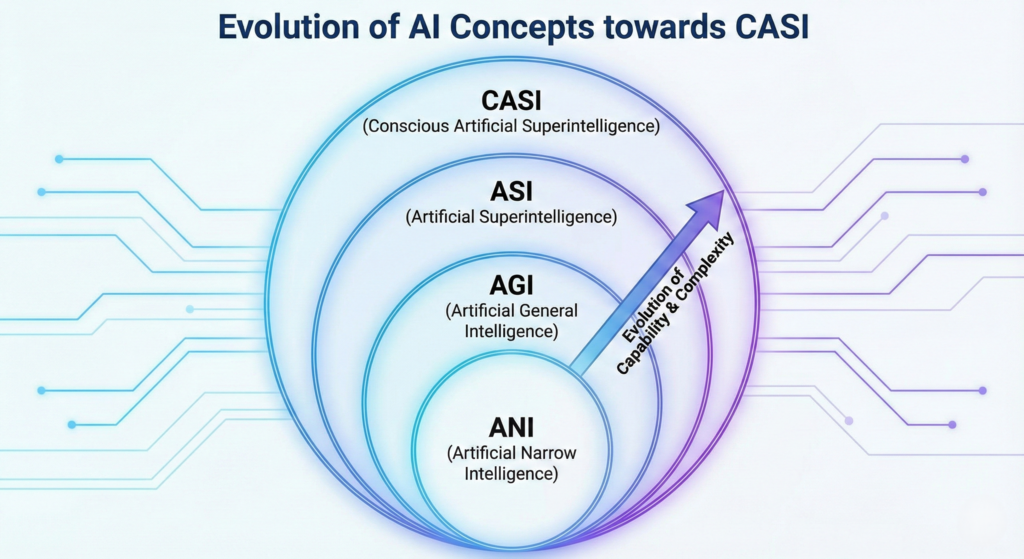
Artificial Narrow Intelligence (ANI) is designed to perform a single, specific task. This is the only type of AI we have successfully created so far. Your navigation app, your music recommendations, and even the AI that helps doctors spot diseases in scans are all examples of ANI. They're incredibly powerful at their one job, but they can't operate outside of it.
The other type is what you often see in science fiction.
Artificial General Intelligence (AGI) is a theoretical form of AI that would possess the ability to understand, learn, and apply its intelligence to solve any problem a human can. An AGI would be able to switch between tasks as different as composing a symphony and performing complex surgery without being reprogrammed.
For now, AGI remains a goal for researchers, not a reality.
How AI Learns
So, how do we get a machine to learn? We don't write explicit, step-by-step instructions for every possible scenario. Instead, we use approaches that allow the machine to figure things out for itself. This is where machine learning comes in.
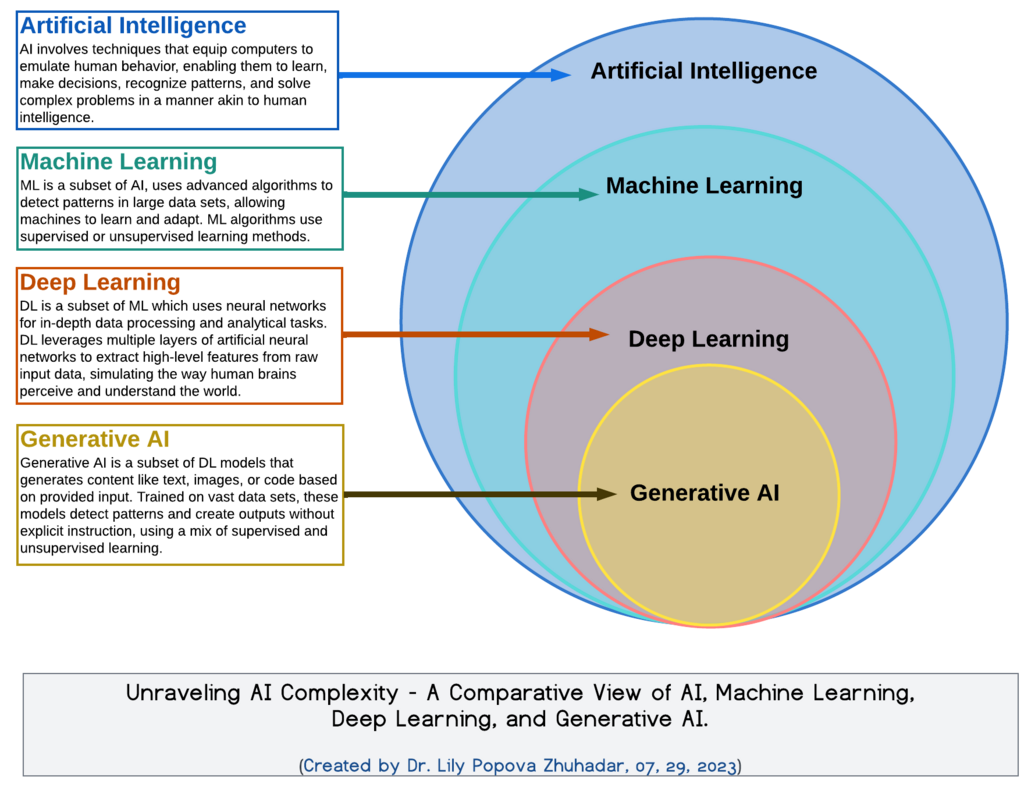
Machine Learning (ML) is a subset of AI where algorithms are trained on large amounts of data. By identifying patterns in the data, the machine learns to make predictions or decisions. Think of it like teaching a child to recognize a cat. You don't list out all the rules for what makes a cat. You just show them lots of pictures of cats, and eventually, they learn to identify one on their own.
A powerful type of machine learning is called deep learning.
Deep Learning (DL) is a more advanced subset of ML that uses structures called neural networks, which are inspired by the human brain. These networks have many layers, and the "deep" in deep learning refers to the large number of layers in the network. Each layer learns to detect different features in the data, allowing the system to handle very complex patterns, such as recognizing faces or understanding speech.
Another key area of AI focuses on how machines can understand and interact with us using our own language.
Natural Language Processing (NLP) is a branch of AI that gives computers the ability to understand, interpret, and generate human language. It's the technology behind chatbots, language translation apps, and spam filters in your email. NLP bridges the gap between human communication and computer understanding.
Now that you have a grasp of these core concepts, let's test your knowledge.
What is the primary goal of artificial intelligence?
The term 'artificial intelligence' was officially coined at a workshop held at which institution?
These building blocks—AI, ML, DL, and NLP—are the foundation for the incredible tools and applications we see emerging today.