AI for International Development Professionals
Introduction to AI
What Is Artificial Intelligence?
Artificial intelligence, or AI, is the science of making machines that can think and learn like humans. It’s a broad field that covers everything from a robot that can see and understand its surroundings to a program that can write a poem or diagnose a disease. The core idea is to build systems that can perform tasks that normally require human intelligence.
Think of AI not as a single technology, but as a collection of methods that allow computers to sense, comprehend, act, and learn.
At its heart, AI is about pattern recognition. Just as a child learns to identify a dog after seeing a few examples, an AI system learns by analyzing vast amounts of data. It looks for patterns, makes connections, and uses that knowledge to make predictions or decisions about new, unseen data.
A Quick Trip Through Time
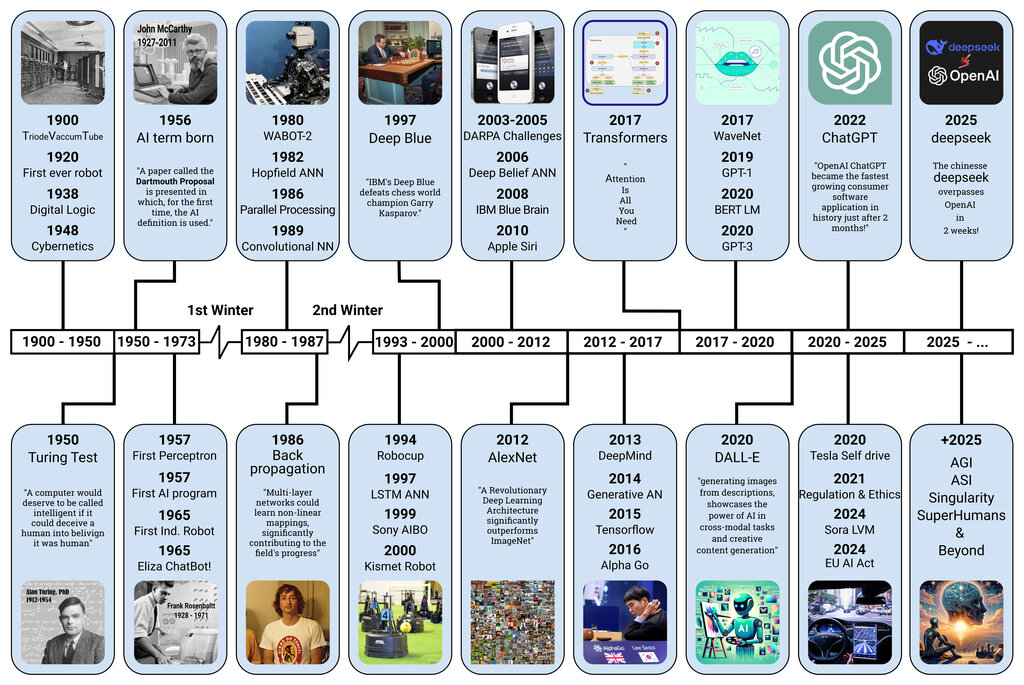
The dream of intelligent machines is ancient, but the formal field of AI began in the 1950s. Early pioneers believed they could simulate all aspects of human intelligence within a generation. Progress was slower than expected, leading to periods of reduced funding and interest known as "AI winters."
But breakthroughs in computing power and the availability of massive datasets fueled a resurgence. Key moments, like a computer defeating a world chess champion in 1997, showed the world what was possible. The last two decades have seen explosive growth, moving AI from research labs into our daily lives.
The Building Blocks of AI
AI is a big umbrella term. Underneath it are several key concepts, each a subset of the one before. The most important ones to know are Machine Learning, Deep Learning, and Neural Networks. Their relationship is often shown as a series of nested circles.
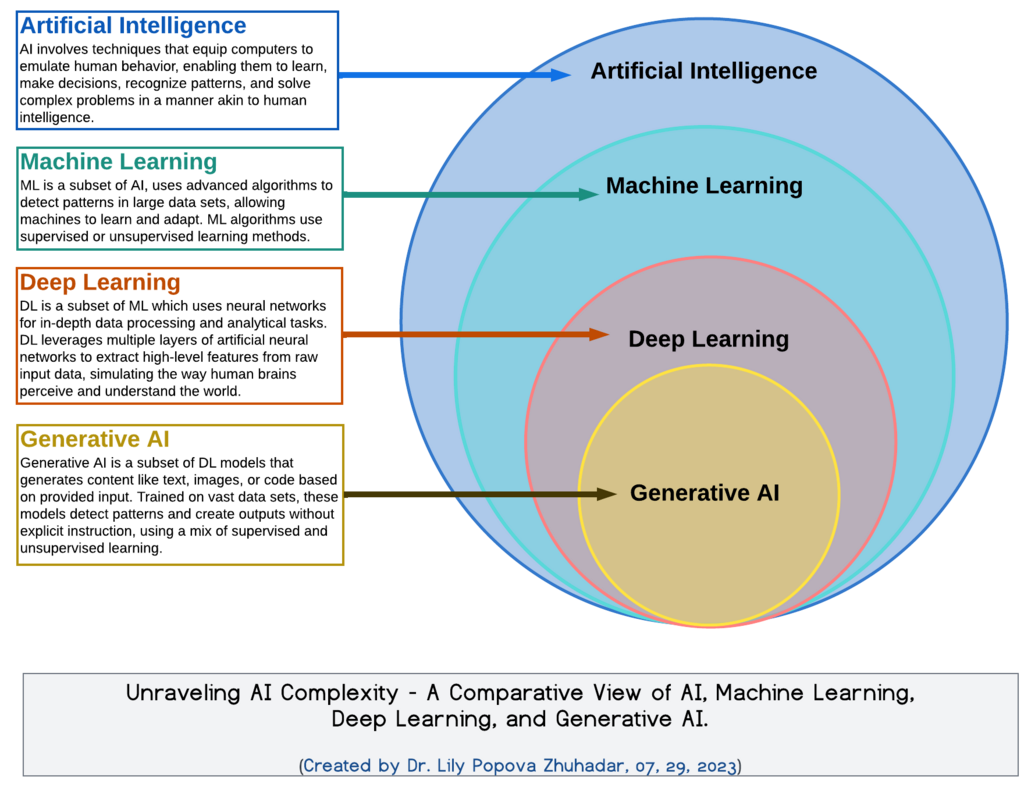
Machine Learning (ML) is a type of AI where systems learn directly from data without being explicitly programmed. Instead of writing step-by-step rules, developers feed an algorithm huge amounts of data and let it figure out the patterns on its own. It's the engine behind recommendation systems on streaming services and spam filters in your email.
Deep Learning (DL) is a more advanced subset of machine learning. It uses structures called neural networks to learn. The "deep" in deep learning refers to the many layers within these networks, which allow them to learn much more complex patterns from data. This is the technology that powers self-driving cars and voice assistants.
Neural Network
noun
A computing system inspired by the biological neural networks that constitute animal brains. It consists of layers of connected nodes, or artificial neurons, that process and transmit information.
Artificial Neural Networks (ANNs) are the core of deep learning. Inspired by the human brain, they are made up of interconnected nodes, or "neurons," organized in layers. An input layer receives data, one or more hidden layers process it, and an output layer produces the final result. Each connection has a weight that gets adjusted as the network learns, making it better at its task over time.
The Human Side of AI
As AI becomes more powerful, it's crucial to think about its impact on society. The decisions made by AI systems can have real-world consequences, which brings up important ethical questions.
Use of artificial intelligence (AI) in human contexts calls for ethical considerations for the design and development of AI-based systems.
One major concern is bias. If an AI system is trained on biased data, it will produce biased results. For example, if a hiring algorithm is trained on historical data from a company that predominantly hired men, it might learn to unfairly favor male candidates.
Privacy is another key issue. AI systems often require vast amounts of personal data to function, raising questions about how that data is collected, used, and protected.
Finally, the societal impact of AI, particularly on jobs, is a topic of intense debate. While AI can automate repetitive tasks and create new kinds of jobs, it also raises concerns about job displacement and the need for workforce retraining.
Understanding these challenges is just as important as understanding the technology itself. As AI continues to evolve, ensuring it is developed and used responsibly is a collective task for everyone.