AI for Humanitarian and Development Impact
Introduction to AI
What is AI, Really?
Artificial Intelligence, or AI, is about making computers think and learn in ways that resemble human intelligence. It's not a single technology but a broad field of computer science. The goal is to create systems that can perform tasks that typically require human smarts, like understanding language, recognizing images, solving problems, and making decisions.
Artificial Intelligence
noun
The theory and development of computer systems able to perform tasks that normally require human intelligence, such as visual perception, speech recognition, decision-making, and translation between languages.
Think of it this way: when you program a traditional calculator, you give it explicit rules. You tell it exactly how to add 2 and 2. With AI, you don't give it the rules; you give it examples. You show it thousands of pictures of cats, and eventually, it learns to recognize a cat on its own. This ability to learn from data is the core idea behind most modern AI.
A Quick Trip Through Time
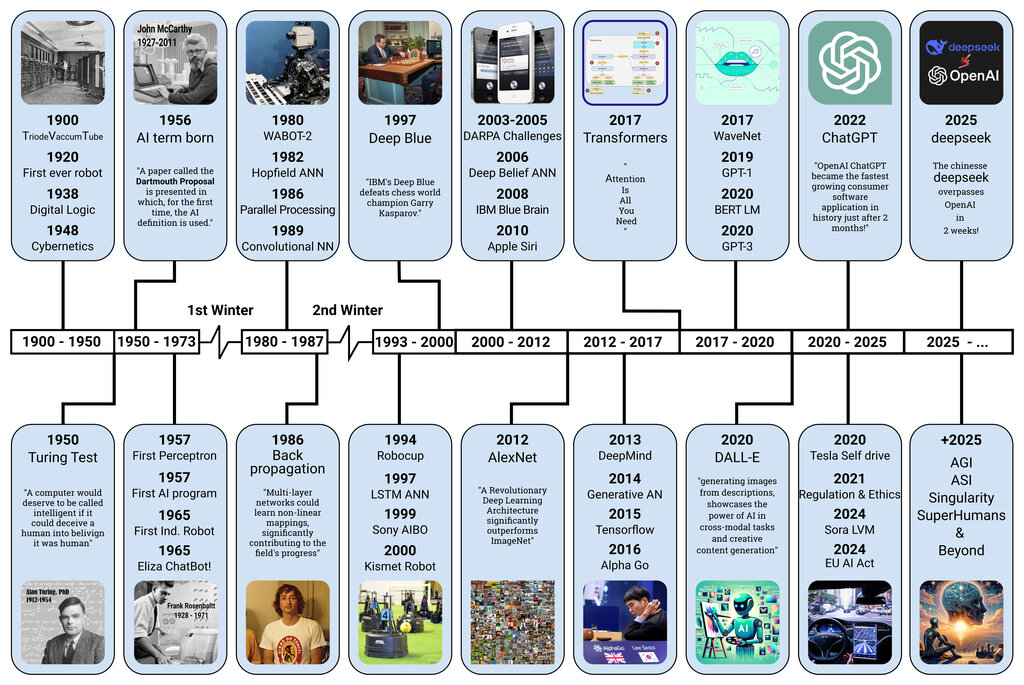
The idea of intelligent machines isn't new. It has roots in myths and fiction from centuries ago. But the scientific field of AI officially began in the mid-1950s. Early researchers were incredibly optimistic, believing machines with human-level intelligence were just a few decades away.
Progress was slower than expected. The field went through several periods known as "AI winters," when funding and interest dried up due to unfulfilled promises. However, two things changed the game: the availability of massive amounts of data (thanks to the internet) and huge increases in computing power. These breakthroughs fueled the AI revolution we see today.
The Building Blocks of AI
AI is a big umbrella term. Underneath it are several important subfields that power AI applications. Let's look at the most important ones you'll encounter.
Machine Learning is the engine of modern AI. It's a method of teaching computers to find patterns in data and make predictions without being explicitly programmed for that task.
Instead of writing step-by-step instructions, developers "train" a machine learning model by feeding it lots of data. An email spam filter is a classic example. It learns what spam looks like by analyzing thousands of examples of spam and non-spam emails. Over time, it gets better at flagging junk mail on its own.
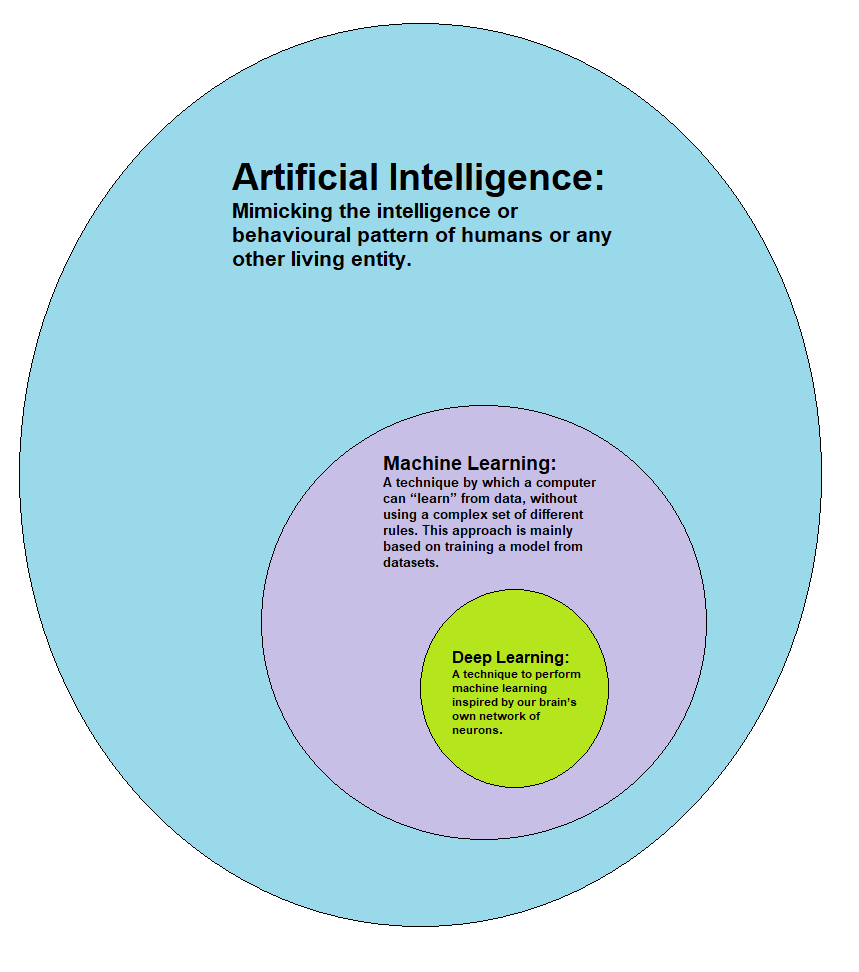
A powerful subset of machine learning is Deep Learning. It's inspired by the structure of the human brain, using interconnected layers of "neurons" to form what's called an artificial neural network. The "deep" in deep learning refers to having many layers in the network.
These deep networks are exceptionally good at finding very complex and subtle patterns in large datasets. This is the technology behind self-driving cars recognizing pedestrians and voice assistants understanding your commands.
Another key area is Natural Language Processing, or NLP. This is a field of AI focused on giving computers the ability to understand, interpret, and generate human language.
Every time you use a language translation app, ask a chatbot a question, or see your phone auto-correct a typo, you're interacting with NLP. It bridges the gap between human communication and computer understanding.
These concepts—Machine Learning, Deep Learning, and NLP—are the foundational pillars of the AI systems that are reshaping our world.
Ready to check your understanding of these core concepts?
What is the core difference between traditional programming and machine learning?
The term "deep" in Deep Learning refers to what?
Understanding these basic terms is the first step in seeing how AI works and what it's capable of.