AI for Financial Directors
Introduction to AI in Finance
What Is AI Anyway?
Artificial Intelligence, or AI, isn't about robots taking over the world. At its core, AI is the science of making machines that can think and learn like humans. It's about teaching computers to recognize patterns, make decisions, and understand language. The idea isn't new; thinkers have dreamed of intelligent machines for centuries. But it was only in the mid-20th century that the field of AI officially began, fueled by the invention of the computer.

Early AI was based on rules. Programmers would write lines and lines of code to tell a machine exactly what to do in every possible situation. Think of a simple chess program that knows all the rules and a few basic strategies. It works, but it's not very flexible. Today's AI is different. It learns on its own, adapting and improving from vast amounts of data.
The Building Blocks of AI
Modern AI is an umbrella term for several powerful technologies. The most important ones to know are Machine Learning, Deep Learning, and Natural Language Processing. Think of them as nested concepts: AI is the broad field, Machine Learning is a specific type of AI, and Deep Learning is a specialized type of Machine Learning.
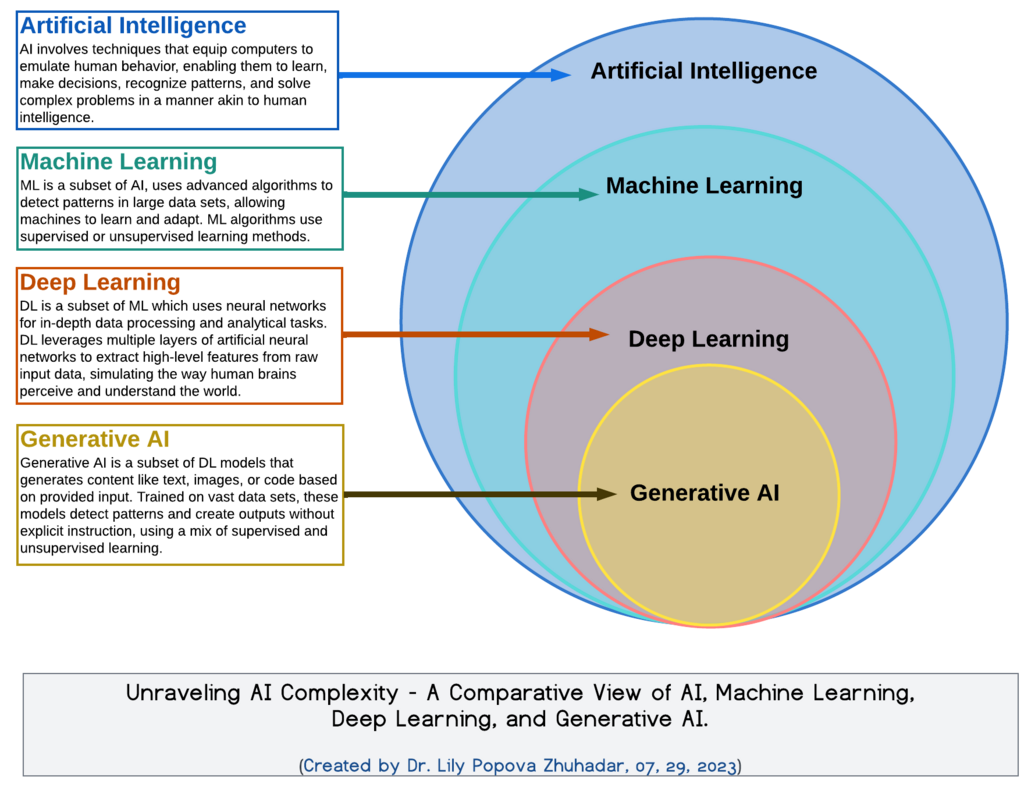
Let's break them down.
Machine Learning
noun
A type of AI that gives computers the ability to learn from data without being explicitly programmed. Instead of following a strict set of rules, the machine identifies patterns and makes predictions.
Deep Learning takes this a step further. It uses complex structures called neural networks, which are loosely inspired by the human brain. These networks have many layers, allowing them to learn from data in a much deeper, more nuanced way. This is the technology behind things like facial recognition and self-driving cars.
Natural Language Processing
noun
A field of AI that focuses on enabling computers to understand, interpret, and generate human language. It's the bridge between human communication and computer understanding.
AI Meets Finance
The financial industry runs on data. Stock prices, transaction records, market trends, customer information—it's a massive, constant flow of information. For humans, analyzing all of this is impossible. For AI, it's the perfect challenge. AI can sift through enormous datasets in seconds, spotting patterns and connections that would be invisible to the human eye.
Artificial intelligence (AI) is transforming financial planning by expanding access, lowering costs, and enabling dynamic, data-driven advice.
This ability to process and interpret data is revolutionizing the financial world. It's making processes faster, decisions smarter, and services more personalized. From banking and insurance to investing and personal finance, AI is changing how the industry operates at a fundamental level.
AI doesn't just make existing financial processes better; it creates entirely new possibilities for managing money and risk.
Benefits and Challenges
Like any powerful technology, implementing AI in finance comes with both huge advantages and significant hurdles. The potential benefits are clear: greater efficiency, reduced human error, and enhanced security. However, financial institutions also have to navigate the complexities of cost, regulation, and ethics.
| Benefit | Challenge |
|---|---|
| Speed & Efficiency | High Implementation Cost |
| Automates repetitive tasks, freeing up human experts for more complex work. | Building or buying AI systems requires a significant upfront investment. |
| Improved Accuracy | Data Privacy & Security |
| Reduces human error in data analysis and financial modeling. | Handling sensitive financial data with AI raises major security and privacy concerns. |
| Enhanced Fraud Detection | Regulatory Hurdles |
| Spots unusual patterns in real-time to prevent fraudulent transactions. | The financial industry is highly regulated, and AI must comply with complex rules. |
| Personalized Services | Risk of Bias |
| Analyzes customer data to offer tailored financial products and advice. | If an AI learns from biased data, it can make unfair or discriminatory decisions. |
Successfully adopting AI means balancing these factors. It requires not just technical expertise but also a strong ethical framework and a clear understanding of the risks involved.
Ready to test your knowledge? Let's see what you've learned about the fundamentals of AI in finance.
What is the core concept of Artificial Intelligence (AI)?
Which statement best describes the relationship between AI, Machine Learning, and Deep Learning?
Understanding these core ideas is the first step. By grasping what AI is, how it works, and its general impact on finance, you're prepared to explore the specific ways it's reshaping the industry.