AI for Everyday Improvement
Introduction to Artificial Intelligence
What Is Artificial Intelligence?
Artificial intelligence is about making machines smart. The goal is to create systems that can perform tasks that typically require human intelligence. This includes things like learning from experience, understanding language, recognizing objects, solving problems, and making decisions.
Think of it less like building a robot with a human brain and more like teaching a computer a specific skill. Just as you might learn to ride a bike or speak a new language, an AI learns to perform a task by processing large amounts of information and recognizing patterns within it.
Artificial Intelligence
noun
The theory and development of computer systems able to perform tasks that normally require human intelligence, such as visual perception, speech recognition, decision-making, and translation between languages.
The Two Main Flavors of AI
AI isn't a single, all-powerful thing. It exists on a spectrum, and today, all the AI we use falls into one specific category.
Artificial Narrow Intelligence (ANI), or Weak AI, is designed to perform a single, specific task. It operates within a pre-defined range and can't do anything beyond its programming. The voice assistant on your phone, the algorithm that recommends movies, and the software that detects spam in your email are all examples of narrow AI. They are incredibly good at their one job, but they can't suddenly decide to learn philosophy.
Artificial General Intelligence (AGI), or Strong AI, is the more futuristic concept. This is the type of AI you see in movies—a machine with the ability to understand, learn, and apply knowledge across a wide range of tasks at a human level. It would possess consciousness, self-awareness, and the ability to solve complex problems it wasn't specifically trained for. It's important to know that AGI does not currently exist.
| Feature | Narrow AI (ANI) | General AI (AGI) |
|---|---|---|
| Scope | Performs a specific task | Can perform any intellectual task a human can |
| State | Exists today | Theoretical, does not exist yet |
| Example | Facial recognition software | A self-aware robot from science fiction |
| Learning | Learns from data for its one task | Understands and learns across different domains |
A Quick Trip Through Time
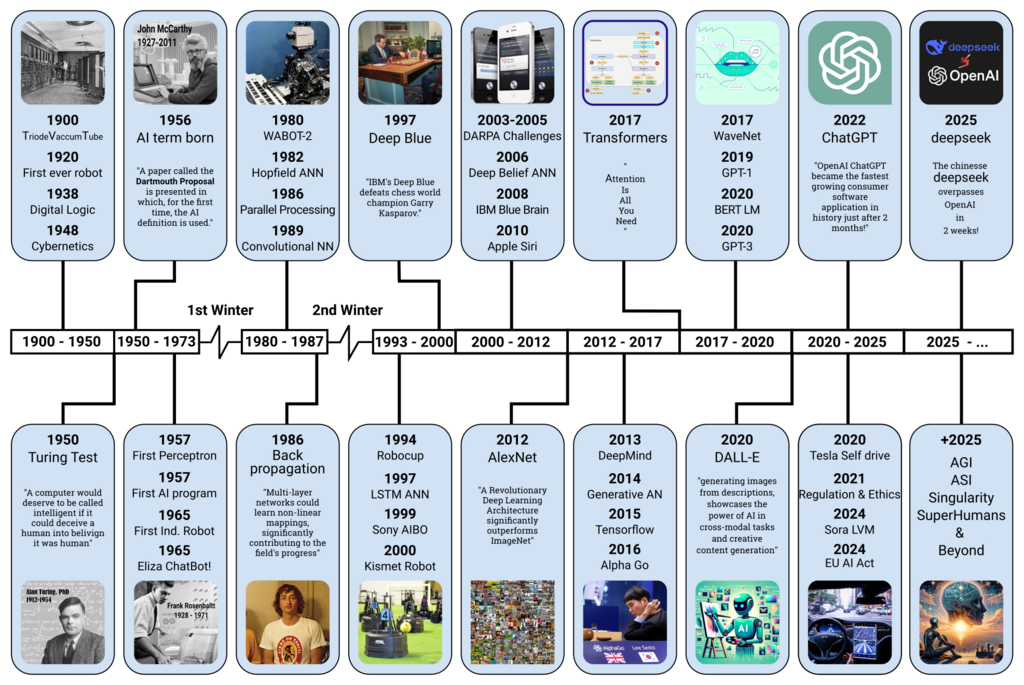
The idea of creating intelligent machines has been around for centuries, but the modern field of AI officially began in the summer of 1956 at a workshop at Dartmouth College. It was there that the term "artificial intelligence" was coined.
The journey since has had its ups and downs. There were periods of great excitement and funding, followed by "AI winters" when progress stalled and interest waned. The last couple of decades, however, have seen an explosion in AI development, largely thanks to two things: the availability of massive amounts of data and the development of powerful computers that can process it all.
The Big Questions AI Poses
As AI becomes more integrated into our lives, it raises important ethical questions that we need to address. These aren't just for scientists and engineers; they affect everyone.
One of the biggest concerns is bias. AI systems learn from data, and if that data reflects existing human biases, the AI will learn and even amplify them. For example, if a hiring AI is trained on historical data where managers favored male candidates, it might learn to discriminate against female applicants.
Privacy is another major issue. Many AI applications, from personalized advertising to facial recognition, rely on collecting and analyzing vast amounts of personal data. This raises questions about who owns that data, how it's used, and how it can be protected.
Then there's the question of accountability. When a self-driving car gets into an accident, who is responsible? The owner, the manufacturer, or the programmer who wrote the code? Establishing clear lines of responsibility for AI's actions is a complex challenge.
Developing AI responsibly means ensuring that these systems are fair, transparent, and accountable to the people they impact.
The societal impact of AI is profound. It's already transforming industries from healthcare, where it helps diagnose diseases, to finance, where it detects fraud. It has the potential to solve some of the world's biggest problems, but it also presents challenges, like the future of work and the potential for job displacement as machines automate more tasks. Navigating this future requires careful planning and a commitment to using AI for the benefit of all.
What is the primary goal of Artificial Intelligence?
How does Artificial General Intelligence (AGI) differ from the AI that exists today?