AI for Document Analysis
Introduction to AI in Document Analysis
From Piles of Paper to Actionable Insights
Every day, businesses and organizations create a staggering amount of information. It's stored in contracts, emails, reports, invoices, and customer feedback forms. Most of this information is unstructured, meaning it’s not neatly organized in a database. It's just text, like the words on this page.
For a long time, the only way to get value from these documents was for a person to read them. This is a slow, expensive, and often tedious process. AI-powered document analysis changes that. It's about teaching computers to read, understand, and process human language, allowing them to sift through mountains of documents in seconds.
Think of it as giving a computer the ability to comprehend text. It can identify key information, understand context, and organize data, all without human intervention.
This isn't just about finding keywords. Modern AI can grasp the nuances of language, much like a human assistant who can read a report and tell you what’s important. It transforms unstructured text into structured, usable data that can inform decisions.
AI's Core Abilities
AI isn't a single magic trick; it's a set of powerful capabilities that work together to make sense of documents. Three of the most important are information extraction, pattern recognition, and summarization.
Information Extraction
noun
The process of automatically identifying and pulling specific pieces of data from a document.
Instead of manually reading an invoice to find the total amount due, AI can pinpoint and extract that number instantly. It can pull a name from a resume, a contract renewal date from a legal agreement, or a patient ID from a medical record. This turns a block of text into clean, organized data fields.
| Field to Extract | Sample Text from Invoice | AI Output |
|---|---|---|
| Invoice Number | "Please reference invoice #INV-7892." | INV-7892 |
| Due Date | "Payment is due on October 31, 2024." | 2024-10-31 |
| Total Amount | "The total amount payable is $1,450.50." | 1450.50 |
Next is pattern recognition. This capability goes beyond a single document. AI can analyze thousands or even millions of documents to find trends, connections, and anomalies that would be impossible for a human to spot.
For example, a company could use AI to analyze customer support tickets. The AI might discover that 80% of complaints in the last month mention the term "slow loading time." This reveals a critical issue that needs immediate attention. In finance, AI can scan news articles and reports to detect market sentiment patterns related to a particular stock.
Finally, there's summarization. Some documents are incredibly long, like legal rulings or scientific papers. AI can read an entire document and generate a short, accurate summary containing the most important points.
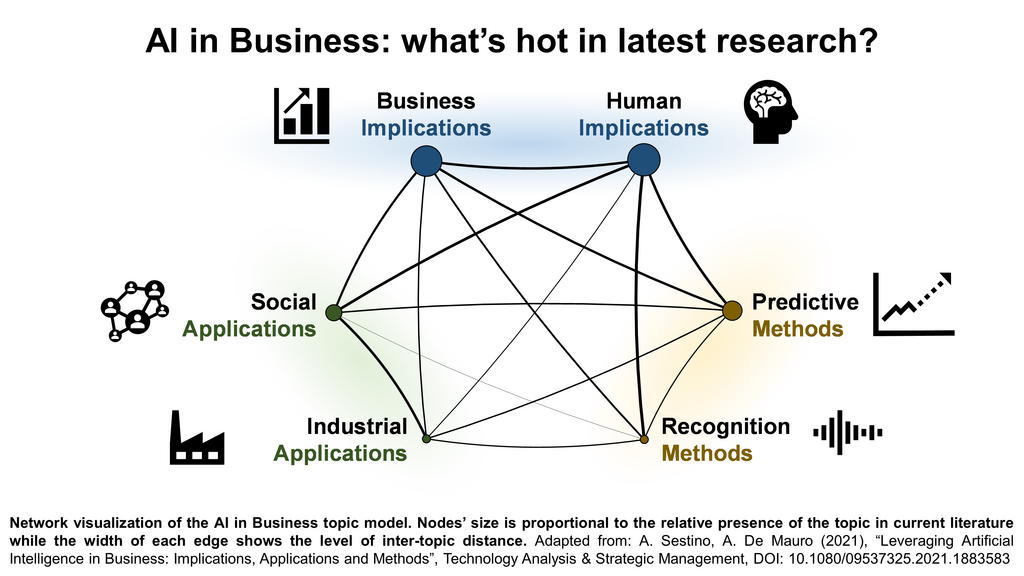
A time-saving solution provided by AI-based services includes digesting and summarizing large volumes of text, video or other data to drive your strategic planning process.
This helps people quickly grasp the essence of a document to decide if it's worth a deeper read. A lawyer could get the gist of a 100-page court filing in a minute, or a researcher could quickly understand the findings of a new study without reading it from start to finish.
Real-World Impact
The applications for AI in document analysis are broad and transformative. They touch nearly every industry.
Healthcare: Hospitals use AI to extract patient information from clinical notes, lab results, and doctors' letters. This helps create a complete patient history, improving diagnoses and treatment plans while reducing administrative work for medical staff.
Finance: Banks and investment firms automate the processing of loan applications, financial statements, and compliance documents. AI can quickly verify information, assess risk, and flag potential fraud, speeding up decisions and improving accuracy.
Legal: Law firms use AI to review thousands of documents for discovery in a lawsuit. The AI can identify relevant documents, redact sensitive information, and even analyze contracts to find non-standard clauses. This saves countless hours of manual review by paralegals and attorneys.
In each case, the goal is the same: to turn a flood of unstructured information into clear, actionable knowledge. By automating the low-level tasks of reading and sorting, AI frees up human experts to focus on higher-level strategy, analysis, and decision-making.
Ready to test your understanding? This quiz covers the key concepts of AI in document analysis.
What is the primary problem that AI-powered document analysis is designed to solve?
A bank uses AI to scan thousands of news articles to gauge public opinion about a particular stock. Which core AI capability is being used?
By handling the heavy lifting of document processing, AI provides a powerful toolkit for any organization looking to make better sense of its data.