AI for Developers A New Frontier
Introduction to AI and NLP
What is Artificial Intelligence?
Artificial Intelligence, or AI, is the science of making machines that can think and learn like humans. It's not a new idea. For decades, scientists and storytellers have imagined intelligent machines. The goal has always been to create systems that can reason, solve problems, perceive the world, and understand language.
Early AI focused on rules. Programmers would write specific instructions for every possible situation. Think of a simple chess program: if your opponent moves their pawn here, you move your knight there. This worked for limited problems, but it was brittle. If the machine faced a situation it wasn't programmed for, it would fail.
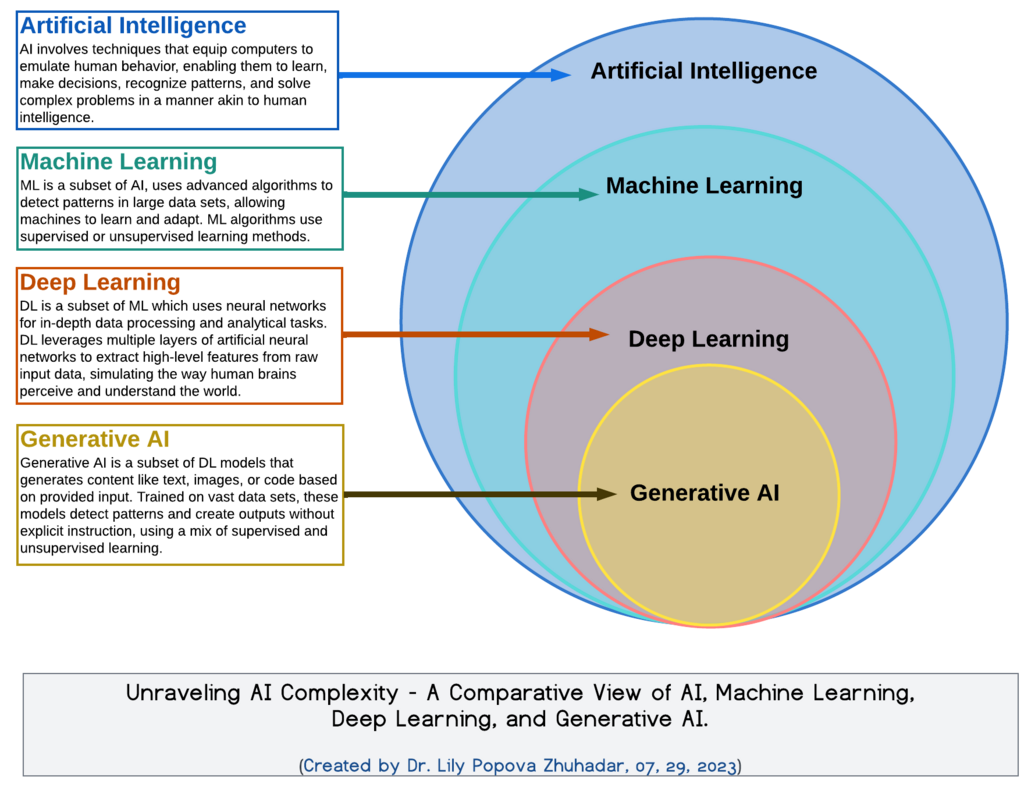
The big shift came with machine learning. Instead of giving machines explicit rules, we started feeding them vast amounts of data and letting them learn the patterns for themselves. This is how modern AI works, from recommending movies to identifying faces in photos. Machine learning is a subfield of AI, and it's the engine that powers most of the AI applications we use today.
Teaching Machines Language
One of the most complex challenges in AI is teaching machines to understand human language. This field is called Natural Language Processing, or NLP. Language is messy, full of ambiguity, slang, and context. A word can mean different things depending on how it's used. For example, "book" can be a noun (something you read) or a verb (to make a reservation).
Natural Language Processing (NLP) is a branch of AI that helps computers understand, interpret, and generate human language.
You use NLP every day. When your phone corrects a typo, suggests the next word in a text message, or translates a foreign menu, that's NLP at work. Early NLP systems were also rule-based, relying on grammar dictionaries and hand-coded rules. They could handle simple sentences but struggled with the nuance and complexity of real-world communication.
The Rise of Language Models
To overcome the limits of rule-based systems, researchers turned to machine learning. They developed language models—AI systems trained on massive amounts of text data. The core task of a language model is simple: predict the next word in a sequence.
Imagine the sentence, "The cat sat on the..." A language model analyzes the patterns it has learned from reading billions of sentences and calculates the most probable next word. In this case, it would likely predict "mat," "couch," or "floor." By mastering this simple-sounding task, language models develop a surprisingly deep understanding of grammar, facts, and even reasoning.
The first language models were statistical. They looked at how often words appeared next to each other. More advanced models use neural networks, which are complex systems inspired by the human brain. These models can capture much more subtle and long-range patterns in language, leading to the powerful AI we see today.
| Decade | Key Development |
|---|---|
| 1950s | The Turing Test is proposed as a way to measure machine intelligence. Early experiments in machine translation begin. |
| 1960s | ELIZA, one of the first chatbots, is created. It uses simple pattern matching to simulate conversation. |
| 1990s | Statistical methods become dominant in NLP, allowing models to learn from data rather than relying solely on hand-written rules. |
| 2010s | Deep learning and neural networks revolutionize NLP, leading to significant improvements in tasks like translation and text generation. |
These milestones built on each other, moving from simple, rigid rules to flexible, data-driven learning. This evolution paved the way for the powerful language models that are transforming how we interact with technology.