AI for Commercial Real Estate Investing
Introduction to Artificial Intelligence
What Is Artificial Intelligence?
Artificial intelligence, or AI, is a field of computer science focused on creating systems that can perform tasks that normally require human intelligence. Think of it as teaching a machine to learn, reason, and solve problems. This could be anything from understanding spoken language to identifying objects in a photo or playing a complex strategy game.
At its core, AI is about building smart machines that can mimic human cognitive functions. The goal is to create technology that can operate intelligently and independently.
These systems aren't just following pre-written instructions like a simple calculator. Instead, they are designed to recognize patterns, make predictions, and adapt based on new information. This ability to learn from data is what makes AI so powerful.
A Brief History
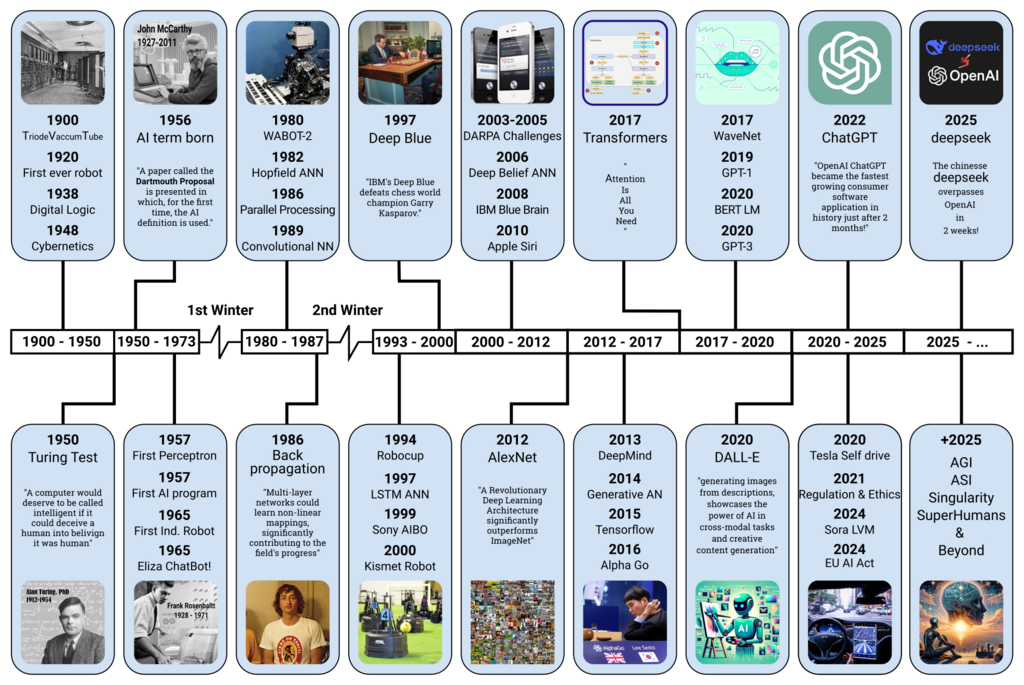
The dream of creating intelligent machines is old, but the formal field of AI research began in the 1950s. Early researchers were optimistic, believing that a machine with human-like intelligence was just a few decades away. However, progress was slower than expected due to limitations in computing power and the sheer complexity of the human brain.
The field went through periods of high funding and excitement, followed by so-called "AI winters" when progress stalled and investment dried up. Everything changed in recent decades. The explosion of big data and massive increases in computing power finally allowed AI theories to be put into practice, leading to the rapid advancements we see today.
Two Main Types of AI
When people talk about AI, they are usually referring to one of two broad categories. Understanding the difference is key.
Narrow AI
noun
Also known as Weak AI, this type of artificial intelligence is designed and trained for one specific task. It operates within a limited, pre-defined range.
Virtually all AI in use today is Narrow AI. Your phone's voice assistant, the recommendation engine that suggests movies, and the software that detects fraudulent credit card transactions are all examples. They are incredibly good at their specific jobs, but they can't step outside of them. You can't ask your spam filter to predict the stock market.
General AI
noun
Also known as Strong AI, this is a theoretical form of artificial intelligence that would possess human-like intelligence. It could understand, learn, and apply its knowledge to solve any problem.
Artificial General Intelligence (AGI) is the stuff of science fiction for now. It represents the goal of creating a machine with a consciousness and problem-solving ability indistinguishable from a human's. While researchers are actively working toward it, AGI does not yet exist.
How AI Learns
The most common way AI systems learn is through a process called machine learning. Instead of being programmed with explicit rules for every possible situation, the system is fed vast amounts of data. This is called training data.
The system's algorithm analyzes the training data to find patterns and relationships. For example, to train an AI to identify pictures of cats, you would show it millions of images, some labeled "cat" and some labeled "not a cat." Over time, the AI builds its own understanding—a model—of what features constitute a cat.
The more high-quality data an AI model is trained on, the more accurate and reliable its predictions become.
Once the model is trained, it can be given new, unseen data and make predictions. It can look at a new picture and determine, based on the patterns it learned, whether it's a cat. This core principle—learning from data rather than being explicitly programmed—is what allows AI to tackle complex, real-world problems.
AI Across Industries
AI is not just a futuristic concept; it's a practical tool that is already transforming countless industries by improving efficiency, providing new insights, and automating complex tasks. Here are just a few examples of how it's being applied today.
| Industry | Common AI Application |
|---|---|
| Healthcare | Analyzing medical images (like X-rays) to detect diseases earlier and more accurately. |
| Finance | Detecting fraudulent transactions in real-time and providing personalized financial advice. |
| Retail | Offering personalized product recommendations and optimizing inventory management. |
| Transportation | Developing self-driving cars and optimizing traffic flow in smart cities. |
| Entertainment | Powering recommendation algorithms for streaming services and creating special effects. |
This foundational understanding of what AI is, its history, and its general capabilities sets the stage for exploring its more specific applications.
What is the primary goal of Artificial Intelligence as a field of computer science?
In the history of AI research, what are the periods of reduced funding and stalled progress known as?