AI for Business Growth
Introduction to AI in Business
What is AI, Really?
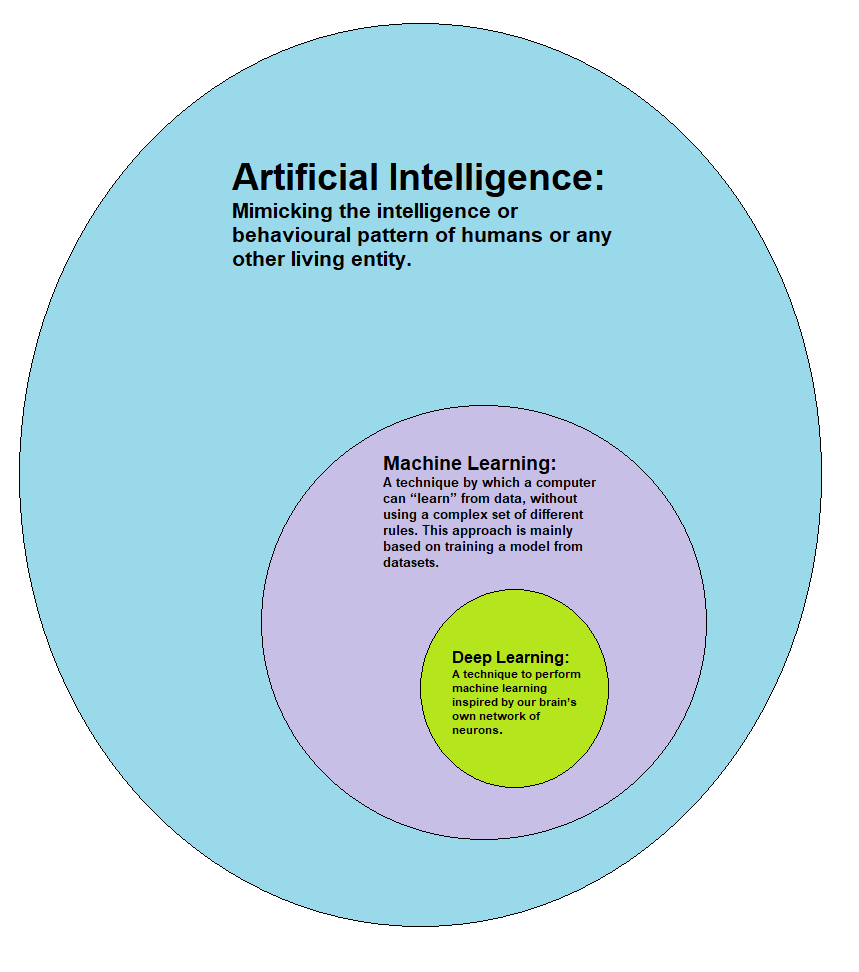
Artificial Intelligence is the science of making machines that can think like humans. The goal is to create systems that can learn, reason, solve problems, and understand language. Think of it less as creating a synthetic brain and more as building tools that can perform specific intelligent tasks, often much faster and more accurately than a person could.
The idea isn't new. Philosophers have wondered about machine intelligence for centuries. But modern AI truly began in the 1950s. Early researchers were optimistic, believing they could replicate human intelligence within a few decades. The reality proved much harder. Progress came in waves, with periods of exciting breakthroughs followed by “AI winters” where funding and interest dried up. Today, thanks to massive amounts of data and powerful computers, AI is more capable than ever and is reshaping industries.
The Building Blocks
AI isn't a single technology; it's a broad field with many sub-disciplines. Two of the most important components for business are Machine Learning and Natural Language Processing.
Machine Learning (ML) is the engine of modern AI. Instead of being programmed with explicit rules, an ML system learns patterns directly from data. A spam filter is a classic example. It isn’t told how to spot spam. Instead, it analyzes thousands of emails you've marked as spam and learns the common features, like certain words or sender addresses.
Natural Language Processing (NLP) allows machines to understand, interpret, and generate human language. It's the technology behind voice assistants like Siri and Alexa, translation apps, and the chatbots that answer your questions on websites. For businesses, NLP is key to analyzing customer feedback, automating support, and making sense of unstructured text data like reports and social media posts.
AI in the Wild
When we talk about AI today, we're almost always talking about Artificial Narrow Intelligence (ANI). This is AI designed to perform a single, specific task. The AI that recommends movies on Netflix can't drive a car. The AI that helps doctors spot tumors in X-rays can't trade stocks. It’s highly specialized and often superhumanly good at its one job.
The other type, Artificial General Intelligence (AGI), is the kind you see in science fiction. This is a hypothetical AI with the ability to understand, learn, and apply its intelligence to solve any problem, just like a human. We are still a long way from creating AGI.
AI is no longer a futuristic concept—it's a practical tool that allows businesses to analyze vast amounts of data and deliver tailored experiences at scale.
For now, the focus is on applying narrow AI to solve real business problems. Companies use it to optimize their supply chains, predict which customers might leave, personalize marketing campaigns, and detect fraudulent transactions. E-commerce giant Amazon uses AI extensively in its warehouses to manage inventory and route packages, dramatically increasing efficiency. By analyzing past sales data, it also predicts future demand for products, ensuring they are stocked in the right locations.
Another example is in finance. Banks use machine learning algorithms to assess credit risk far more accurately than traditional models. These systems analyze thousands of data points to determine the likelihood of a borrower defaulting on a loan, leading to better lending decisions.
Ready to check your understanding?
What is the primary goal of Artificial Intelligence as described in the text?
The type of AI that can understand, learn, and apply its intelligence to solve any problem, much like a human, is known as:
By understanding these core concepts, you're better equipped to see how AI can create value, not just as a piece of technology, but as a strategic tool for business growth.