AI for 2048
Introduction to 2048 and Game AI
Welcome to 2048
The game 2048 is simple to learn but difficult to master. It's played on a 4x4 grid. The goal is to slide numbered tiles around, combining them to create a tile with the number 2048.
You can slide all the tiles up, down, left, or right with a single swipe. When two tiles with the same number touch, they merge into one tile with their sum. For example, two '2' tiles become a '4' tile, two '4's become an '8', and so on.
2 + 2 = 4 4 + 4 = 8 8 + 8 = 16 ...
After every swipe, a new tile, either a '2' or a '4', appears in a random empty spot on the board. The game ends in one of two ways. You win if you create the 2048 tile. You lose if the grid fills up and you can no longer make any moves.
Teaching a Computer to Play
Now, how would you teach a computer to play 2048? This is the central question of game AI. An AI, or 'agent', needs to analyze the board and decide on the best move to make. This isn't just for complex games like chess or Go. Simple-looking puzzle games like 2048 present their own unique challenges, especially because of the random element of new tiles appearing.
Game AI has a rich history. In 1997, IBM's Deep Blue defeated world chess champion Garry Kasparov. More recently, Google DeepMind's AlphaGo beat the world's top Go player, Lee Sedol. These events showed that computers could master games that require deep strategy and intuition.
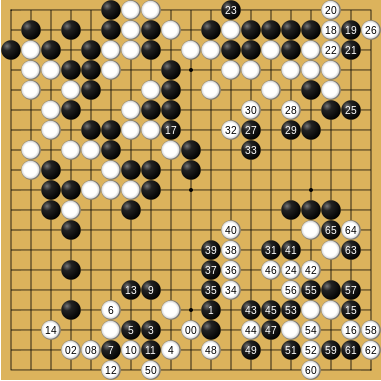
The core task is always the same: create an agent that can perceive its environment (the state of the game board), process that information, and choose an action (which way to swipe) to achieve its goal. For 2048, the goal is to reach the highest tile possible while keeping the board open for future moves.
The AI for 2048 must balance short-term gains (merging tiles) with a long-term strategy (avoiding a gridlock).
2048 is a perfect environment for training an AI agent. It has a clearly defined goal, a small set of possible actions, and an element of chance. This combination makes it an interesting puzzle not just for humans, but for machines as well. The agent must learn to think ahead, considering how its current move will affect the board and what random tiles might appear next.
What's Next
So, how does an AI make a decision? It needs a way to evaluate the board and score the potential outcomes of each possible move. Is it better to merge two '128' tiles, or to arrange smaller tiles in a corner? Answering that question is the key to building an effective 2048-playing agent.
What is the primary goal for a player or an AI agent in the game 2048?
What happens immediately after a player makes a valid swipe in 2048?
Now that we've covered the basics of the game and how AI approaches it, we're ready to explore the specific algorithms that can turn these ideas into a working program.