AI Explained
Introduction to Artificial Intelligence
What Is Artificial Intelligence?
Artificial intelligence isn't just about robots from science fiction. At its heart, AI is a field of computer science dedicated to creating machines that can perform tasks that typically require human intelligence. This includes things like learning from experience, solving problems, understanding language, and recognizing patterns.
Artificial Intelligence
noun
The theory and development of computer systems able to perform tasks that normally require human intelligence, such as visual perception, speech recognition, decision-making, and translation between languages.
Think about how you recognize a friend's face in a crowd or understand the meaning of a sentence. These tasks seem effortless to us, but they involve complex processing. The goal of AI is to replicate these abilities in machines. This doesn't mean creating a machine that is a human, but rather one that can intelligently assist with human tasks.
AI systems are often categorized into two types: Narrow AI, which is designed for a specific task (like playing chess or identifying spam emails), and General AI, a more theoretical form that would possess human-like intelligence across a wide range of tasks.
A Quick Trip Through Time
The idea of intelligent machines has been around for centuries, but the formal study of AI began in the mid-20th century. The field was officially born at a 1956 workshop at Dartmouth College, where the term "artificial intelligence" was coined. Early researchers were incredibly optimistic, believing that a machine as intelligent as a human could be built within a generation.
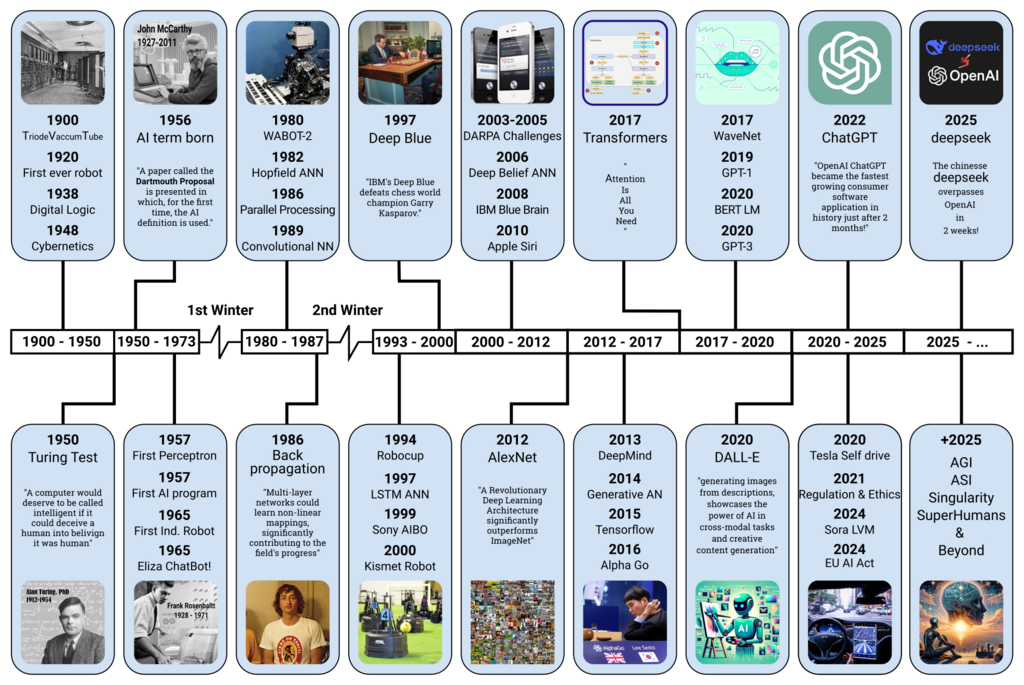
Progress was slower than expected. The initial excitement was followed by periods of reduced funding and interest, known as "AI winters." Limited computing power and data made it difficult to turn theories into reality.
However, the 21st century brought a massive resurgence. The explosion of big data and significant increases in computing power allowed machine learning, a subset of AI, to flourish. This led to breakthroughs in areas like image recognition and natural language processing, powering the AI tools we see today.
AI in the Real World
Today, AI is no longer a futuristic concept; it's a part of our daily lives. Its applications span nearly every industry, making processes more efficient, insightful, and automated.
- Healthcare: AI helps doctors diagnose diseases earlier and more accurately by analyzing medical images like X-rays and MRIs. It also powers personalized treatment plans based on a patient's genetic makeup.
- Finance: Banks use AI to detect fraudulent transactions in real-time and assess credit risk more effectively. Algorithmic trading, where AI makes high-speed trading decisions, is also common.
- Entertainment: Recommendation engines on platforms like Netflix and Spotify use AI to learn your preferences and suggest content you'll likely enjoy.
- Transportation: AI is the brain behind self-driving cars, enabling them to perceive their environment and navigate safely. It's also used in logistics to optimize delivery routes, saving time and fuel.
From navigating with GPS to asking a virtual assistant about the weather, AI is working behind the scenes. It's a powerful tool that is fundamentally changing how we interact with technology and the world around us.
What is the core goal of artificial intelligence?
The term "artificial intelligence" was first coined at a 1956 workshop held at which institution?