AI Explained for Everyday Users
Introduction to Artificial Intelligence
What Is Artificial Intelligence?
At its core, artificial intelligence is about creating machines that can think, learn, and solve problems like humans. Instead of being explicitly programmed for every single task, an AI system is designed to recognize patterns, make decisions, and adapt.
Think of it like teaching a computer a new skill. With traditional programming, you'd write a detailed, step-by-step instruction manual. For an AI, you might show it thousands of examples and let it figure out the rules for itself. This ability to learn from data is what makes modern AI so powerful.
Artificial Intelligence
noun
A field of computer science dedicated to creating systems capable of performing tasks that typically require human intelligence, such as visual perception, speech recognition, decision-making, and translation.
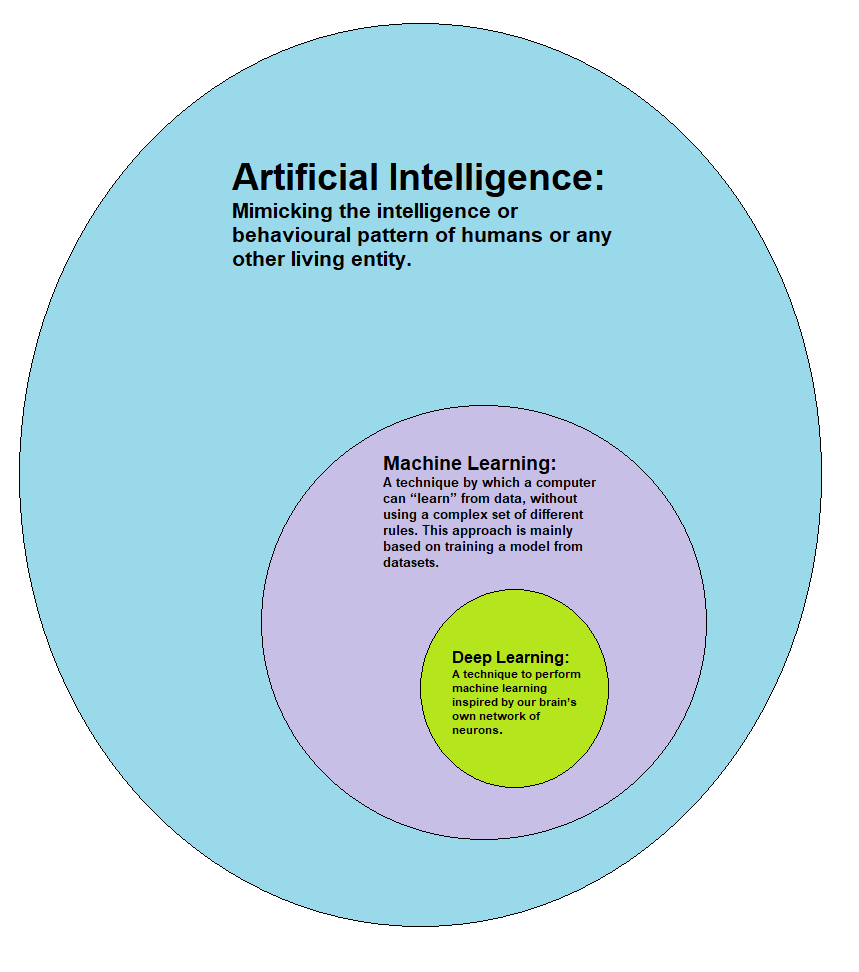
AI isn't a single technology but a broad field that includes many subfields. Machine learning and deep learning are two of the most important ones. They represent the engine that allows AI to move from simple, rule-based systems to the dynamic, predictive tools we see today.
A Brief History of AI
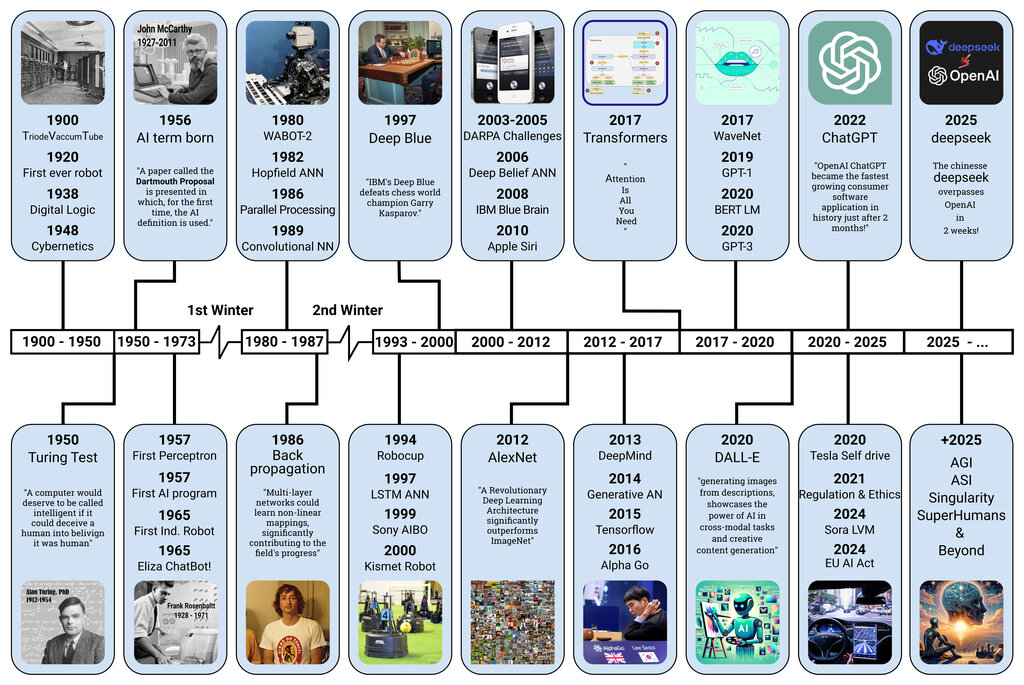
The idea of intelligent machines has been around for centuries, but the formal field of AI research began in the 1950s. A key moment was the 1956 Dartmouth Workshop, where the term "artificial intelligence" was officially coined. Early researchers were optimistic, believing that a machine with human-like intelligence was just a few decades away.
This early enthusiasm was met with major hurdles. The limited computing power of the time and the immense complexity of human cognition led to periods known as "AI winters." During these years, funding dried up and progress slowed. Early AI systems were mostly "rule-based," meaning they relied on experts to manually write rules for them to follow. They were effective for specific tasks but brittle; they couldn't handle new situations they weren't programmed for.
The major shift came with the rise of machine learning in the 1980s and 90s, powered by bigger datasets and faster computers. Instead of being fed rules, systems could now learn from data.
The last two decades have seen an explosion in AI capabilities, largely thanks to deep learning—a technique that uses complex, multi-layered networks inspired by the human brain. This has unlocked breakthroughs in everything from image recognition to natural language understanding.
AI in Your Daily Life
You probably interact with AI every day without realizing it. It's the silent partner that powers many of the services you rely on. When your email provider automatically filters out spam, that's AI at work. When a streaming service recommends a new show you might like, it's using AI to analyze your viewing habits.
Beyond personal convenience, AI is transforming entire industries. In healthcare, it helps doctors detect diseases like cancer earlier and more accurately from medical scans. In finance, it identifies fraudulent transactions in real time, protecting consumers and businesses. Automakers are using AI to develop self-driving cars that could make our roads safer and more efficient.
| Industry | AI Application |
|---|---|
| Retail | Personalized product recommendations |
| Transportation | Route optimization in navigation apps |
| Entertainment | Content suggestions on streaming platforms |
| Healthcare | Analysis of medical images (X-rays, MRIs) |
| Finance | Fraud detection and credit scoring |
| Agriculture | Crop monitoring and yield prediction |
The Bigger Picture
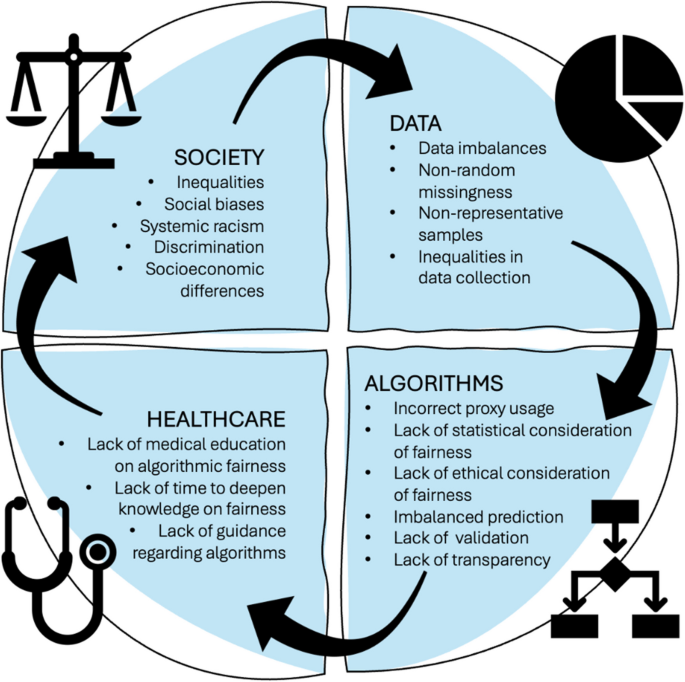
As AI becomes more integrated into our lives, it raises important ethical and societal questions. One of the biggest concerns is bias. If an AI system is trained on biased data, it will produce biased results. For example, a hiring tool trained on historical data from a male-dominated industry might unfairly penalize female candidates.
Ensuring fairness, transparency, and accountability in AI systems is a critical challenge. We need to be able to understand why an AI made a particular decision, especially in high-stakes areas like criminal justice or medical diagnoses.
There are also broader societal impacts to consider, like the future of work and the potential for job displacement as AI automates more tasks. Navigating this transition requires careful planning and a focus on education and retraining.
The goal is to develop AI that is not only powerful but also safe, fair, and beneficial for everyone. This involves collaboration between technologists, policymakers, ethicists, and the public to create frameworks and regulations that guide AI's responsible development.
Let's test your understanding of these core AI concepts.
What is the primary difference between an AI system and a traditionally programmed system?
What was a significant outcome of the 1956 Dartmouth Workshop?
You've now got a solid foundation in what AI is, where it came from, and why it matters. By understanding these fundamentals, you're better equipped to navigate the changes it will bring to our world.