AI Essentials for E-commerce Professionals
Introduction to AI
What Is Artificial Intelligence?
At its core, artificial intelligence is about creating machines that can perform tasks that typically require human intelligence. This isn't just about robots that look like us; it's about software that can reason, learn, and adapt.
Artificial Intelligence
noun
A field of computer science dedicated to creating systems capable of performing tasks that normally require human intelligence, such as visual perception, speech recognition, decision-making, and translation between languages.
Think about how you learn. You take in information from the world, process it, identify patterns, and make decisions. AI systems are designed to do something similar, just with data.
This introduction to this special issue discusses artificial intelligence (AI), commonly defined as “a system’s ability to interpret external data correctly, to learn from such data, and to use those learnings to achieve specific goals and tasks through flexible adaptation.”
An AI system has a few key parts. It needs data to learn from, algorithms (a set of rules or instructions) to process that data, and a way to apply what it has learned to make predictions or take actions. A simple way to visualize this is a loop: data feeds the model, the model makes a prediction, and the outcome of that prediction can become new data for future learning.
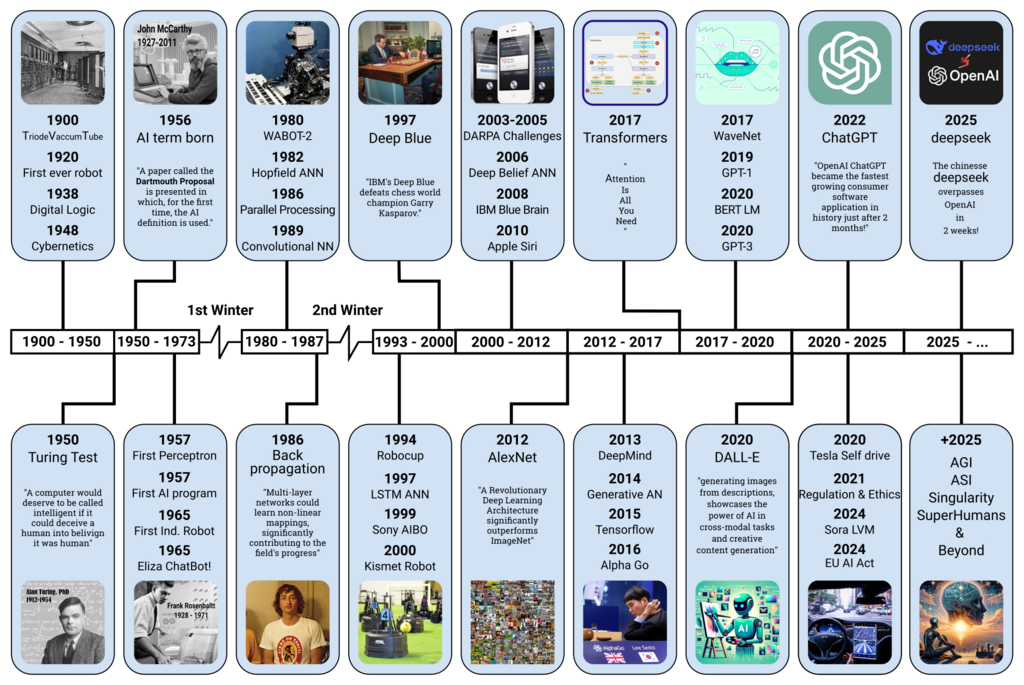
A Quick Trip Through Time
The idea of intelligent machines has been around for centuries, but the actual field of AI took root in the 1950s. Early researchers were optimistic, believing they could create human-like intelligence in a matter of decades. This initial excitement was followed by periods known as "AI winters," when funding dried up and progress slowed.
Things changed dramatically in the 21st century. The explosion of the internet created massive amounts of data, and advancements in computer hardware made it possible to process that data faster than ever before. This combination of big data and powerful computing reignited the field, leading to the AI boom we're experiencing today.
Narrow vs General AI
It's important to understand that not all AI is the same. The vast majority of AI in the world today is what we call Artificial Narrow Intelligence (ANI), or Weak AI. This type of AI is designed to perform a single task very well.
Your smart assistant playing a song, a recommendation engine suggesting a movie, or an app that translates languages are all examples of Narrow AI. They excel at their specific job but can't operate outside of it.
The other type is Artificial General Intelligence (AGI), or Strong AI. This is the more sci-fi concept of an AI that possesses the ability to understand, learn, and apply its intelligence to solve any problem, much like a human being. AGI doesn't exist yet; it remains a long-term goal for researchers.
For now, every AI application you interact with is a form of Narrow AI.
| Feature | Narrow AI (ANI) | General AI (AGI) |
|---|---|---|
| Scope | Performs a specific, single task | Can handle any intellectual task a human can |
| Learning | Learns from data relevant to its task | Can learn and transfer knowledge across domains |
| Example | Facial recognition, spam filters | A hypothetical, self-aware machine |
| Status | Widely used today | Theoretical, not yet achieved |
AI in Action
AI is no longer a futuristic concept; it's a practical tool transforming industries from healthcare to finance. One of the most visible impacts is in e-commerce, where AI has completely reshaped the online shopping experience.
Online stores use AI to personalize your shopping trip from the moment you land on their site. Recommendation engines analyze your browsing history, past purchases, and what similar customers have bought to suggest products you're likely to enjoy. This creates a more relevant and engaging experience for the customer.
AI also powers features like chatbots for instant customer service, fraud detection systems to secure transactions, and even inventory management to ensure products are in stock. When you search for an item, AI-driven algorithms work to understand your query—even if it's vague—and show you the most relevant results. These systems continuously learn and improve, making online shopping smarter and more efficient.
Ready to check your understanding? Let's see what you've learned about the fundamentals of AI.
What is the primary goal of artificial intelligence?
The type of AI that can perform a wide variety of tasks at a human-like level of intelligence, but which does not yet exist, is known as:
Understanding these basic concepts is the first step. You now have a framework for what AI is, where it came from, and how it's already affecting the world around you.