AI Essentials
Introduction to AI
What Is Artificial Intelligence?
Artificial intelligence, or AI, is the science of making machines that can think like humans. The goal is to create systems that can learn from experience, understand complex ideas, recognize patterns, and solve problems without being explicitly programmed for every single task.
Think of it this way: You don't tell a self-driving car exactly when to turn the wheel or press the brake. Instead, you train it on vast amounts of driving data, and it learns the rules of the road on its own.
Artificial Intelligence
noun
A field of computer science dedicated to creating systems that can perform tasks that typically require human intelligence.
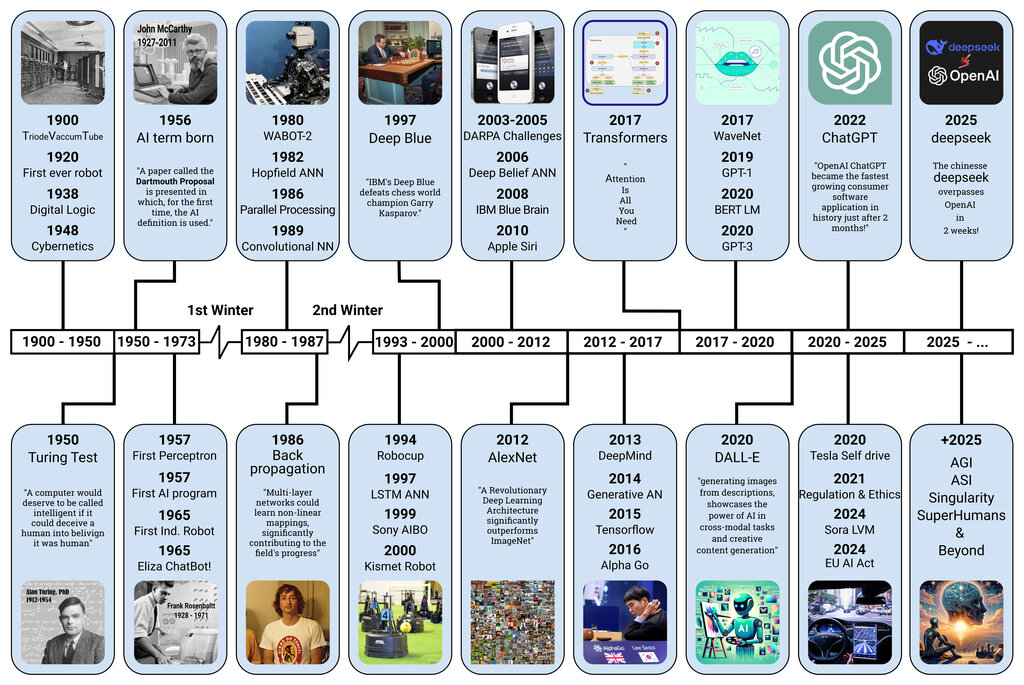
The idea of intelligent machines has been around for centuries, but the modern field of AI truly began in the 1950s. Early researchers were optimistic, believing they could create human-level intelligence within a few decades. The reality was much more complex.
Progress happened in fits and starts. Periods of intense funding and excitement, known as "AI summers," were often followed by "AI winters," when progress stalled and funding dried up. But with the recent explosion in computing power and the availability of massive datasets, AI has entered a new golden age.
The Flavors of AI
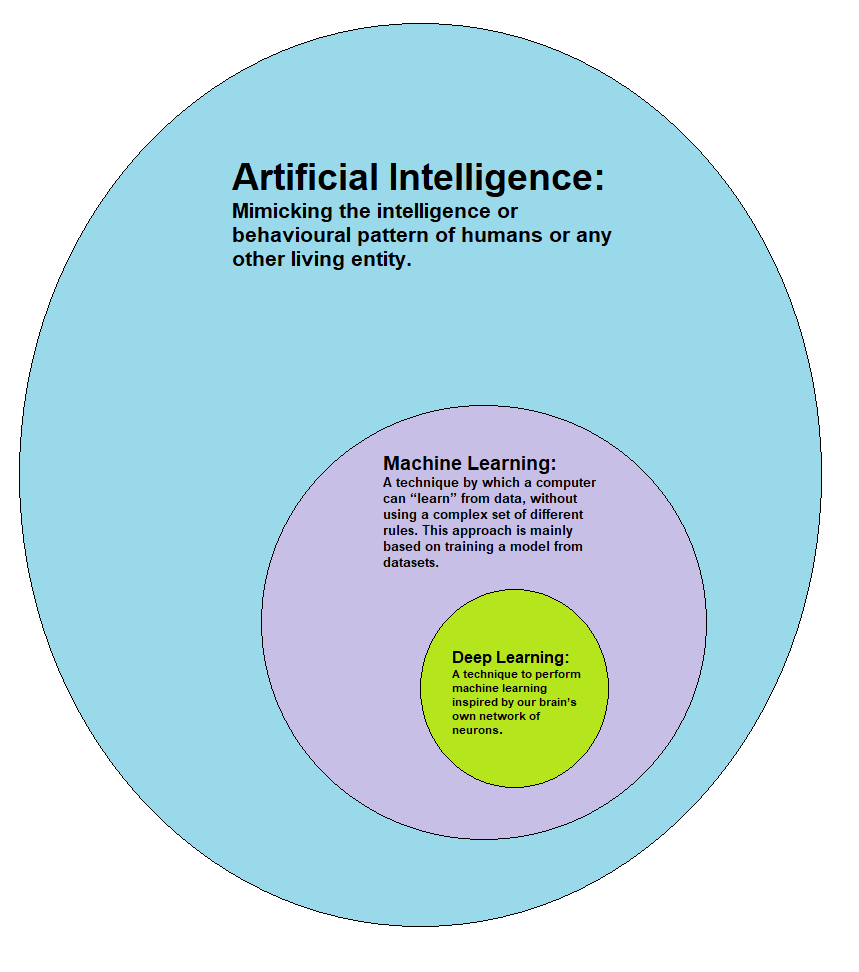
AI isn't a single technology. It's a broad umbrella that covers several specialized subfields, each focused on a different aspect of intelligence.
Machine Learning (ML) is the most common type of AI today. It's the process of teaching a computer to learn from data without being explicitly programmed. A spam filter that learns to recognize junk email is a classic example of machine learning.
Natural Language Processing (NLP) focuses on the interaction between computers and human language. When you ask a voice assistant for the weather or use a translation app, you're using NLP. The goal is to enable machines to understand, interpret, and generate human language.
Computer Vision gives machines the ability to see and interpret the visual world. This is the technology behind facial recognition on your phone, self-checkout systems that identify your groceries, and systems that diagnose diseases from medical scans.
Robotics is a field that combines AI with engineering to build and operate robots. These aren't just humanoid robots from movies; they include everything from robotic arms in factories to vacuum cleaners that navigate your living room.
How AI Thinks
Regardless of the subfield, most AI systems share three core characteristics that mimic human cognition: learning, reasoning, and self-correction.
| Characteristic | Description | Real-World Example |
|---|---|---|
| Learning | Acquiring data and creating rules (algorithms) to turn that data into actionable information. | A movie streaming service analyzes your viewing history to learn your preferences. |
| Reasoning | Using the established rules to reach approximate or definite conclusions. | Based on your preferences, the service recommends a new movie it predicts you will enjoy. |
| Self-correction | Continuously refining algorithms to ensure the most accurate results possible. | If you don't watch the recommended movie, the service adjusts its algorithm for future suggestions. |
This cycle of learning, reasoning, and correcting allows AI systems to adapt and improve over time. It's why your music recommendations get better the more you listen, and why navigation apps can find faster routes based on real-time traffic.
Why AI Matters
Artificial intelligence is more than just a fascinating area of research. It's a powerful tool that is transforming nearly every industry, from healthcare and finance to entertainment and transportation. By automating complex tasks, analyzing huge datasets, and providing new insights, AI is helping us solve some of the world's most challenging problems.
Understanding the basics of AI is no longer just for computer scientists. It's becoming essential for navigating the modern world and understanding the technologies that shape our lives.
What is the primary goal of artificial intelligence?
The history of AI has been characterized by periods of high enthusiasm and funding followed by periods of disappointment and reduced investment. What are these cycles commonly called?