AI Engineering Mastery
Introduction to AI
What Is Artificial Intelligence?
Artificial intelligence (AI) is the science of making machines smart. The goal is to create computer systems that can perform tasks that typically require human intelligence, like learning, reasoning, problem-solving, and understanding language.
Think of it this way: instead of programming a computer with explicit, step-by-step instructions for every single task, AI allows a computer to learn from experience and adapt to new inputs on its own.
Artificial Intelligence
noun
A branch of computer science dealing with the simulation of intelligent behavior in computers.
A Brief History
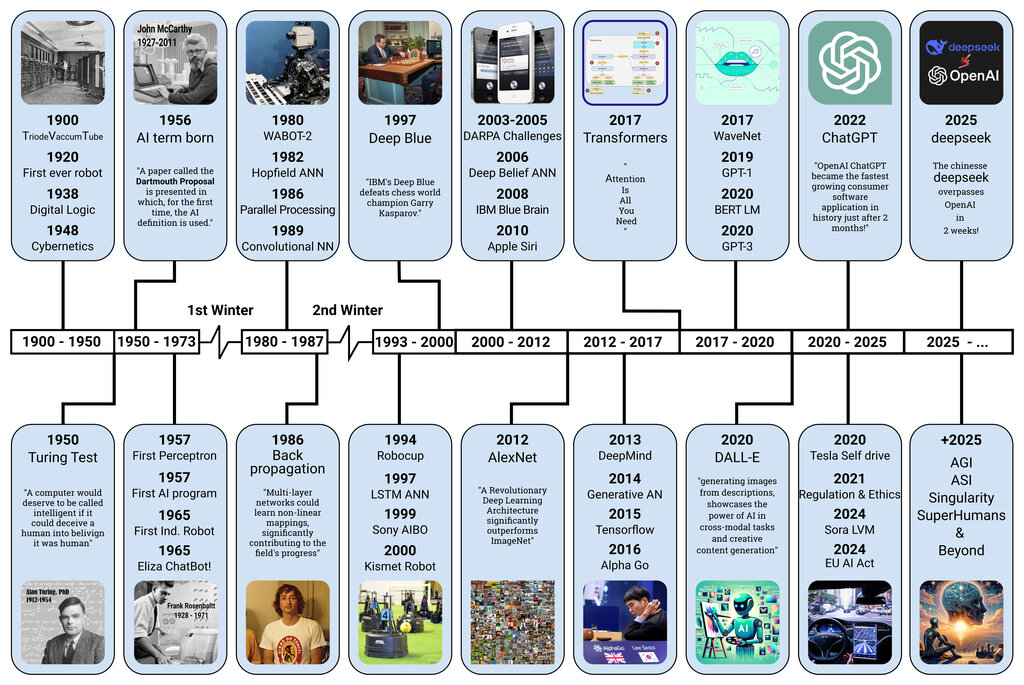
The idea of intelligent machines has been around for centuries, but the modern field of AI began in the 1950s. A pivotal moment was the Dartmouth Workshop in 1956, where the term "artificial intelligence" was officially coined. Early researchers were optimistic, creating programs that could solve algebra problems and prove theorems.
However, progress slowed in the 1970s and 80s. The limited computing power and data at the time couldn't support the complex ideas researchers had. This period is often called the "AI winter" because funding and interest dried up.
Things started to change in the 1990s and 2000s with the rise of the internet and more powerful computers. Suddenly, there was a massive amount of data to train AI systems and the hardware to process it. This led to a resurgence, particularly in a subfield called machine learning.
The AI Family Tree
AI is a broad field with many different branches. You've likely heard terms like machine learning and deep learning used interchangeably with AI, but they have distinct meanings. The relationship is hierarchical, with each term representing a subset of the one before it.
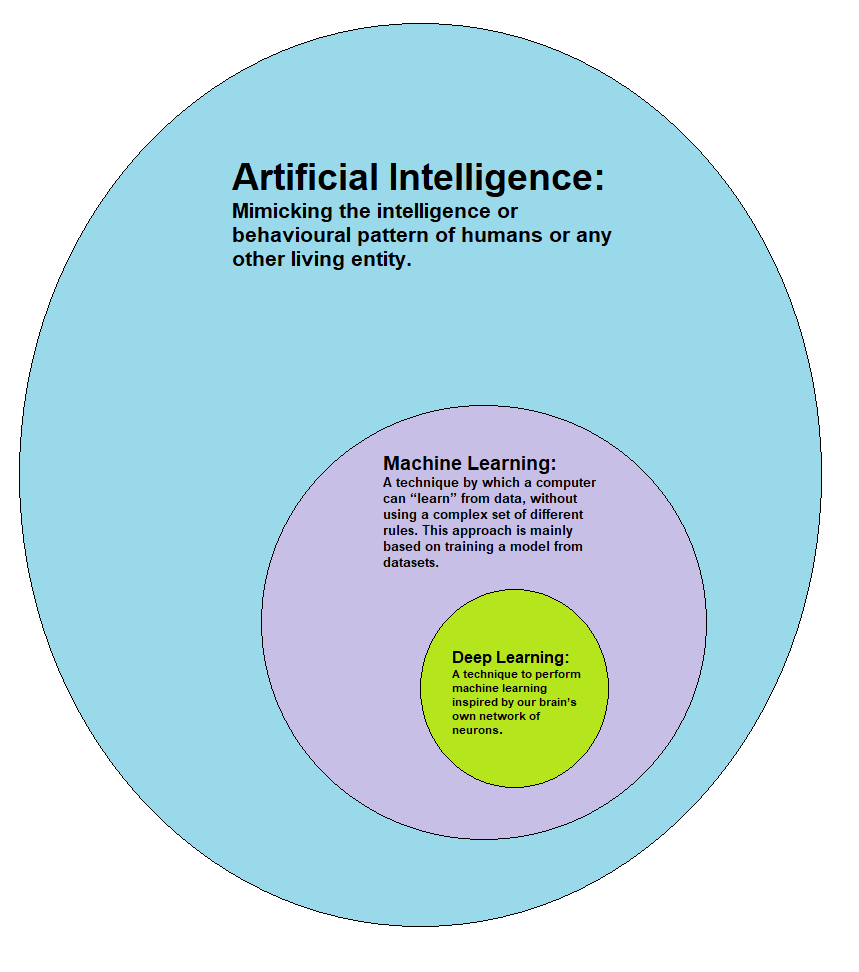
Machine Learning (ML) is a subfield of AI where systems learn directly from data without being explicitly programmed. Instead of writing rules, developers feed an algorithm vast amounts of data, and the algorithm finds patterns and makes predictions. A spam filter is a classic example: it learns to identify junk mail by analyzing thousands of emails you've marked as spam.
Deep Learning (DL) is a specialized type of machine learning. It uses complex structures called neural networks, which are inspired by the human brain. Deep learning is the engine behind many of today's most advanced AI applications, like recognizing faces in photos or powering self-driving cars.
Natural Language Processing (NLP) is another key branch of AI that focuses on the interaction between computers and human language. NLP enables machines to read, understand, and generate text. It's what allows digital assistants like Siri or Alexa to understand your questions and chatbots to provide customer support.
AI in Your Daily Life
AI isn't just a futuristic concept; it's already a part of our daily routines. Every time you unlock your phone with your face, get a movie recommendation on Netflix, or use a navigation app to find the fastest route, you're using AI.
Here are a few common applications:
| Application | How AI is Used |
|---|---|
| Recommendation Engines | Analyzes your past behavior to suggest products, songs, or movies. |
| Digital Assistants | Uses Natural Language Processing (NLP) to understand and respond to voice commands. |
| Navigation Apps | Processes real-time traffic data to predict travel times and suggest routes. |
| Fraud Detection | Identifies unusual patterns in financial transactions to prevent fraud. |
Ethical Considerations
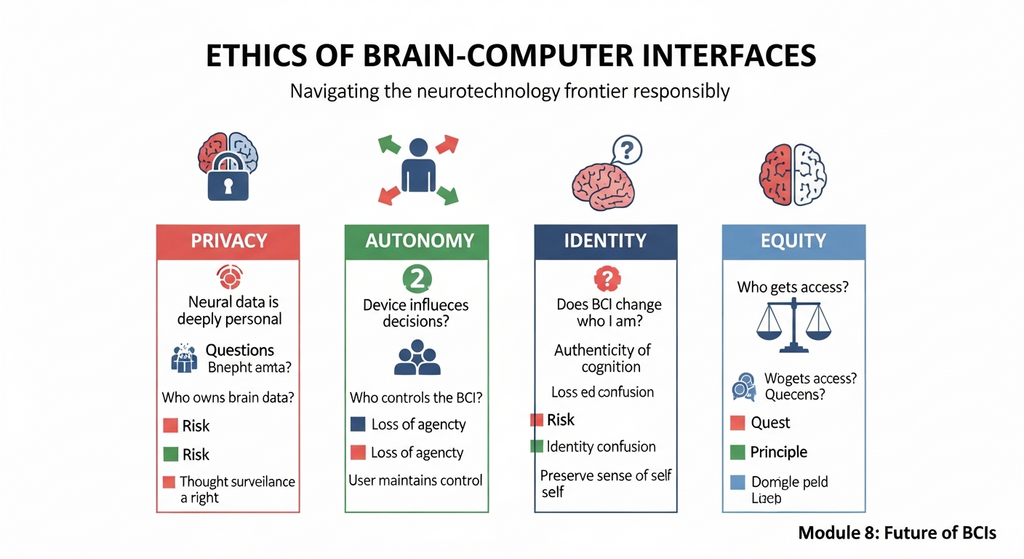
As AI becomes more powerful, it's crucial to consider the ethical implications. These systems are trained on data created by humans, which means they can inherit and even amplify human biases. For example, an AI system for hiring could be biased against certain groups if its training data reflects historical inequalities in the workplace.
Other major concerns include privacy, as AI systems often require large amounts of personal data to function, and job displacement, as AI automates tasks previously done by humans. There is also the challenge of transparency. Many deep learning models are so complex that they are considered "black boxes," making it difficult to understand exactly how they arrive at a particular decision. Addressing these challenges is a critical part of developing AI responsibly.
Now that you have a foundational understanding of what AI is and its core concepts, let's test your knowledge.
What 1956 event is credited with officially coining the term "artificial intelligence" and marking the start of the modern field of AI?
Which statement accurately describes the relationship between Artificial Intelligence (AI), Machine Learning (ML), and Deep Learning (DL)?
This overview covers the essential concepts of AI, setting the stage for understanding how these powerful systems are engineered and applied.