AI Engineering Fundamentals
Introduction to AI
What Is Artificial Intelligence?
Artificial intelligence is the science of making machines that can think and learn like humans. It's a broad field in computer science focused on building smart machines capable of performing tasks that typically require human intelligence.
Artificial Intelligence
noun
The theory and development of computer systems able to perform tasks that normally require human intelligence, such as visual perception, speech recognition, decision-making, and translation between languages.
The idea of intelligent machines has been around for centuries, but the modern field of AI began in the 1950s. Early researchers were optimistic, believing they could create a thinking machine within a few decades. Progress was slower than expected, with periods of excitement followed by 'AI winters' where funding and interest dried up.
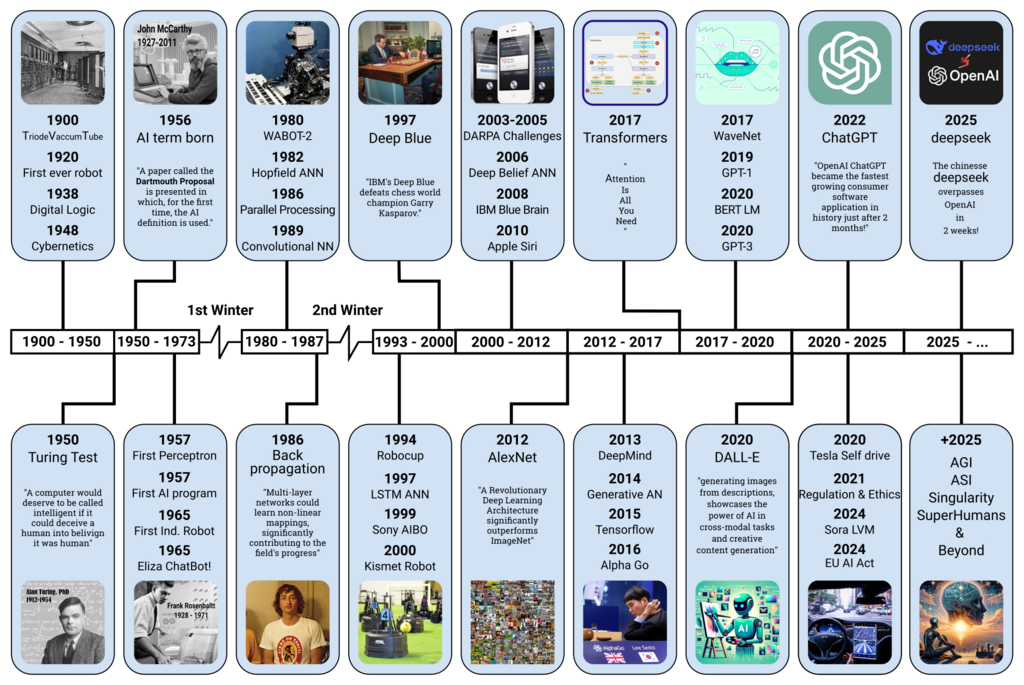
Today, thanks to massive amounts of data and powerful computers, AI is experiencing a renaissance. It has moved from the lab into our daily lives, shaping how we work, communicate, and entertain ourselves.
The Three Types of AI
Not all AI is created equal. It's helpful to think about AI in three stages or categories, based on its capabilities.
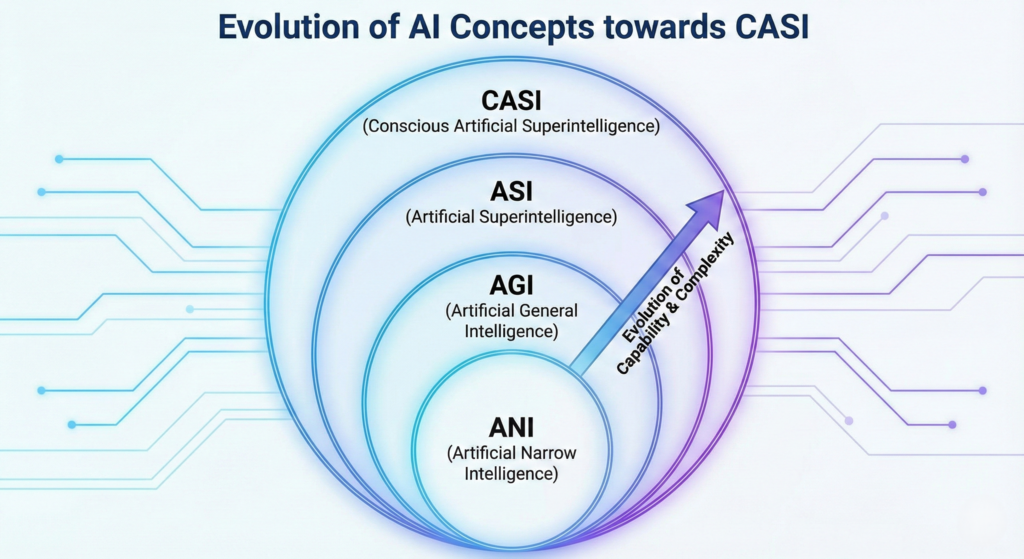
1. Artificial Narrow Intelligence (ANI) This is the only type of AI we have successfully created so far. ANI, also known as Weak AI, is designed to perform a single, specific task. It operates within a pre-defined range and cannot perform tasks beyond its programming.
Think of the AI that powers your favorite apps. A spam filter in your email, the recommendation engine on a streaming service, or a virtual assistant like Siri or Alexa are all examples of ANI. They are incredibly good at their one job, but they can't suddenly decide to learn a new language or compose music.
ANI is like a highly specialized tool. A calculator is fantastic at math, but you can't use it to hammer a nail.
2. Artificial General Intelligence (AGI) This is the AI of science fiction. AGI, or Strong AI, would have the ability to understand, learn, and apply its intelligence to solve any problem, just like a human being. An AGI could switch between tasks, learn new skills without being explicitly programmed, and understand context and nuance.
We are not there yet. Creating AGI is one of the most significant and complex challenges in computer science.
3. Artificial Superintelligence (ASI) This is the final, theoretical stage. ASI would be an intellect that is much smarter than the best human brains in practically every field, including scientific creativity, general wisdom, and social skills. The development of ASI raises profound questions about humanity's future and our relationship with technology.
AI in the Real World
While AGI and ASI remain theoretical, ANI is already transforming industries around the globe. It's not just about chatbots and smart speakers. AI is a powerful tool driving efficiency and innovation.
| Industry | Application of AI |
|---|---|
| Healthcare | Analyzing medical images to detect diseases earlier and more accurately. |
| Finance | Detecting fraudulent transactions and providing personalized financial advice. |
| Transportation | Powering self-driving cars and optimizing traffic flow in smart cities. |
| Entertainment | Recommending movies and music, and creating stunning visual effects in films. |
| Retail | Managing inventory, personalizing shopping experiences, and powering checkout-free stores. |
These applications show how AI can take over repetitive, data-heavy tasks, freeing up humans to focus on more creative and strategic work. The goal is often to augment human abilities, not replace them entirely.
Important Ethical Questions
The rapid growth of AI also brings significant ethical challenges that we need to address as a society. These aren't just abstract problems for the future; they affect us right now.
How do we ensure AI systems are fair and don't perpetuate human biases? Who is responsible when an AI makes a mistake?
Key concerns include:
- Bias: AI models are trained on data from the real world. If that data contains biases related to race, gender, or other factors, the AI can learn and even amplify those biases in its decisions.
- Privacy: AI systems often require vast amounts of data to function, raising concerns about how personal information is collected, used, and protected.
- Accountability: If a self-driving car causes an accident, who is at fault? The owner, the manufacturer, or the software developer? Establishing clear lines of responsibility is a major legal and ethical hurdle.
- Job Displacement: As AI automates more tasks, there are concerns about its impact on the job market and the need for workforce retraining and adaptation.

Navigating these issues is crucial for building a future where AI benefits everyone. It requires collaboration between developers, policymakers, ethicists, and the public.
Now, let's test your understanding of these foundational ideas.
What is the primary goal of the field of Artificial Intelligence?
A virtual assistant like Siri or Alexa, which can answer questions and perform specific commands, is an example of which type of AI?
Understanding these basics gives you a solid foundation for exploring the more complex and fascinating aspects of artificial intelligence.