AI Engineering for Foundation Model Applications
Foundation Models
The Bedrock of Modern AI
At the heart of today's most impressive AI systems, from chatbots to image generators, lies a powerful concept: the foundation model. Think of it not as a specialized tool, but as a multi-talented apprentice that has spent years studying a vast library of human knowledge. It’s not an expert in any single subject, but it has learned the underlying patterns of language, logic, and even imagery.
Foundation Model
noun
A large-scale, pre-trained artificial intelligence model that serves as a base for a wide variety of downstream tasks.
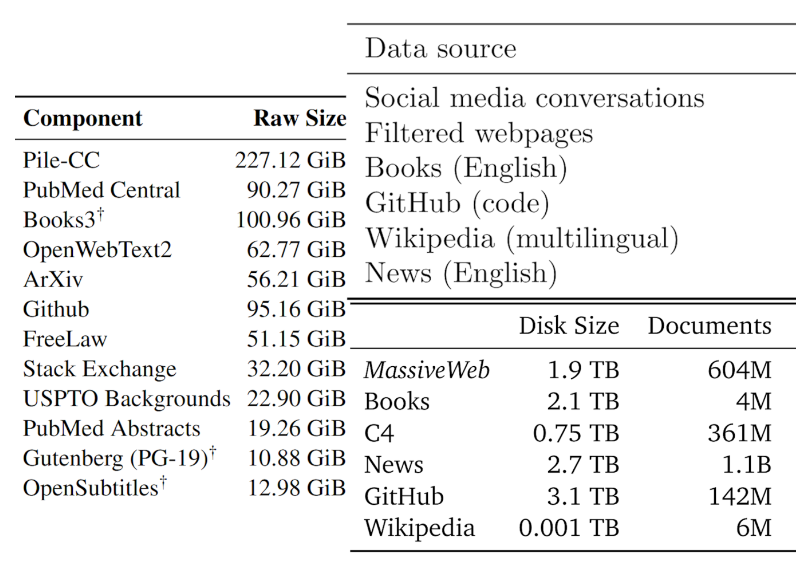
These models are defined by a few key characteristics. First, they are enormous. They are trained on immense datasets, often containing hundreds of billions of words, images, and code snippets scraped from the internet. This massive scale is what allows them to grasp the nuances of human communication and reasoning.
Second, they are generalists. Unlike older AI models designed for one specific job, like identifying spam emails, a foundation model can be prompted to do many different things. This flexibility comes from its pre-training, where it learns general patterns rather than task-specific instructions.
The core idea is to do the heavy lifting of training once, on a massive scale, creating a single powerful model that can be adapted to many different purposes.
The Transformer Architecture
The breakthrough that made these powerful models possible was an architecture called the Transformer, introduced in 2017. Before the Transformer, AI struggled to keep track of context in long sequences of text. It might forget the beginning of a paragraph by the time it reached the end.
The Transformer's secret weapon is a mechanism called attention. Attention allows the model to weigh the importance of different words in the input text when it's processing information. When you read the sentence, "The cat, which was black, sat on the mat," your brain pays more attention to "cat" and "sat" to understand the core action. The attention mechanism does something similar, learning which words are most relevant to each other to build a richer understanding of the context.
This architecture is the foundation for many well-known models.
-
GPT (Generative Pre-trained Transformer) models are excellent at generating human-like text. They are trained to predict the next word in a sentence, which makes them great for writing, summarizing, and conversation.
-
BERT (Bidirectional Encoder Representations from Transformers) is designed to understand the context of a word by looking at the words that come both before and after it. This makes it ideal for tasks like search engines and sentiment analysis.
A Universe of Capabilities
Because they are trained on such diverse data, foundation models have a startlingly wide range of abilities. They have become the backbone for a huge number of AI applications.
| Domain | Example Applications |
|---|---|
| Natural Language | Writing emails, translating languages, answering questions, summarizing articles. |
| Computer Code | Generating code from a text description, debugging, explaining code snippets. |
| Images & Audio | Creating images from text prompts, generating music, transcribing speech. |
| Structured Data | Analyzing sales data, identifying trends in financial markets, categorizing information. |
The power of foundation models is their versatility. Instead of building a new AI from scratch for every problem, developers can now start with a powerful, pre-trained base and guide it toward their specific goal. This has dramatically accelerated the pace of innovation in artificial intelligence.
What is the primary characteristic that defines a foundation model?
What key architectural innovation, introduced in 2017, was crucial for the development of modern foundation models?