AI Embeddings Explained
Introduction to Embeddings
Translating for Machines
Computers don't understand words, images, or sounds. They understand numbers. This creates a fundamental problem: How can we get a machine to grasp the meaning behind a news article, a photograph, or a song? The answer lies in a concept called embeddings.
Think of an embedding as a translator. It takes something complex and unstructured, like a word, and converts it into a list of numbers called a vector. This vector is the data's numerical fingerprint, a format that a computer can actually work with.
Embedding models transform unstructured data, such as text, images, and audio, into vector representations.
This process isn't just about turning things into numbers. It's about turning them into meaningful numbers. The magic of embeddings is that they capture the essence and relationships of the original data.
A Map of Meaning
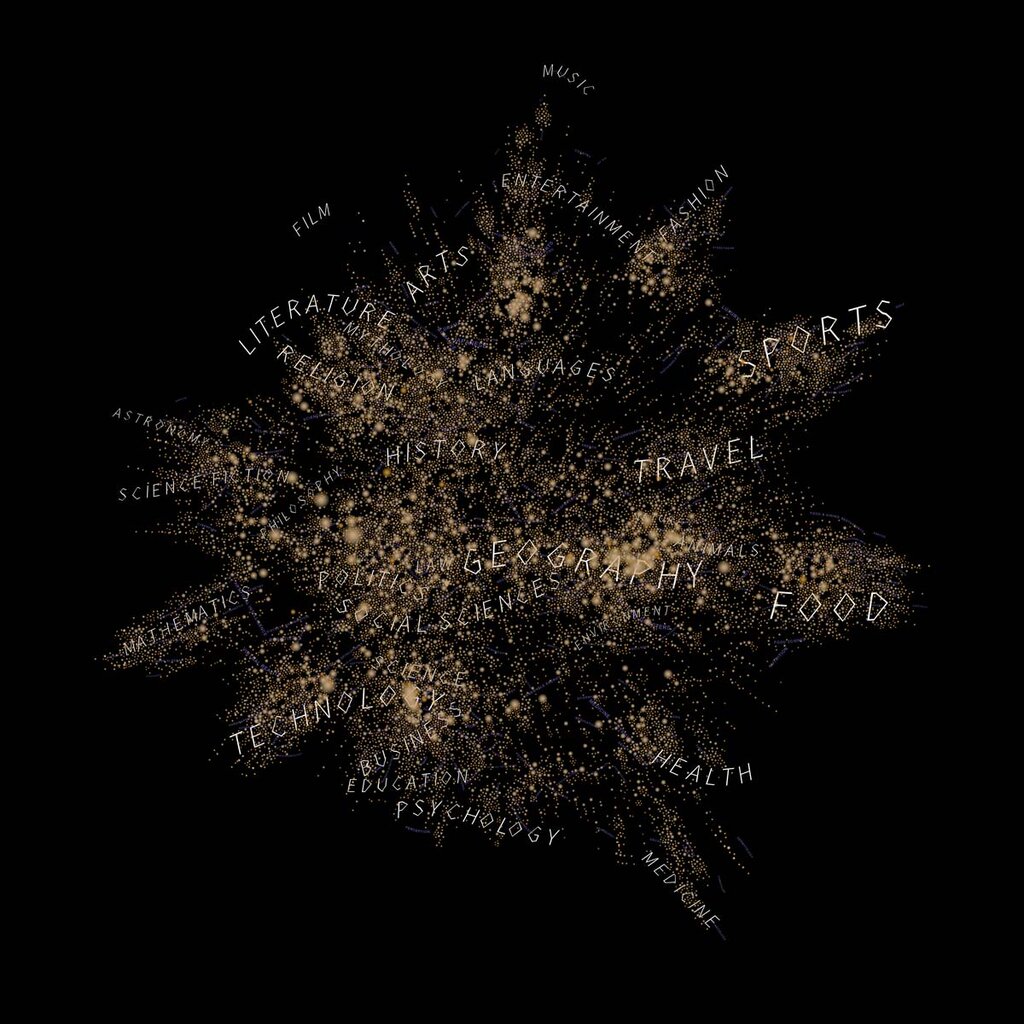
Imagine a giant, multi-dimensional map where every possible concept has a specific location. In this space, items with similar meanings are placed close together. The embedding for "dog" would be near the embedding for "puppy." The vector for a picture of a cat would be close to the vector for a picture of a kitten.
This proximity allows machines to understand relationships. For instance, the distance and direction between "king" and "queen" on this map would be very similar to the distance and direction between "man" and "woman." The model learns the concept of gender just by observing these patterns in the data.
By plotting these vectors, an AI can navigate the world of human language and perception. It can identify synonyms, understand analogies, and even group related ideas without being explicitly told how they connect.
This idea extends beyond text. The melody of a sad song can be translated into a vector. When you ask your phone to show you more pictures of beaches, it's using embeddings to find images whose numerical fingerprints are similar to other beach photos. This is how machines begin to categorize and understand the world in a human-like way.
Embeddings in Action
Because they are so effective at capturing meaning, embeddings are a cornerstone of many AI systems you use every day.
- Recommendation Systems: When a streaming service suggests a new show, it's because the embedding for that show is numerically close to the embeddings of shows you've already watched and liked. It's finding neighbors on that giant map of content.
- Search Engines: Modern search engines go beyond simple keyword matching. They use embeddings to understand the intent behind your query, helping you find relevant pages even if they don't contain the exact words you typed.
- Anomaly Detection: In fields like finance and cybersecurity, embeddings can establish a baseline for normal activity. When a new transaction or network event produces an embedding that is far away from this baseline, it gets flagged as a potential anomaly or threat.
By converting complex data into a universal language of numbers, embeddings allow different parts of an AI system to communicate and make sophisticated connections.
This simple but powerful idea of translating meaning into numbers is a foundational piece of modern artificial intelligence. It's what allows machines to move from just processing data to actually understanding it.