AI Driven Dropshipping Mastery
AI Niche Research
Beyond Manual Research
You already understand the fundamentals of supply and demand. Finding a dropshipping niche has traditionally meant hours spent with keyword planners and sifting through Google Trends data. It's a manual process of looking for high search volume and low competition. AI-powered tools change the game by analyzing massive, real-time datasets to uncover what's next, not just what's popular now.
Instead of just looking at search terms, these algorithms scan social media, news articles, customer reviews, and online forums. They identify patterns and emerging desires that signal a new trend. This allows you to find opportunities before they become saturated.
Forecasting Future Demand
The real power of AI in niche research is its ability to move from observation to prediction. By analyzing historical sales data, seasonal trends, and even external factors like social media buzz, AI uses predictive modeling to forecast future demand for a product category. It’s the difference between seeing that umbrellas are selling well today and predicting that umbrella sales will spike in a specific region next week because of a weather forecast.
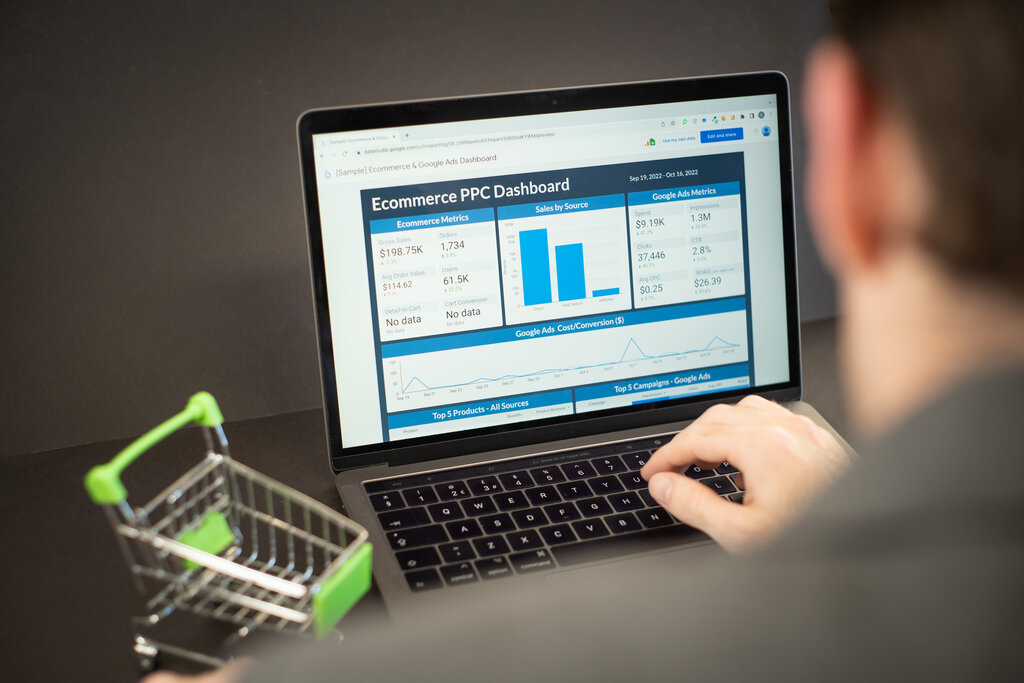
Tools like Perplexity AI can act as a starting point. Instead of asking
What are popular dropshipping products?
You can ask more sophisticated questions:
Analyze recent discussions on subreddits like r/homegym for fitness products with rising positive sentiment but low market penetration.
This kind of prompt leverages the AI's ability to synthesize information from diverse sources, giving you a much richer picture of the market.
Validating with Sentiment Analysis
High demand isn't always good demand. A product might be popular because it's cheap, but if customers are constantly complaining about its quality, you're walking into a customer service nightmare. This is where sentiment analysis comes in.
AI can analyze thousands of reviews, comments, and social media posts to determine the overall feeling—positive, negative, or neutral—toward a product or niche. A niche with high demand and overwhelmingly positive sentiment is a strong signal. Conversely, a product with mixed or negative sentiment, even with high search volume, might be one to avoid.
Automated Competitor Analysis
Once you have a potential niche, you need to understand the competitive landscape. Manually visiting every competitor's website is tedious. Specialized tools like FindNiche or Minea use automated scrapers and data aggregators to do the heavy lifting. They pull data from thousands of Shopify stores, AliExpress listings, and social media ads.
You can also use Large Language Models (LLMs) for a qualitative edge. Feed an LLM the URLs of the top five stores in your target niche and ask it to perform a gap analysis. It can identify common weaknesses, like slow shipping times mentioned in reviews, or an underserved customer segment, like a lack of plus-size options for a clothing item.
| Metric | Manual Research | AI-Powered Tool |
|---|---|---|
| Competitor Sales | Guesswork based on site traffic | Estimated sales volume & revenue |
| Winning Products | Find best-seller page | Identify specific viral products |
| Ad Strategy | Search for ads on Facebook | See exact ad creatives, spend, & targeting |
| Supplier Info | Manually search AliExpress | Link directly to top suppliers |
| Market Saturation | Subjective feeling | Data on number of stores selling item |
This combination of quantitative data from scrapers and qualitative insights from LLMs gives you a complete 360-degree view of the market, allowing you to find a unique angle to enter it.
Ready to test what you've learned about using AI for market analysis?
How does AI-powered niche research primarily differ from traditional methods that rely on keyword planners?
Which AI technique involves analyzing thousands of reviews and comments to determine the overall positive, negative, or neutral feeling toward a product?
By shifting from manual keyword chasing to AI-driven analysis, you can identify promising niches with greater speed and confidence. These tools provide the data-backed insights needed to make smarter decisions from the very start.