AI Diplomacy and International Policy
Introduction to AI
What is AI?
Artificial intelligence is about making computers smart. The goal is to create machines that can perform tasks that typically require human intelligence, like learning from experience, understanding language, recognizing patterns, and making decisions. It’s a broad field with roots going back decades.
Artificial Intelligence
noun
A branch of computer science focused on building smart machines capable of performing tasks that usually require human intelligence.
At its core, AI isn't one single technology. It's an umbrella term for a collection of methods and tools that allow computers to mimic cognitive functions. To understand where we are today, it helps to look at where it all started.
A Quick History
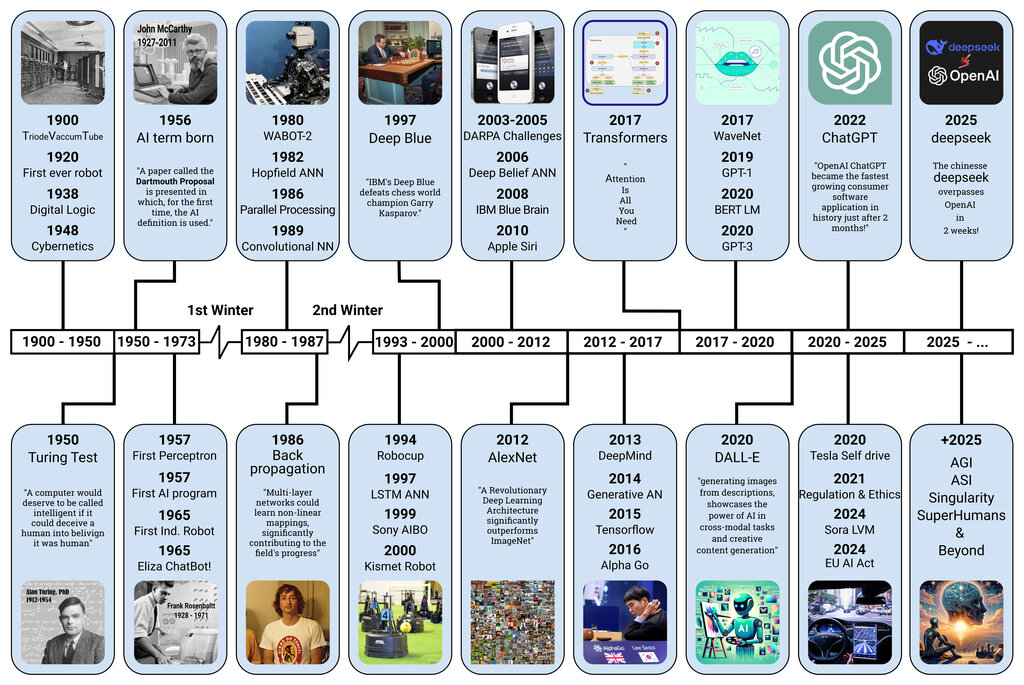
The dream of intelligent machines is ancient, but the scientific field of AI officially began in the summer of 1956. A group of researchers gathered at Dartmouth College and coined the term "artificial intelligence." They were incredibly optimistic, believing that a machine as intelligent as a human being would exist in less than a generation.
Progress was slower than expected. The initial excitement gave way to periods known as "AI winters," when funding dried up because the technology couldn't deliver on its grand promises. But the dream never died. In recent decades, two key developments have fueled an AI renaissance: the availability of massive amounts of data and the development of powerful computers that can process it all.
The Building Blocks of AI
Modern AI is powered by a few core concepts. Understanding them is key to understanding how AI works.
Machine Learning (ML) is the most common approach to AI today. Instead of writing explicit instructions for a task, developers build systems that can learn from data. Think of it like teaching a child by showing them examples. A spam filter learns to identify junk mail by analyzing thousands of emails you've marked as spam.
One of the most powerful types of machine learning is built on neural networks.
Neural networks are computing systems inspired by the interconnected neurons in the human brain. They consist of layers of nodes. The input layer receives data, which is then processed through one or more "hidden" layers before an output is produced. Each connection has a weight, which the network adjusts during training to improve its accuracy. This is the technology behind things like image recognition and self-driving cars.
Another key area is Natural Language Processing (NLP). This field gives machines the ability to read, understand, and generate human language. When you talk to a virtual assistant like Siri or Alexa, or use a tool like Google Translate, you're interacting with NLP.
Types of AI
It's important to distinguish between the AI we have today and the AI often depicted in science fiction. Broadly, AI is categorized into two types: narrow and general.
| Type | Description | Example |
|---|---|---|
| Artificial Narrow Intelligence (ANI) | Also known as Weak AI, it is designed and trained for one specific task. | A chess-playing computer, a spam filter, a facial recognition system. |
| Artificial General Intelligence (AGI) | Also known as Strong AI, this is a theoretical form of AI that has the ability to understand, learn, and apply its intelligence to solve any problem. | This does not yet exist. It's the type of AI seen in movies, like the androids in Westworld or HAL 9000. |
Every AI application you interact with today is a form of narrow AI. It might be incredibly powerful at its one job, but it can't operate outside of that specific domain. A chess program can't recommend a movie, and a spam filter can't drive a car.
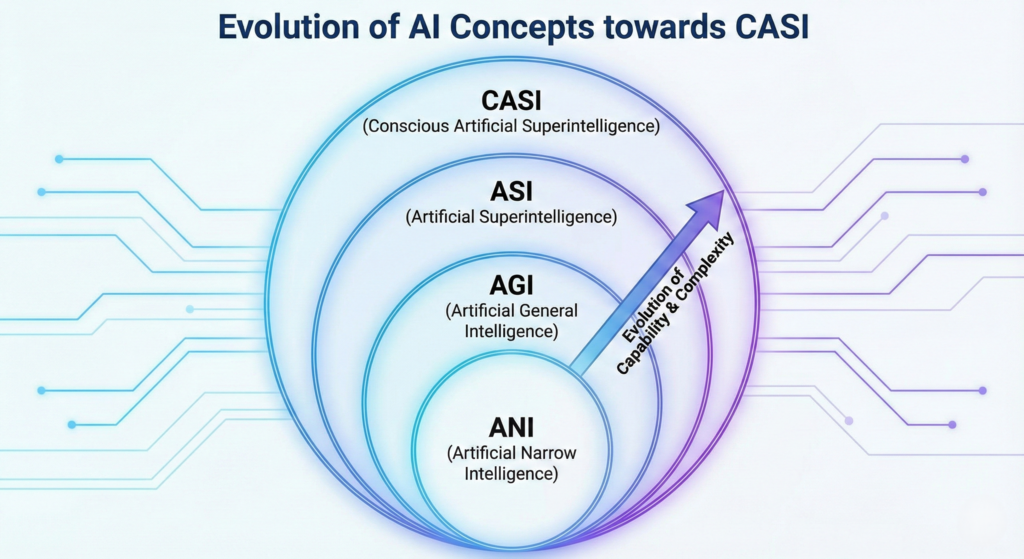
The quest for AGI remains one of the biggest challenges in computer science. Building a machine with the flexible, creative, and common-sense reasoning of a human is still a distant goal.
Ready to check your understanding?
Where was the term "artificial intelligence" officially coined at a conference in 1956?
Which two factors were described as the primary drivers of the recent "AI renaissance"?
With this foundation, you can better understand the technologies that are shaping our world.