AI Development Fundamentals
Introduction to Artificial Intelligence
What Is AI Anyway?
Artificial intelligence, or AI, is about creating systems that can perform tasks that normally require human intelligence. This includes things like learning, reasoning, problem-solving, and understanding language. The idea isn't new. For centuries, people have imagined creating artificial beings with minds of their own. But it was only in the mid-20th century, with the invention of computers, that the field of AI truly began.
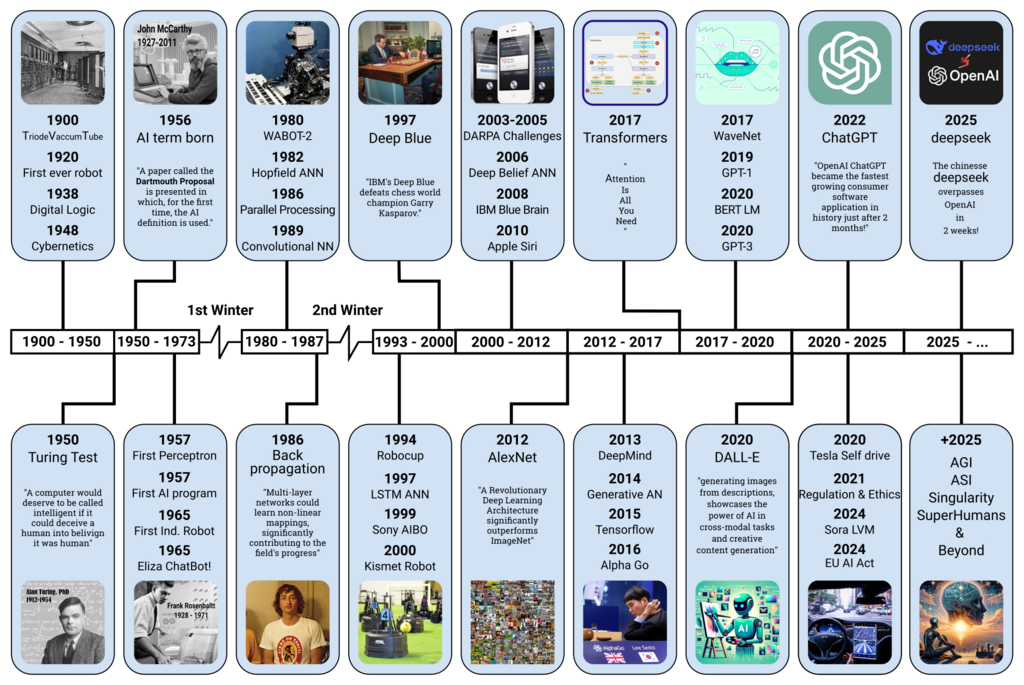
Early AI research focused on rule-based systems. You could program a computer with a set of rules, like the rules of chess, and it could play the game. But it couldn't learn or adapt. If you showed it a new situation not covered by its rules, it was stuck. Modern AI has moved far beyond this, focusing instead on systems that can learn from experience.
The AI Family Tree
The terms AI, machine learning, and deep learning are often used interchangeably, but they have distinct meanings. It helps to think of them as nested concepts, with each one being a more specialized version of the one before it.
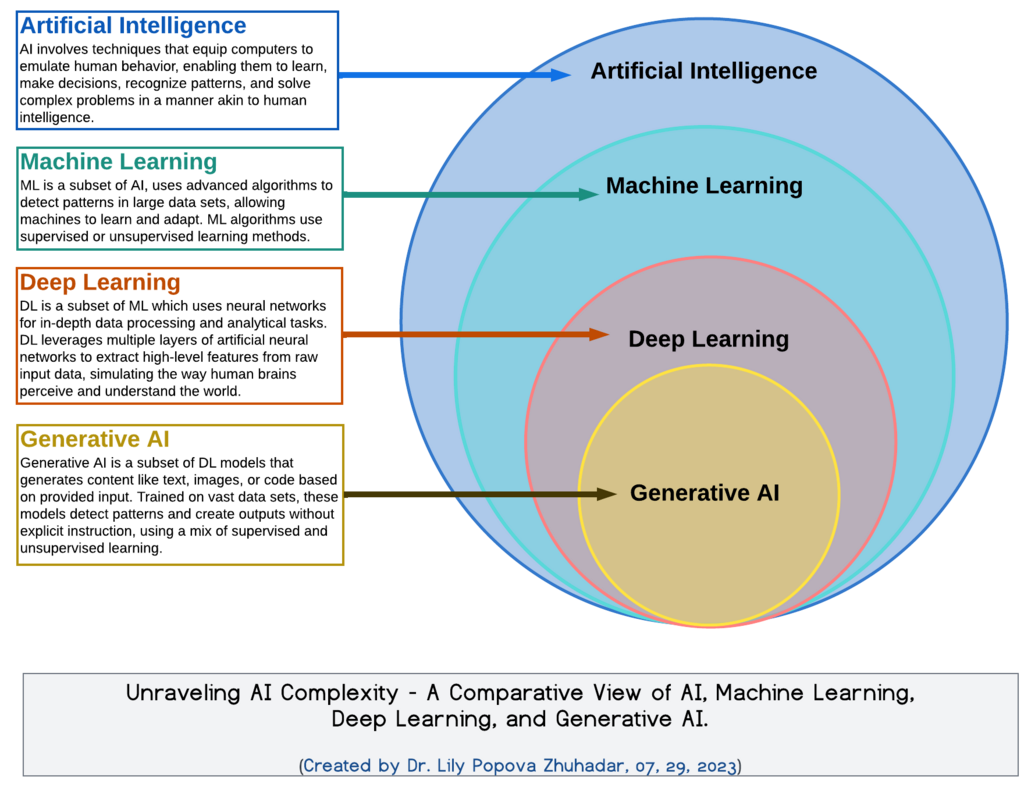
Artificial Intelligence (AI) is the all-encompassing field. It’s the broad idea of machines being able to carry out tasks in a way that we would consider “smart.”
Machine Learning (ML) is a subset of AI. Instead of being explicitly programmed with rules, ML systems are trained on large amounts of data. They learn to identify patterns and make decisions on their own. This is what powers your email's spam filter or your favorite streaming service's recommendations.
Deep Learning (DL) is a specialized type of machine learning. It uses complex structures called neural networks, which are loosely inspired by the human brain. Deep learning is behind some of the most impressive AI advancements, like image recognition and natural language processing.
How AI Learns
So, how does an AI system actually learn? It comes down to a few core principles that work together.
Pattern Recognition
noun
The process of identifying recurring structures, trends, or regularities within data.
At its heart, machine learning is about pattern recognition. An AI model sifts through vast amounts of data to find connections and trends that a human might miss. For example, by analyzing thousands of cat photos, a model learns the common patterns—pointy ears, whiskers, a certain eye shape—that define a cat.
This is a data-driven learning process. The more data the AI sees, the better it gets. It refines its internal model through a process of optimization, constantly tweaking its parameters to make more accurate predictions. The goal is generalization—the ability to apply what it learned from the training data to new, unseen examples. A well-trained model can recognize a cat it's never seen before because it has generalized the concept of "cat."
Ultimately, this allows for the automation of cognitive tasks. Instead of a person manually sorting photos, an AI can do it instantly. This principle applies to everything from translating languages to diagnosing medical conditions from scans.
Garbage In, Garbage Out
An AI model is only as good as the data it's trained on. This is a fundamental concept in AI development. If you feed a model messy, inaccurate, or biased data, its performance will suffer. This is why data quality and preprocessing are so critical.
Imagine trying to learn to cook from a recipe book filled with typos and incorrect measurements. You'd probably end up with some strange-tasting dishes. It's the same for AI.
Preprocessing involves cleaning and organizing the raw data to make it suitable for training. This might include:
- Removing errors and inconsistencies: Fixing typos or standardizing formats (like dates).
- Handling missing values: Deciding whether to remove entries with missing information or fill in the gaps intelligently.
- Normalizing data: Scaling numerical values to a common range so that no single feature dominates the learning process.
This careful preparation ensures the model learns from a reliable source of truth, leading to more accurate and useful results.
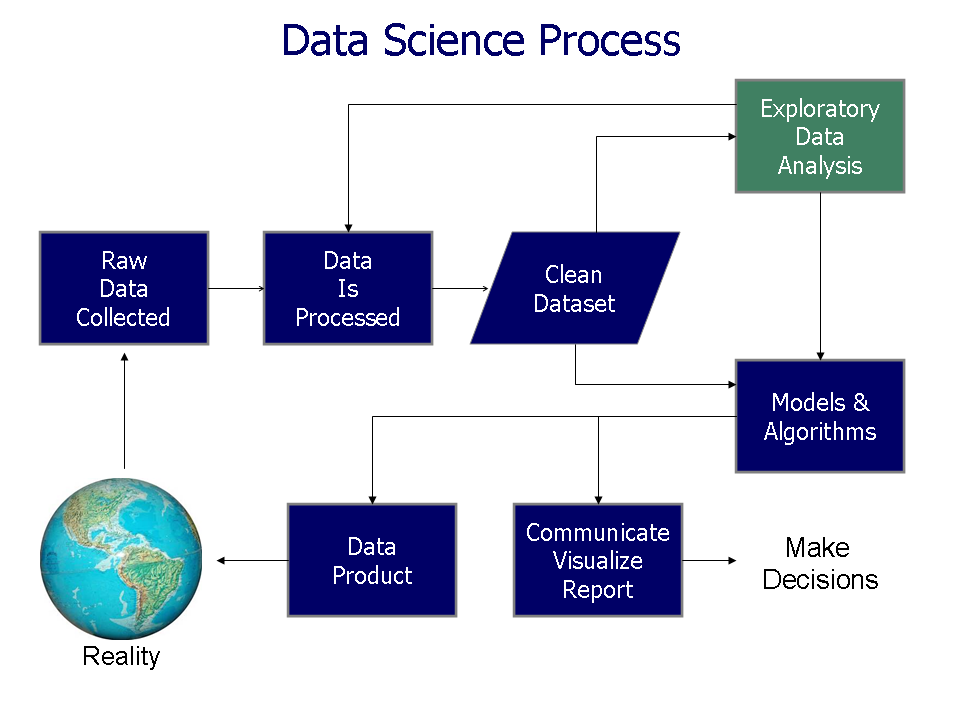
Let's review the key terms we've covered so far.
Now, let's test your understanding of these concepts.
Which statement best describes the relationship between Artificial Intelligence (AI), Machine Learning (ML), and Deep Learning (DL)?
An AI model is trained on thousands of cat photos. When it is later shown a photo of a cat breed it has never encountered before and correctly identifies it, what key principle is being demonstrated?
By understanding these foundational ideas, you have a solid framework for seeing how AI works and why it's becoming such a transformative force in our world.