AI Course Generation Platforms
Introduction to AI in Education
AI in the Classroom
Artificial intelligence, or AI, is about teaching computers to think and learn in ways that mimic human intelligence. It’s not about sentient robots from science fiction. Instead, it’s about creating systems that can recognize patterns, make decisions, and solve problems.
Think of it as a broad field of computer science. Within this field, there are many different branches and approaches, but the core idea is always the same: building machines that are smart.
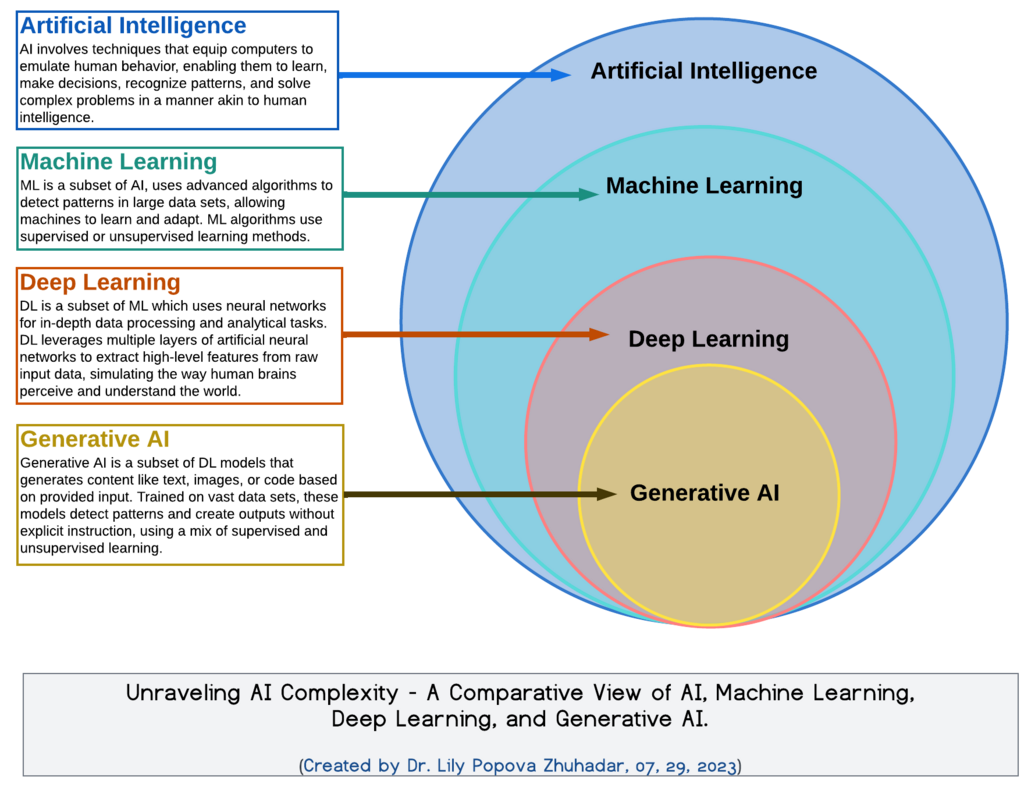
Most AI today is what experts call Artificial Narrow Intelligence (ANI). This type of AI is designed to perform a single, specific task very well. The AI that recommends songs on your music app, suggests the fastest driving route, or filters spam from your email is all ANI. It's powerful, but its abilities are limited to its programming.
The next stages, which are still largely theoretical, are Artificial General Intelligence (AGI) and Artificial Superintelligence (ASI). AGI would have the ability to understand, learn, and apply knowledge across a wide range of tasks at a human level. ASI would surpass human intelligence in every way. For now, our focus in education and elsewhere is on the practical applications of ANI.
The Core Technologies
Two key concepts power many of the AI tools you see today: Machine Learning and Natural Language Processing.
Machine Learning
noun
A subset of AI where computers learn from data without being explicitly programmed for every task. The system identifies patterns and makes predictions on its own.
Imagine showing a child thousands of pictures and telling them, “This is a cat,” or “This is not a cat.” Eventually, the child learns to recognize a cat on their own, even if they've never seen that specific breed before. Machine learning (ML) works in a similar way. Instead of writing rigid rules, developers feed a system huge amounts of data. The system then learns to identify patterns and make decisions based on that data. It's the engine behind personalized learning platforms that adapt to a student's pace.
Natural Language Processing
noun
A field of AI that helps computers understand, interpret, and generate human language. It bridges the gap between human communication and computer understanding.
Natural Language Processing, or NLP, is what allows you to talk to your phone or use a translation app. It’s the technology that enables machines to read, understand, and generate human language. In education, NLP powers tools that can analyze student essays for clarity, create summaries of long texts, or act as conversational partners for language learners.
Reshaping the Learning Experience
AI isn't just a futuristic idea; it's already changing how we teach and learn. These technologies are being applied in schools and universities to make education more efficient, accessible, and personalized.
One of the biggest impacts is in personalized learning. AI-powered platforms can track a student's progress and identify their strengths and weaknesses in real time. If a student is struggling with a math concept, the system can provide extra practice problems or a different video explanation. If they've mastered a topic, it can move them ahead to more challenging material.
This adaptive approach allows every student to follow a unique learning path tailored to their individual needs, rather than a one-size-fits-all curriculum.
AI also helps with administrative tasks, freeing up teachers' time. Systems can automate grading for multiple-choice quizzes and even provide initial feedback on written assignments, checking for grammar and structure. This allows educators to focus less on repetitive tasks and more on mentoring students and facilitating deeper learning.
Intelligent tutoring systems act like 24/7 teaching assistants, providing step-by-step guidance and instant feedback. These tools can help students with homework, answer questions, and simulate complex scenarios for hands-on learning in a safe, virtual environment.
The Ethical Tightrope
While the potential of AI in education is exciting, it comes with important ethical questions that we need to address. Integrating these powerful tools responsibly is crucial.
Data privacy is a major concern. To create personalized learning paths, AI systems collect a vast amount of data on student performance. We must ensure this sensitive information is protected and used ethically, without creating invasive surveillance systems in the classroom.
Another challenge is algorithmic bias. If the data used to train an AI system is biased, the AI's decisions will also be biased. This could lead to unfair outcomes, such as a system that consistently gives lower scores to students from a certain demographic or favors a particular learning style. Ensuring fairness and equity is essential for any AI tool used in education.
Finally, there's the risk of becoming too reliant on technology. AI should be a tool that supports great teaching, not a replacement for it. The human connection between teachers and students—mentorship, inspiration, and emotional support—is something technology cannot replicate.
Artificial Intelligence (AI) in education offers transformative potential for personalized learning and administrative efficiency but raises ethical concerns about fairness, privacy, and accountability.
Let's test your understanding of these core concepts.
What is the primary type of AI currently in use, as seen in applications like music recommendation apps and email spam filters?
A developer is creating a tool that analyzes thousands of student essays to identify common grammatical errors and provide feedback. Which core AI concept is central to this tool's ability to understand human language?
Successfully navigating the future of education means embracing the benefits of AI while being mindful of its challenges. A balanced approach will allow us to build smarter, more supportive, and more equitable learning environments.