AI Content Mastery Through Competitor Analysis
Competitor Analysis Fundamentals
Understanding the Competition
To create a content strategy that succeeds, you need to understand the digital landscape you're operating in. This is where competitor analysis comes in. It's the process of identifying who your rivals are in search engine results and analyzing their strategies to find opportunities for your own content.
Think of it as reconnaissance. Before you create new content, you look at who is already ranking for your target keywords. What topics are they covering? What format is their content in? How are they structuring their information? Answering these questions helps you spot gaps in the market, avoid their mistakes, and replicate their successes. It’s a foundational step for building an intelligent, AI-driven content plan.
Competitive analysis involves systematically examining your competitors to identify their strengths and weaknesses, understand their strategies, and ultimately gain insights to enhance your marketing approach.
Finding Your Rivals
Your competitors in SEO are not always who you think. They fall into two main categories:
- Direct Competitors: These are the businesses you'd traditionally think of as rivals. They sell similar products or services to the same target audience.
- Indirect Competitors: These are sites or publications that don't sell what you sell, but they compete for your audience's attention by ranking for the same keywords. This could be a blog, a news site, or a forum. For example, a company selling hiking boots (direct competitor) and a popular travel blog writing about the best hiking trails (indirect competitor) might both be competing for the keyword "best trails for hiking."
Identifying both is crucial. The simplest way to start is by searching for your main target keywords and seeing who consistently appears on the first page of results. Those are your primary SEO competitors.
Tools of the Trade
Manually analyzing competitors is time-consuming and often incomplete. Luckily, a variety of powerful tools can automate this process and provide deep insights. These platforms crawl the web, gather data, and present it in a way that helps you understand competitor performance at a glance.
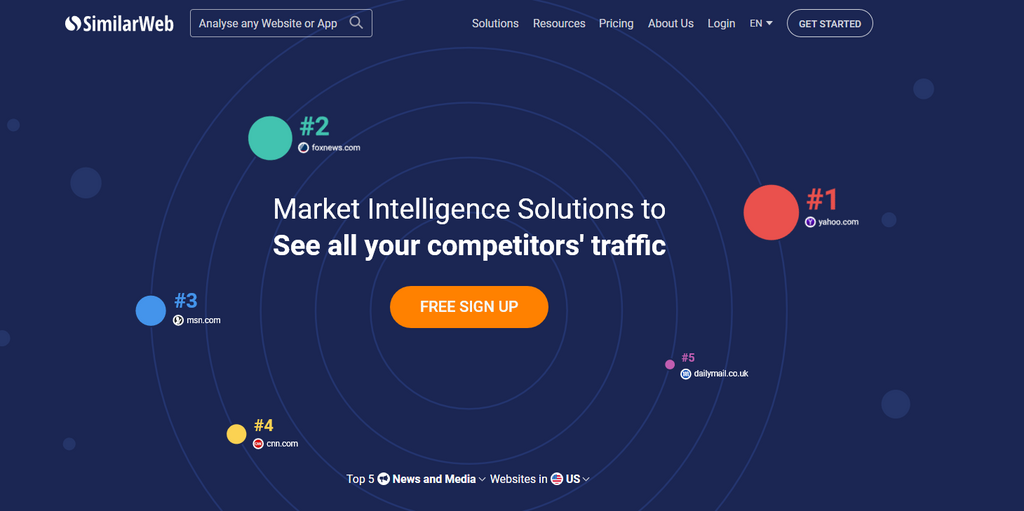
Some of the most common tools in the industry include Ahrefs, SEMrush, Moz, and SimilarWeb. While each has its own unique features, they all provide core functionalities for analyzing keywords, backlinks, top-performing content, and overall website traffic. You don't need to be an expert in all of them, but being familiar with what they offer is the first step toward leveraging their data for your strategy.
What to Look For
When you start analyzing your competitors, it's easy to get lost in the data. To stay focused, begin by looking at a few key metrics. These will give you a high-level overview of their SEO health and content strategy without getting bogged down in advanced details.
| Metric | What It Tells You | Why It Matters |
|---|---|---|
| Organic Keywords | The keywords a site ranks for in search results. | Shows their content focus and what topics drive their traffic. |
| Top Pages | The pages on a competitor's site that receive the most organic traffic. | Reveals their most successful content pieces and formats. |
| Domain Authority (DA) | A score (typically 1-100) predicting a site's ranking potential. | A higher score suggests a more established, authoritative site. |
| Backlinks | Links from other websites pointing to the competitor's site. | Indicates the site's authority and trustworthiness to search engines. |
By examining these basic metrics across your key competitors, you can start to see patterns. You'll understand what kind of content resonates with your target audience and what it takes to rank in your niche. This knowledge is the bedrock of an effective, data-informed content strategy.
Ready to check your understanding?
What is the primary goal of conducting a competitor analysis for a content strategy?
A company that sells running shoes is targeting the keyword "best marathon training plan." A popular sports medicine blog that doesn't sell any products is also ranking high for this keyword. The blog is considered a(n)...
This foundational analysis sets the stage for everything that follows, from keyword research to content creation.