AI Concepts and Applications
AI Applications Overview
AI in the Real World
Artificial intelligence is no longer a concept from science fiction. It's a powerful tool that has woven itself into the fabric of our daily lives, often in ways we don't even notice. From how we shop to how we travel, AI is optimizing processes, providing insights, and changing how industries operate. Let's explore some of its most significant applications.
Healthcare
In medicine, AI is becoming a crucial partner to doctors and researchers. One of its primary roles is in medical imaging. AI models can be trained on thousands of X-rays, CT scans, and MRIs to spot subtle patterns that might be invisible to the human eye. This helps in the early detection of diseases like cancer or diabetic retinopathy, leading to better patient outcomes.
Beyond diagnostics, AI algorithms analyze vast datasets of patient information, including genetics and lifestyle factors, to create personalized treatment plans. Instead of a one-size-fits-all approach, treatments can be tailored to an individual's specific needs. AI also accelerates drug discovery by simulating how different compounds might interact with diseases, dramatically shortening the time it takes to develop and test new medicines.
This process doesn't replace doctors. It augments their abilities, acting as a tireless assistant that can process information at a scale humans simply can't.
Finance
The financial industry runs on data, making it a perfect environment for AI. One of the most common applications is fraud detection. AI systems monitor millions of transactions in real-time, learning the normal spending patterns of customers. When a transaction deviates from the norm, such as a purchase in an unusual location, the system can flag it for review or block it instantly.
Algorithmic trading is another area where AI dominates. These systems analyze market conditions, news reports, and social media sentiment to make trades in fractions of a second. They can execute complex trading strategies far faster and more efficiently than any human trader.
For personal finance, AI-powered "robo-advisors" offer automated, algorithm-driven financial planning services. After you answer questions about your financial goals and risk tolerance, they can build and manage a diversified investment portfolio for you.
AI in finance helps make services more secure through fraud detection and more accessible through automated financial advice.
Retail and E-commerce
If you've ever shopped online, you've interacted with AI. The "products you may also like" section on an e-commerce site is powered by a recommendation engine. This AI analyzes your browsing history, past purchases, and the behavior of similar shoppers to suggest items you're likely to be interested in.
Behind the scenes, AI optimizes supply chains. It forecasts demand for products based on factors like seasonality, current trends, and even weather patterns. This helps retailers know how much stock to keep on hand, preventing shortages of popular items and overstocking of others. This predictive power reduces waste and improves efficiency.
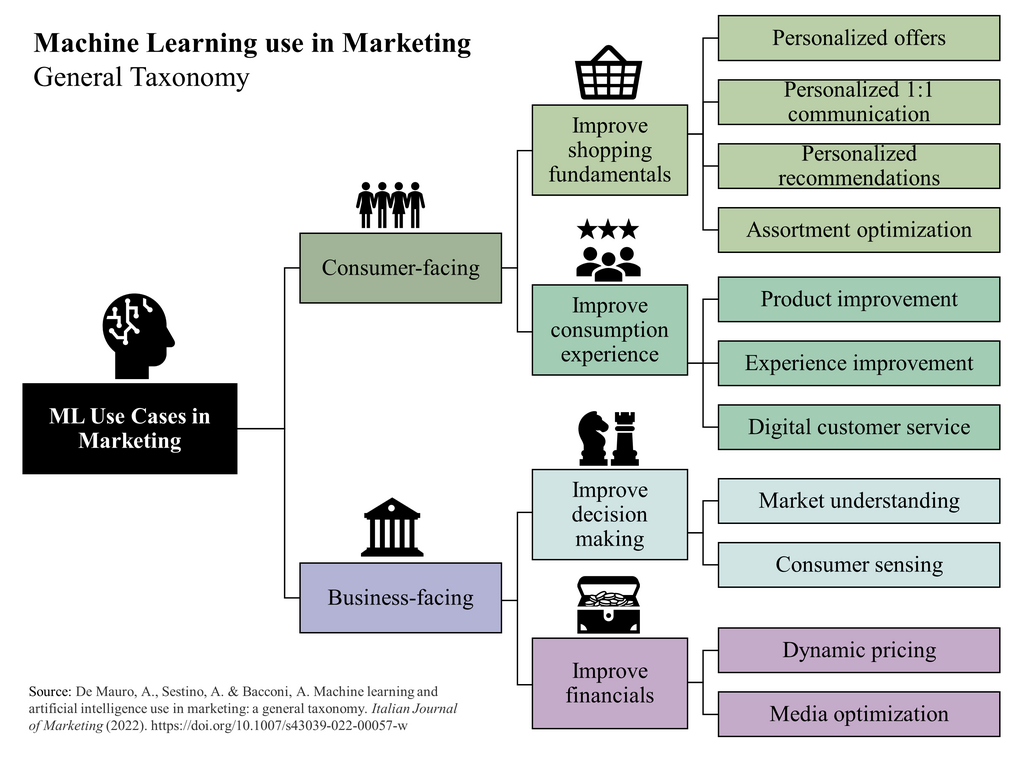
In physical stores, AI can analyze foot traffic patterns to optimize store layouts and manage checkout queues. Some stores are even experimenting with cashier-less checkout, where cameras and sensors track what you take and automatically charge your account.
Transportation and Logistics
AI is at the heart of the push toward autonomous vehicles. Self-driving cars use a combination of sensors, cameras, and sophisticated AI models to perceive the world around them, predict the actions of other drivers and pedestrians, and navigate safely. While fully autonomous cars are still in development, many modern vehicles already use AI for features like adaptive cruise control and lane-keeping assist.
In logistics, AI is a game-changer for efficiency. Companies like UPS and FedEx use AI to optimize delivery routes, saving millions of dollars in fuel and reducing delivery times. The AI considers traffic, weather, delivery windows, and vehicle capacity to calculate the most efficient path for thousands of vehicles simultaneously.
AI also enables predictive maintenance. By analyzing data from sensors on engines and other critical components, AI can predict when a part is likely to fail. This allows airlines, trucking companies, and railway operators to perform maintenance before a breakdown occurs, improving safety and reducing downtime.
Customer Service
Many of your initial interactions with a company's customer service are now handled by AI. Chatbots and virtual assistants on websites and in apps can answer common questions, guide you through troubleshooting steps, or help you track an order 24/7.
These systems use Natural Language Processing (NLP), a branch of AI, to understand your written or spoken questions and provide relevant answers. By handling routine inquiries, these AI agents free up human support staff to focus on more complex or sensitive issues that require empathy and critical thinking.
AI affects: Decision-Making – AI helps professionals analyze patterns, predict trends, and make smarter business choices. Customer Service – AI-powered chatbots and virtual assistants are becoming more common. Data Analysis – AI can sift through large amounts of information quickly, helping teams make sense of data. Marketing And Sales – AI improves personalization, from product recommendations to ad targeting.
Now that you've seen how AI is applied across different fields, let's test your knowledge.
In the field of medicine, what is a primary role of AI in medical imaging?
How do AI-powered recommendation engines on e-commerce sites decide what products to show you?
These examples are just the tip of the iceberg. As the technology continues to evolve, AI will find its way into even more aspects of our lives, driving innovation and reshaping industries.