AI Chatbots Capabilities and Differences
Introduction to Large Language Models
What Are Large Language Models?
At its core, a large language model, or LLM, is a type of artificial intelligence designed to understand and generate human language. Think of it as a very advanced pattern-matching system. It has been trained on an enormous amount of text data, allowing it to learn the relationships between words, sentences, and ideas.
A large language model (LLM) is an AI model trained on massive amounts of text data that can understand and generate human-like text, recognize patterns in language, and perform a wide variety of language tasks without task-specific training.
This ability to recognize patterns allows it to do things like write an email, summarize a long document, translate languages, or even write computer code. It doesn't “understand” text in the way a human does, but it's exceptionally good at predicting what word should come next in a sequence.
A Quick Trip Through Time
The idea of teaching machines language isn't new. Early attempts in the mid-20th century were very rule-based and clunky. Scientists tried to program grammar rules directly into computers, which was incredibly difficult and not very effective.
Over time, the approach shifted to statistical methods. Instead of hard-coded rules, models would analyze huge amounts of text to calculate the probability of words appearing together. This was a big step forward.
The real breakthrough came with neural networks, and specifically a design called the Transformer architecture, introduced in 2017. This model was exceptionally good at handling long sequences of text and understanding the context of words, paving the way for the powerful LLMs we see today.
How LLMs Learn
Training an LLM is like giving a student a library containing nearly every book and website ever created and asking them to read it all. The model processes this text, learning grammar, facts, reasoning abilities, and even biases from the data.
The primary training method is simple: predict the next word. The model is given a sequence of words and tries to guess the next one. For example, given "The cat sat on the...", it might predict "mat". If it's correct, its internal connections are strengthened. If it's wrong, they're adjusted. This process is repeated billions or trillions of times.
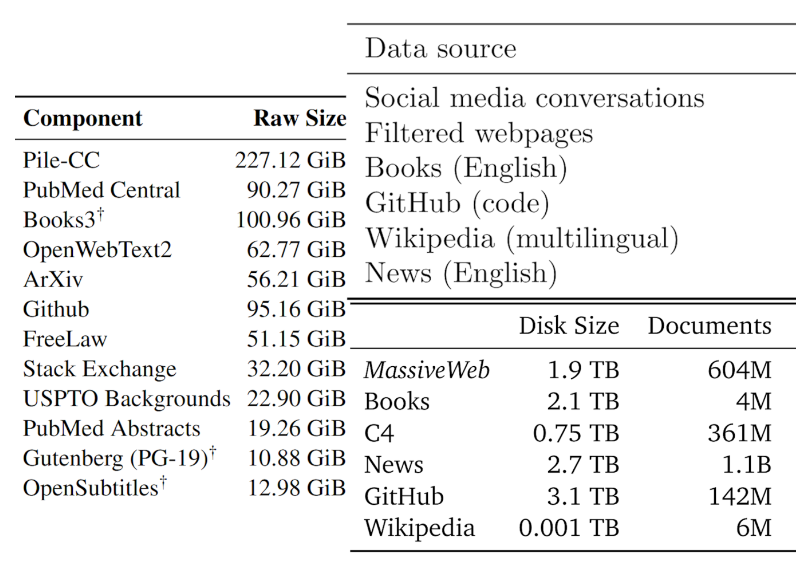
This initial phase is called pre-training. It's where the model gains its general knowledge of language. Afterward, it can be fine-tuned on a smaller, more specific dataset for a particular task, like customer support or medical text analysis.
What Can LLMs Do?
The general nature of their training allows LLMs to be surprisingly versatile. They can be applied to a wide range of tasks across many different fields.
| Application | Description |
|---|---|
| Content Creation | Writing articles, marketing copy, emails, and even poetry. |
| Summarization | Condensing long reports or articles into key points. |
| Translation | Translating text between dozens of different languages. |
| Chatbots | Powering conversational agents for customer service or information retrieval. |
| Code Generation | Writing and debugging computer code based on natural language descriptions. |
| Data Analysis | Extracting insights and trends from unstructured text data. |
This flexibility is what makes LLMs so significant. They provide a powerful foundation that can be adapted to solve countless problems involving human language.
Ready to check your understanding?
What is the primary function of a large language model (LLM) at its most fundamental level?
What was the key technological innovation, introduced in 2017, that significantly advanced the capabilities of LLMs?
Large Language Models are a foundational technology in modern AI, transforming how we interact with information and machines.