AI-Centric Startup Architecture
Understanding AI Fundamentals
What Is Artificial Intelligence?
Artificial intelligence, or AI, is about making computers smart. It's a broad field of computer science focused on building machines that can perform tasks that typically require human intelligence. This includes things like learning from experience, solving problems, understanding language, and recognizing patterns.
Artificial intelligence (AI) is a broad field of computer science and engineering that focuses on developing computers capable of performing activities that normally require human intelligence, such as learning, problem-solving, decision-making, and natural language processing.
Think of it this way: instead of writing a detailed, step-by-step program for every single task, AI allows a computer to figure out some of the steps on its own. It's the difference between giving someone a recipe and having them learn to cook by tasting different ingredients and seeing what works.
A Quick Trip Through Time
The idea of intelligent machines has been around for centuries, but the formal field of AI research began in the 1950s. The journey hasn't been a straight line. It's been marked by periods of great excitement and funding (often called "AI summers") followed by periods of disillusionment and budget cuts ("AI winters").
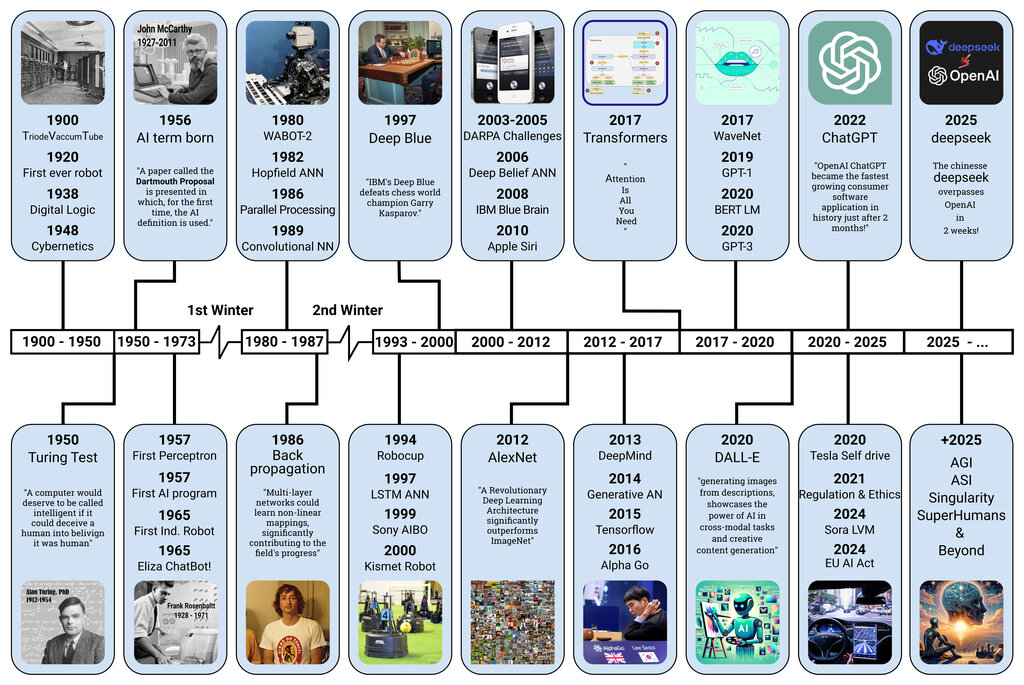
Early research focused on problem-solving and symbolic reasoning. Over the decades, breakthroughs in computing power and the availability of massive amounts of data have fueled rapid progress, leading to the powerful AI tools we see today.
The AI Family Tree
AI isn't a single thing; it's a large category with several important subfields. You can think of them as nested dolls, where each one is a specialized version of the one before it.
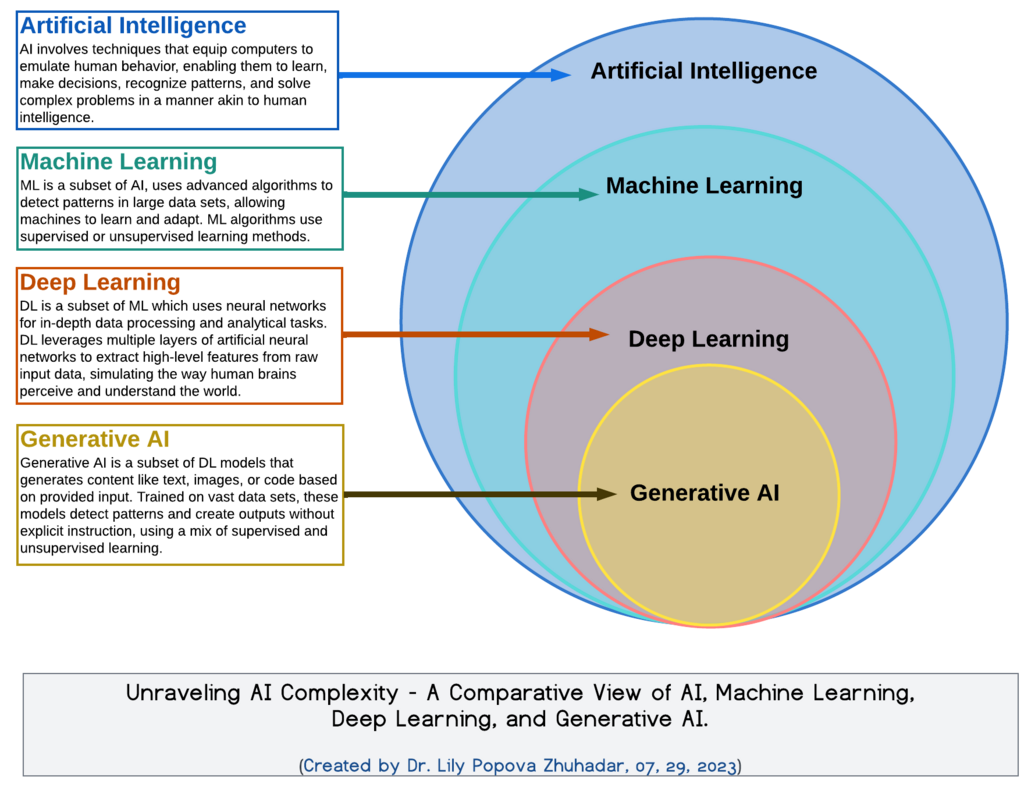
Machine Learning (ML) is a subset of AI. Instead of being explicitly programmed with rules, an ML system learns directly from data. It identifies patterns and makes decisions. A classic example is a spam filter. It's not programmed with a list of every possible spam word. Instead, it learns to recognize spam by analyzing thousands of emails you've marked as junk.
Deep Learning (DL) is a further subset of Machine Learning. It's an approach that uses complex structures called neural networks. The "deep" in deep learning refers to networks with many layers, allowing them to learn very complex patterns from vast amounts of data. This is the technology behind self-driving cars recognizing pedestrians and voice assistants understanding your speech.
Inspired by the Brain
So, what are these Neural Networks? They are computing systems loosely inspired by the biological neural networks that constitute animal brains. They aren't literal models of the brain, but they borrow the concept of interconnected nodes, or "neurons."
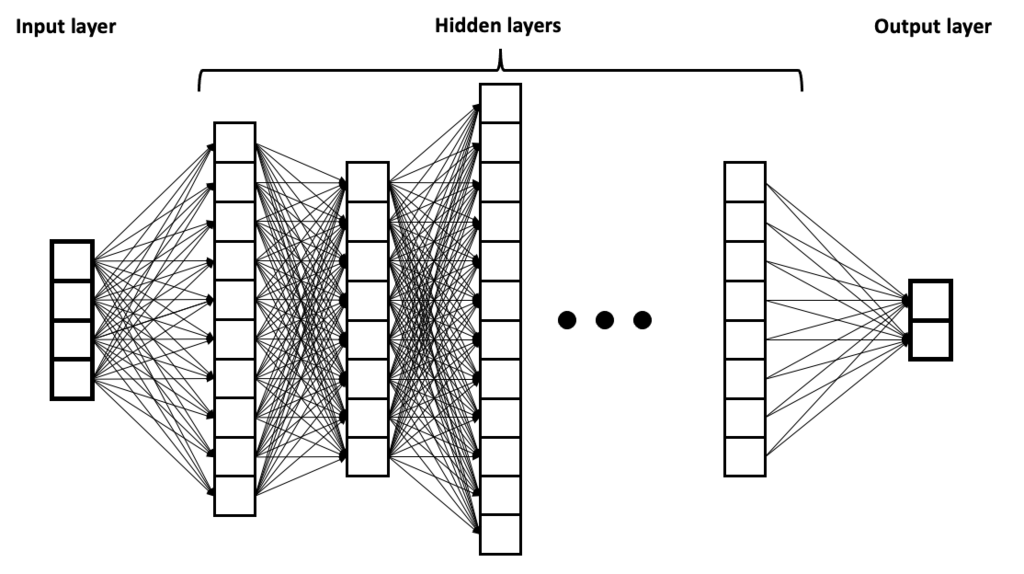
Each node in the network receives inputs, performs a simple computation, and passes the result to other nodes. In a deep learning model, these nodes are organized into layers. Information passes from the input layer, through multiple "hidden" layers, to an output layer that delivers the final result. By processing information through these layers, the network can learn to identify incredibly subtle patterns, like the difference between a cat and a dog in a photo.
Two Flavors of AI
When people talk about AI, they are usually talking about one of two types: Narrow AI or General AI.
All AI that exists today is Narrow AI. It's designed to perform a single, specific task.
Artificial Narrow Intelligence (ANI), or Weak AI, is what we have now. This AI is a master of one trade. A chess program can beat any grandmaster, but it can't play checkers, suggest a recipe, or tell a joke. Your phone's digital assistant, GPS navigation, and recommendation engines on streaming services are all examples of Narrow AI.
Artificial General Intelligence (AGI), or Strong AI, is the stuff of science fiction... for now. This is a hypothetical AI that would have the flexible, adaptable, and general intelligence of a human. It could learn and perform any intellectual task that a human being can. Creating AGI is the ultimate goal for many researchers, but it remains a distant and complex challenge.
AI in the Real World
Beyond our phones and entertainment, AI is transforming industries.
- Healthcare: AI helps doctors diagnose diseases like cancer from medical images with greater accuracy and can predict patient outcomes based on health records.
- Finance: Algorithms analyze market trends to make trades, detect fraudulent transactions in real-time, and assess credit risk.
- Transportation: AI is the brain behind self-driving cars, optimizing navigation and safety. It also helps manage traffic flow in smart cities and optimizes logistics for shipping companies.
- Retail: AI powers personalized product recommendations, manages inventory, and even helps design new products based on consumer trends.
This foundation is just the beginning. Understanding these core concepts is the first step to seeing how AI is not just a tool, but a fundamental shift in how we solve problems.
What is the primary goal of Artificial Intelligence?
Which statement accurately describes the relationship between AI, Machine Learning (ML), and Deep Learning (DL)?