AI Capabilities Explained
Introduction to Artificial Intelligence
What Is Artificial Intelligence?
Artificial intelligence, or AI, is the science of making machines that can think and learn like humans. It's about creating systems that can solve problems, understand language, perceive their environment, and make decisions. Instead of following a rigid set of pre-programmed instructions for every single task, AI allows a machine to adapt to new information and learn from experience.
At its core, AI is about giving computers the ability to perform tasks that typically require human intelligence.
Think about how you learn. You observe, you try things, you make mistakes, and you get better over time. AI works in a similar way. It sifts through massive amounts of data to find patterns, make predictions, and improve its performance without a human manually changing its code for every new scenario.
A Quick History
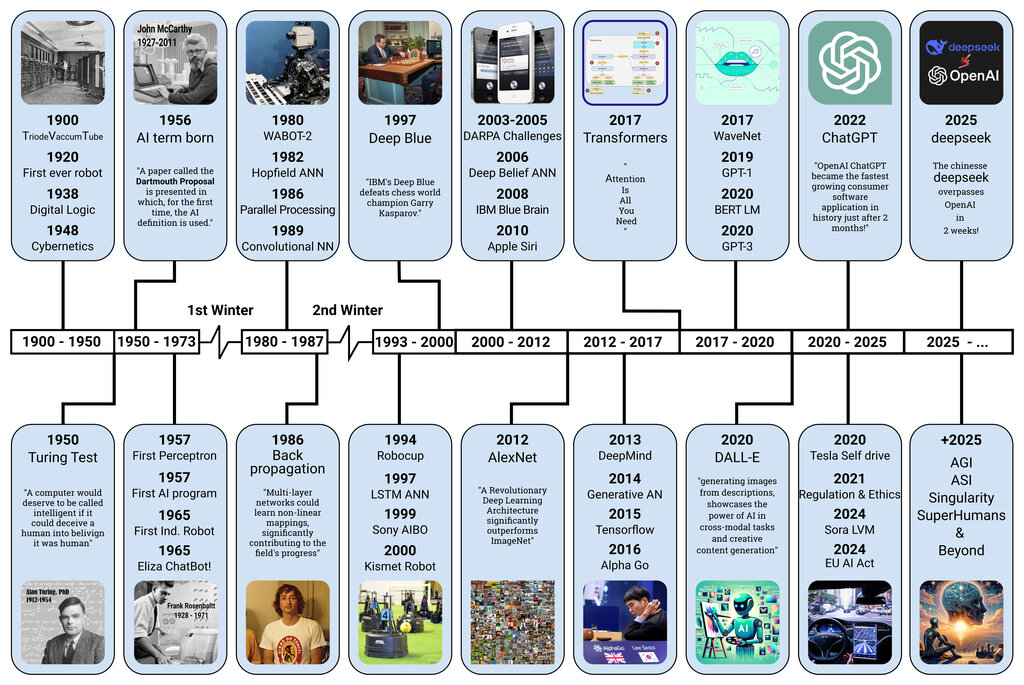
The idea of intelligent machines has been around for centuries, but the field of AI officially began in the summer of 1956 at a workshop at Dartmouth College. Early researchers were incredibly optimistic, believing that a machine as intelligent as a human being was only a generation away.
Progress wasn't a straight line. The field went through several “AI winters,” periods when funding dried up and public interest faded because the technology couldn't live up to the hype. But recent breakthroughs in computing power and the availability of vast amounts of data have fueled an AI renaissance, leading to the powerful tools we see today.
Two Main Types of AI
When people talk about AI, they are usually referring to one of two categories: Narrow AI or General AI. Understanding the difference is key.
Narrow AI
noun
Also known as Weak AI, this is a type of artificial intelligence that is designed and trained for a specific task. It operates within a limited, pre-defined range of functions.
All the AI we use today is Narrow AI. A spam filter in your email, a chess-playing computer, a movie recommendation engine, and a self-driving car are all examples. They can be incredibly good at their one job, sometimes even better than humans, but they can't operate outside of it. A chess program can’t suggest a movie, and a spam filter can't drive a car.
General AI
noun
Also known as Strong AI, this is a theoretical form of artificial intelligence that would have the ability to understand, learn, and apply its intelligence to solve any problem, much like a human being.
General AI (or AGI) doesn't exist yet. It's the kind of AI you see in science fiction movies, with consciousness, self-awareness, and the ability to handle a wide variety of tasks it wasn't specifically trained for. Building an AGI is the ultimate goal for many in the field, but it presents enormous technical and ethical challenges.
Core AI Concepts
AI is a broad field with many sub-disciplines. To get started, let's look at three fundamental concepts that power most AI systems: Machine Learning, Neural Networks, and Natural Language Processing.
Before diving deep, it's essential to grasp the fundamental concepts of AI, including machine learning, deep learning, and neural networks.
Machine Learning (ML) is a subset of AI focused on building systems that learn from data. Instead of being programmed with explicit rules, an ML model is trained on a large dataset. It learns to recognize patterns and make decisions based on that data. For example, to build an ML model that identifies pictures of cats, you would show it thousands of labeled pictures of cats. It learns the features of a cat on its own and can then identify cats in new, unseen photos.
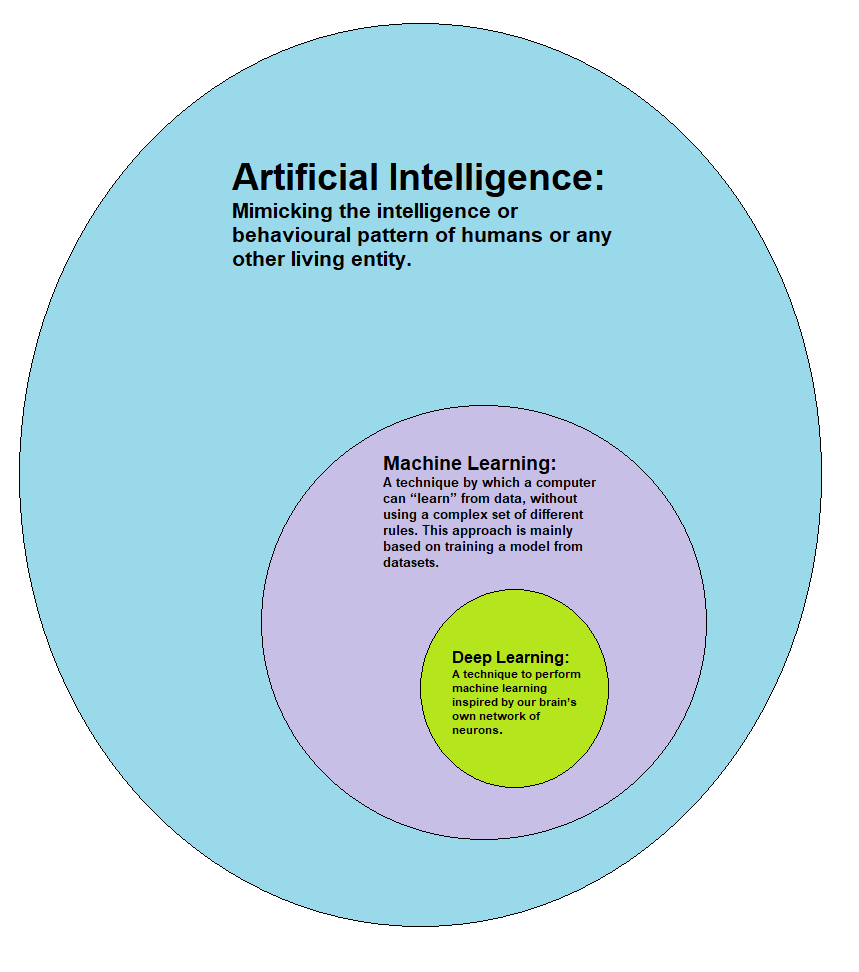
Neural Networks are a key part of Machine Learning, inspired by the structure of the human brain. A neural network is made up of layers of interconnected nodes, or "neurons." Each neuron receives input, processes it, and passes its output to other neurons. When a network has many layers, it's called a Deep Learning model. These deep networks are very powerful and are behind many of today's biggest AI advances, from image recognition to language translation.
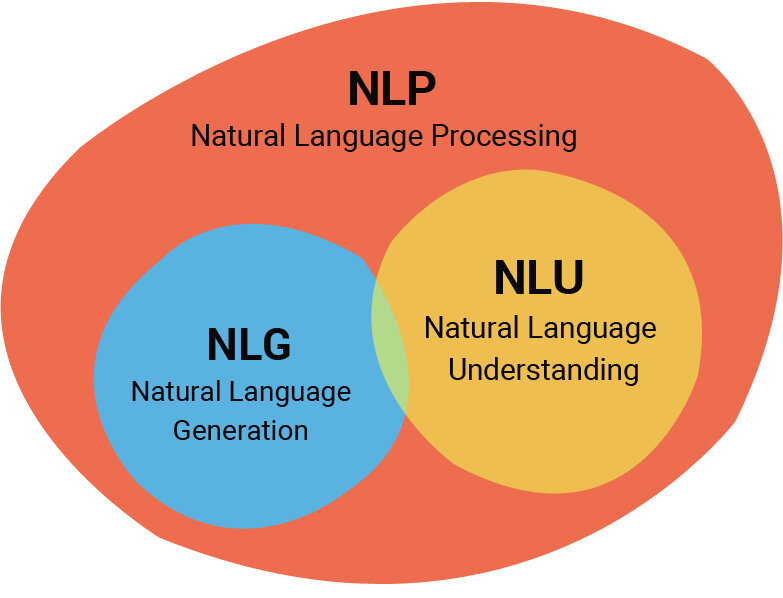
Natural Language Processing (NLP) is the branch of AI that gives computers the ability to understand, interpret, and generate human language, both text and speech. NLP is what allows you to talk to your phone's voice assistant, use a translation app, or see a chatbot answer your questions on a website. It bridges the gap between human communication and computer understanding.
These core ideas are the building blocks of the AI systems that are transforming our world. By understanding what AI is, where it came from, and its fundamental concepts, you have a solid foundation for exploring this exciting field.