AI Capabilities Explained
Introduction to AI Language Models
Teaching Computers to Talk
At its heart, an AI language model is a sophisticated program designed to understand and generate human language. Think of it like a student who has read nearly every book, article, and website ever published. By analyzing all that text, it learns the patterns, grammar, context, and nuances of how we communicate.
The main goal of a language model is to predict the next word in a sentence. This simple-sounding task, when done on a massive scale, allows it to write essays, answer questions, and even translate languages.
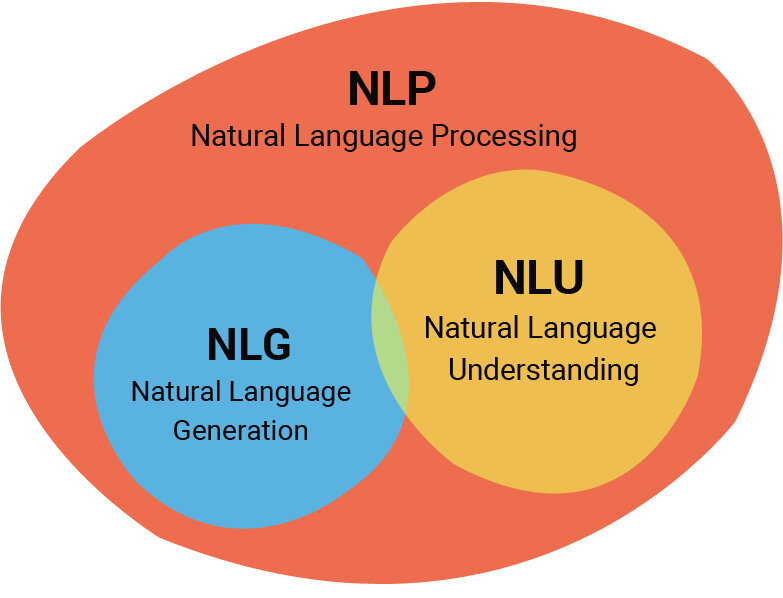
This capability is part of a broader field in artificial intelligence called Natural Language Processing, or NLP.
Natural Language Processing
noun
A field of artificial intelligence (AI) focused on enabling computers to understand, interpret, and manipulate human language, both text and speech.
NLP is what allows your phone to understand a voice command or your email to suggest a reply. Language models are the engines that power these advanced NLP tasks.
Learning From Data
Language models aren't explicitly taught grammar rules the way a person is. Instead, they are trained on enormous datasets of text and code. During training, the model is repeatedly shown a piece of text with a word missing and asked to guess the hidden word. It makes a prediction, compares its guess to the actual word, and adjusts its internal connections to be more accurate next time.
This process is repeated billions or even trillions of times. Over time, the model builds a complex statistical understanding of how words relate to each other. It learns that "queen" is related to "king" and that "run" can have different meanings depending on whether you're talking about sports or a leaky faucet.
Prominent Models
You've likely heard of some of the most powerful language models. They represent major leaps in AI's ability to process language.
GPT (Generative Pre-trained Transformer) models, like GPT-4, are famous for their ability to generate incredibly human-like text. They are the technology behind tools like ChatGPT. They read text from left to right, making them exceptionally good at creative writing, summarization, and conversation.
BERT (Bidirectional Encoder Representations from Transformers) took a different approach. Unlike models that read left-to-right, BERT looks at an entire sentence at once, considering the context from both directions. This makes it particularly powerful for tasks that require a deep understanding of context, like search engines trying to figure out the true intent behind your query.
Models like these are the foundation of modern NLP, turning the complex, messy world of human language into something a computer can work with.
What is the primary function of an AI language model?
Language models learn the rules of grammar by having linguists explicitly program them into the system.