AI Business Models and Innovation
Introduction to AI Business Models
What Makes a Business an AI Business?
At its core, any business model explains how a company creates value for customers, delivers that value, and captures some of it as profit. A traditional bakery creates value by baking bread, delivers it by selling it in a shop, and captures value through the price of a loaf.
An AI business model does the same things, but it uses artificial intelligence as a central engine for creating and delivering value. It’s not just about using AI as a tool here and there. Instead, AI is woven into the very fabric of the product or service.
The key distinction is that an AI-driven company's product often gets better on its own, simply by being used. This is because its core components are data, algorithms, and a continuous feedback loop.
Think of it like this: a navigation app doesn't just give you directions. It collects real-time traffic data from its users. Algorithms process this data to find the fastest routes, which improves the service for everyone. The more people use the app, the more data it gets, and the smarter its recommendations become. This self-improving cycle is the hallmark of a strong AI business model.
Shifting Traditional Structures
Integrating AI fundamentally alters how businesses operate. In traditional models, growth often requires a proportional increase in resources. To sell more cars, you need to build more factories and hire more workers. AI can break this linear relationship.
AI introduces automation and data-driven decision-making at a scale humans can't match. A retail company might traditionally rely on experienced buyers to predict fashion trends. An AI-powered retailer, however, can analyze millions of social media posts, search queries, and purchase histories to forecast demand with greater accuracy. This shifts the core competency from human intuition to the ability to collect, process, and act on data.
This also allows for hyper-personalization. A local bookstore owner might know a few dozen customers' tastes. An AI can recommend books to millions of individual users, each recommendation tailored to their unique reading history. The business structure changes from serving broad market segments to serving a market of one, millions of times over.
Data as the Core Asset
If AI is the engine, data is the fuel. In an AI-centric business, data isn't just a byproduct of operations; it's the primary asset that drives value creation. The quality, quantity, and uniqueness of a company's data determine the power of its AI models.
A company that helps farmers optimize crop yields isn't just selling software; it's leveraging vast datasets on weather patterns, soil types, and historical harvests. The more farms that use the service, the more data it collects, and the more accurate its predictions become. This creates a powerful competitive advantage known as a "data moat." A competitor starting from scratch would struggle to replicate the years of accumulated data, even if they had a better algorithm.
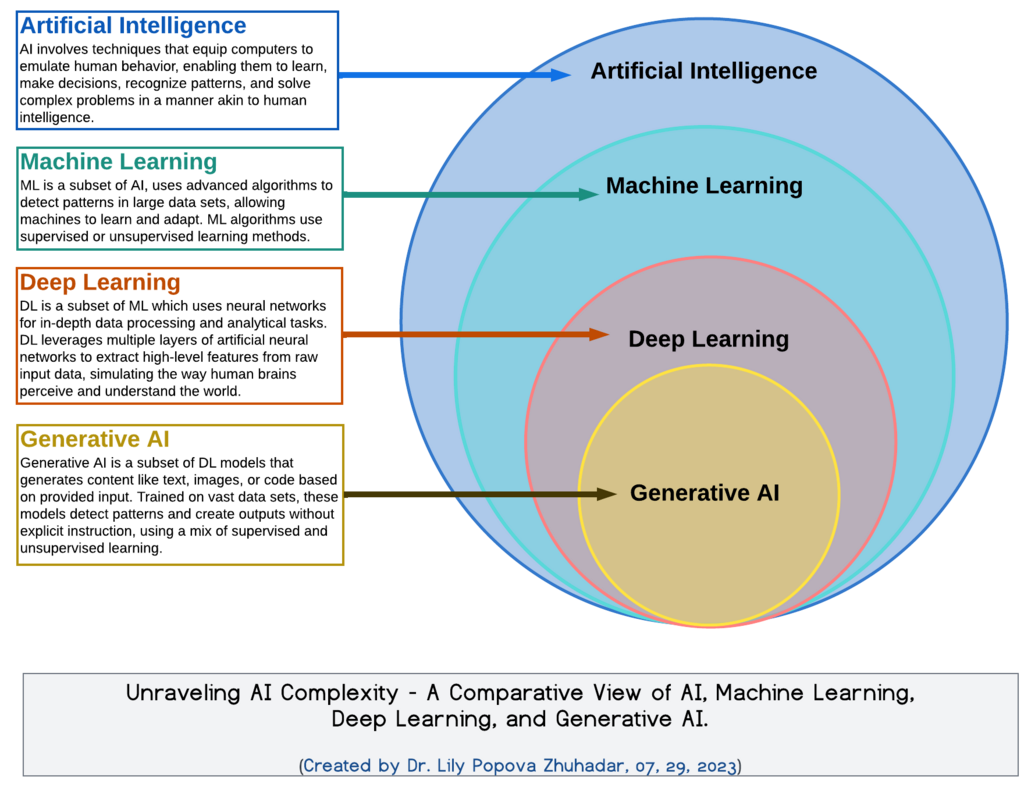
This reliance on data is enabled by key technological advancements. The rise of cloud computing provides the massive, affordable processing power needed to train complex AI models. Without it, building an AI business would be prohibitively expensive for most companies. Likewise, steady improvements in machine learning algorithms allow businesses to extract more sophisticated insights from their data, unlocking new ways to create value.
AI can create value for businesses by helping them make strategic decisions related to resource allocation, spotting new market prospects, anticipating consumer habits and optimizing pricing structures.
Understanding these components—the feedback loop, the shift in business structure, the central role of data, and the enabling technologies—is the first step to seeing how AI is not just a new technology, but a new foundation for building a business.
What is the primary role of artificial intelligence in a dedicated AI business model?
A navigation app that uses real-time traffic data from its users to suggest faster routes is an example of a(n) __________.