AI Automation Fundamentals and Applications
Introduction to AI Automation
What is AI Automation?
Automation isn't new. For decades, we've used computers to handle repetitive, rule-based tasks. Think of a simple script that sorts files into folders or an assembly line robot that performs the same weld over and over. This is traditional automation: it follows a strict set of pre-programmed instructions.
AI automation is different. It brings intelligence to the process. Instead of just following a rigid script, an AI-powered system can learn, adapt, and make decisions in situations it hasn't seen before. It handles tasks that require judgment, pattern recognition, or understanding context.
Think of traditional automation as a junior assistant who needs exact instructions for every task. AI automation is more like a senior assistant who understands the goal and can figure out the steps independently.
This ability to go beyond fixed rules unlocks a new level of efficiency. AI automation can tackle complex, dynamic workflows, from managing customer support conversations to identifying fraudulent transactions in real time.
The AI Toolkit
Several key technologies power AI automation. While they are related, each plays a unique role in making systems smarter.
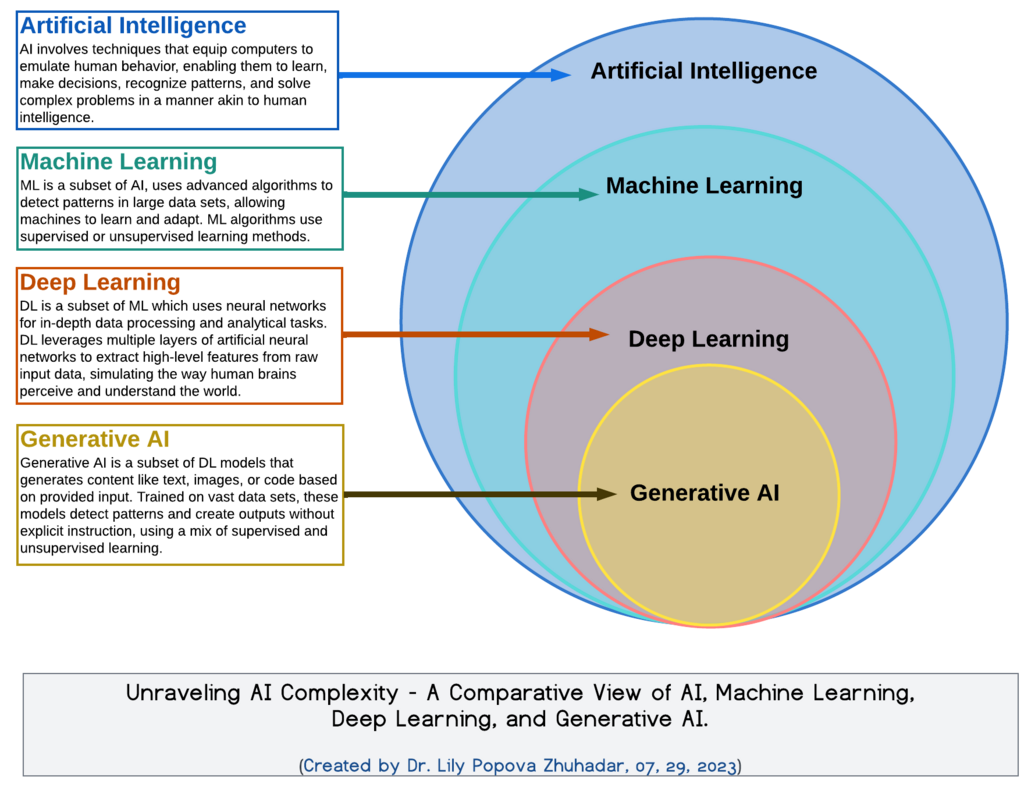
Machine Learning
noun
A type of AI that enables systems to learn from data and improve their performance on a task without being explicitly programmed for it.
Machine Learning (ML) is the foundation. Instead of writing code for every possible scenario, you feed an ML model a huge amount of data and let it figure out the patterns on its own. For example, you can show a model thousands of pictures labeled "cat" and "dog," and it will eventually learn to distinguish between them.
Deep Learning is a more advanced subset of machine learning. It uses complex structures called neural networks, which are loosely inspired by the human brain. Deep learning excels at finding intricate patterns in very large datasets, making it ideal for tasks like voice recognition and image analysis.
Natural Language Processing (NLP) focuses on the interaction between computers and human language. It's the technology that allows a chatbot to understand your questions, a translation app to convert Spanish to Japanese, or a word processor to check your grammar. NLP gives machines the ability to read, comprehend, and generate human language.
The Fuel for AI
AI systems aren't intelligent right out of the box. They need to be trained, and their primary food source is data. The more high-quality, relevant data an AI system has, the better it becomes at its task. A machine learning model trained on a million customer service emails will be far better at categorizing new emails than one trained on only a thousand.
Data is to an AI what books are to a student. It provides the examples and information needed to learn and develop expertise.
But data alone isn't enough. The AI also needs a method for learning from that data. This is where algorithms come in. An algorithm is a set of rules and statistical techniques used to find patterns in data. It's the 'recipe' that guides the learning process.
Different tasks require different algorithms. One algorithm might be excellent at spotting anomalies in financial data, while another is better suited for predicting customer behavior. The algorithm defines how the AI system makes its decisions, turning raw data into actionable insights and automated tasks.
Time to test your knowledge on these core concepts.
What is the primary characteristic that distinguishes AI automation from traditional automation?
Which technology is specifically focused on enabling computers to understand, interpret, and generate human language?
By understanding these building blocks—the difference between AI and traditional automation, the key technologies, and the crucial roles of data and algorithms—you have a solid foundation for exploring the world of intelligent automation.