AI Automation Explained
Introduction to AI Automation
The Building Blocks
Let's start with automation. At its heart, automation is about making a process or system operate automatically. Think of it as creating a machine to do a repetitive task so a person doesn't have to. The goal is usually to increase efficiency and reduce errors.
A classic example is the factory assembly line. Each station performs one specific, pre-programmed task over and over. It’s fast and consistent, but it can't handle surprises.
Automation
noun
The use of technology to perform tasks with minimal human assistance.
Now, what about artificial intelligence? AI is a much broader field. It’s about creating systems that can simulate human intelligence. This includes learning from experience, solving problems, understanding language, and making decisions.
Intelligence
noun
The ability to acquire and apply knowledge and skills.
If automation is the hands that perform a task, AI is the brain that can think about the task. AI doesn't just follow a script; it can analyze information and choose a course of action.
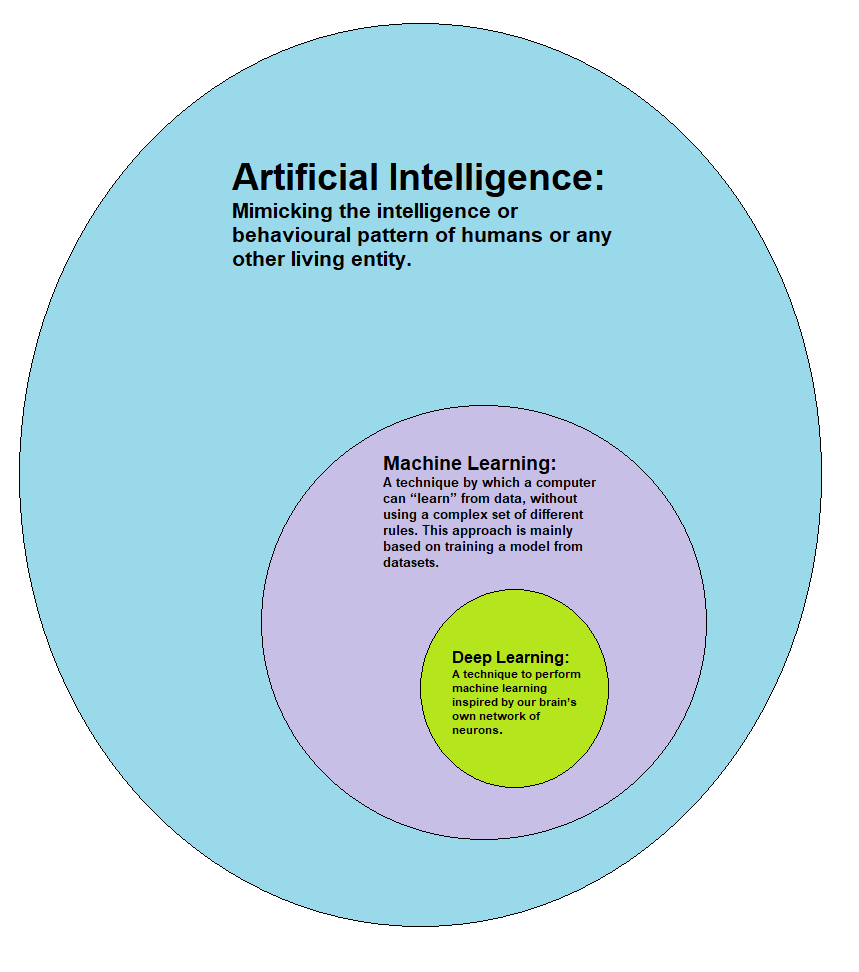
A Brief History
The ideas of automation and AI aren't new. Automation has roots in the Industrial Revolution with machines that mechanized production. AI as a formal field of study began in the 1950s, born from the idea that human thought could be broken down and simulated by machines.
Over the decades, both fields grew, but often on separate tracks. Automation focused on mechanical and robotic systems, while AI research explored logic, problem-solving, and eventually, learning from data.
| Concept | Key Historical Point |
|---|---|
| Automation | The first industrial robot, Unimate, was installed at a General Motors plant in 1961. |
| Artificial Intelligence | The Dartmouth Workshop in 1956 is widely considered the birth of AI as a field of research. |
AI vs. Traditional Automation
The biggest difference comes down to rules versus learning.
Traditional automation is strictly rule-based. You program it with a set of explicit instructions: "If X happens, do Y." It will execute these instructions perfectly every time, but it cannot deviate from them. If it encounters a situation it wasn't programmed for, it either stops or makes an error.
Think of a simple thermostat. If you set it to 72 degrees, it turns on the heat when the temperature drops below 72 and turns it off when it rises above. It follows one simple rule and has no ability to adapt.
AI-powered automation is different. It can learn from data and adapt its actions over time. Instead of relying on a rigid script, it identifies patterns and makes predictions. It can handle variability and make decisions in situations it has never seen before.
A smart thermostat, for example, learns your daily routines. It figures out when you typically leave for work and when you come home, adjusting the temperature automatically to save energy. It doesn't just follow a static rule; it learns and adapts to your life.
| Feature | Traditional Automation | AI Automation |
|---|---|---|
| Logic | Rule-based (If-Then) | Data-driven and adaptive |
| Flexibility | Rigid, follows a script | Flexible, can handle new situations |
| Core Function | Executes predefined tasks | Makes decisions and predictions |
| Example | Basic cruise control | Self-driving car |
This ability to learn and adapt is what makes AI automation so powerful. It moves beyond simply doing tasks to optimizing them.
What is the primary goal of automation?
What is the most significant difference between traditional automation and AI?
Now you have a solid foundation for what AI and automation are, and how they differ. This distinction is the starting point for understanding how they can be combined to create powerful, intelligent systems.