AI Automation Essentials
Introduction to AI Automation
First, Automation
Automation, in its simplest form, is about making a process or system operate automatically. It’s about setting up a machine to follow a pre-written set of instructions, performing a task without human intervention. Think of it like a simple recipe. You give the machine the steps, and it follows them exactly, every time.
A classic example is a factory assembly line. Each robotic arm performs one specific task over and over again. It welds, it paints, it tightens a bolt. The robot doesn't think about why it's doing the task or how to improve it. It just executes a command.
Traditional automation is great at repetitive, rule-based tasks that don't change.
Adding the 'Intelligence'
Artificial intelligence, or AI, is different. It's a branch of computer science focused on building machines capable of tasks that typically require human intelligence. This includes things like learning from experience, understanding language, recognizing patterns, and making decisions.
intelligence
noun
The ability to acquire and apply knowledge and skills.
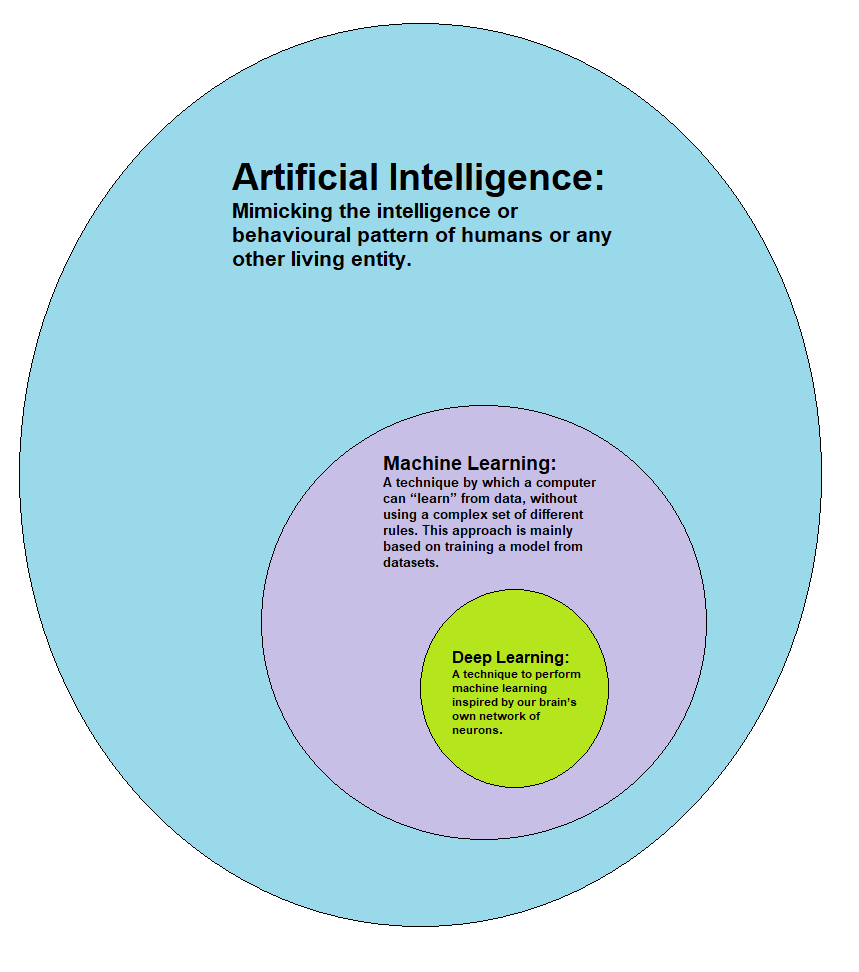
Instead of just following a fixed script, an AI system analyzes data to find patterns and make predictions. It can adapt its behavior based on new information. This ability to learn is what separates AI from simple automation. AI is a broad field, and it contains other important concepts like Machine Learning and Deep Learning, which are different ways of achieving this 'intelligence'.
AI and Automation Together
So, what happens when you combine these two ideas? You get AI automation. This is where automation gets a major upgrade. Instead of a system that just follows rigid rules, you get a system that can think, learn, and adapt as it works.
AI automation systems can handle complex, unpredictable situations. They don't just perform tasks; they optimize them. They can analyze vast amounts of data to make intelligent decisions on the fly, improving their own performance over time without needing a human to reprogram them.
| Feature | Traditional Automation | AI Automation |
|---|---|---|
| Decision Making | Rule-based, follows a script | Data-driven, predictive |
| Adaptability | Rigid, requires reprogramming | Learns and adapts to change |
| Task Type | Simple, repetitive | Complex, variable |
| Example | A pop-up toaster | A self-driving car navigating traffic |
The distinction is fundamental. One is a tool that follows orders, while the other is a partner that helps solve problems.
Think of traditional automation as an intern who needs exact instructions for every task. AI automation is more like a senior assistant who can take a goal, reference past projects, check your calendar, and figure out what needs to be done without constantly asking you.
A Quick Look Back
The idea of intelligent machines isn't new. The term "artificial intelligence" was coined back in 1956. For decades, AI was mostly theoretical, limited by the available computing power. Early automation in factories, starting in the 1960s, was strictly of the traditional, rule-based variety.
Everything changed with the rise of big data and powerful computers in the 21st century. Suddenly, we had the two key ingredients needed to make AI practical: massive datasets for AI to learn from, and the processing power to analyze it all quickly. This is when AI began to merge with automation in a meaningful way, moving from science fiction to practical reality.

This integration has created a powerful new category of technology that can tackle tasks previously thought impossible for machines.
Let's check your understanding of these core concepts.
What is the primary characteristic that distinguishes Artificial Intelligence from simple automation?
A factory robot arm that welds the same two pieces of metal together in exactly the same way, thousands of times a day, is a classic example of:
Understanding this foundation is the first step. By separating the concepts of 'automation' and 'intelligence,' it becomes clear how powerful they are when combined.