AI Automation Essentials
Introduction to Artificial Intelligence
What Is Artificial Intelligence?
Artificial intelligence, or AI, is the science of making machines that can think and act like humans. The goal is to create systems that can learn, reason, perceive, and solve problems on their own. Think of it like teaching a computer to be smart, not just to follow instructions.
AI is a system’s ability to correctly interpret data, learn from it, and use those learnings to achieve specific goals through flexible adaptation.
A simple calculator can perform complex math, but it can't learn or adapt. It just executes commands. An AI, on the other hand, can analyze new information and make decisions. For example, an AI can learn to recognize a cat in a photo, even if it has never seen that specific cat before. It identifies patterns—whiskers, pointy ears, fur—much like a person does.
A Brief History of AI
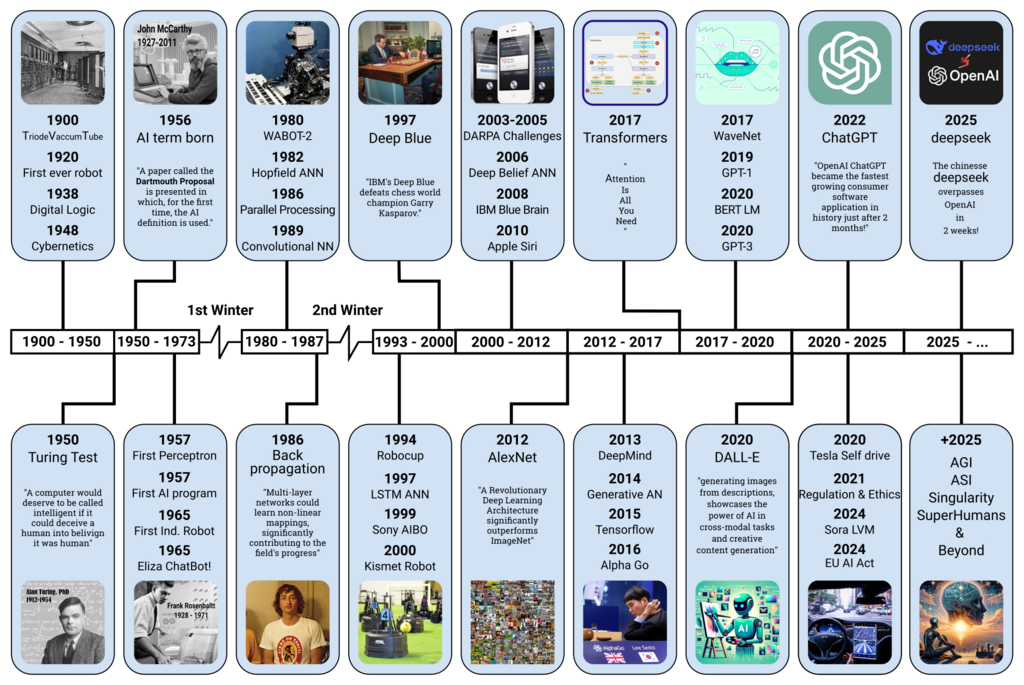
The dream of intelligent machines is ancient, but the formal field of AI research began in the summer of 1956. A group of scientists gathered at Dartmouth College for a workshop where they officially coined the term "artificial intelligence." They were optimistic, believing that a machine as intelligent as a human could be built in a generation.
The reality was more complicated. The following decades saw periods of great excitement and progress, followed by "AI winters" when funding and interest dried up due to unmet expectations. Early AI focused on rule-based systems, which were powerful but brittle. If a situation wasn't in the rules, the system would fail.
The history of artificial intelligence reveals a fascinating journey from philosophical thought experiments to technologies that are now reshaping our world.
A major turning point came in the 1990s and 2000s, thanks to two key developments: the availability of massive amounts of data (the internet) and a dramatic increase in computing power. These changes fueled the rise of machine learning, a subfield of AI that allows systems to learn from data instead of being explicitly programmed. This led to breakthroughs like IBM's Deep Blue defeating chess champion Garry Kasparov in 1997.
The Three Types of AI
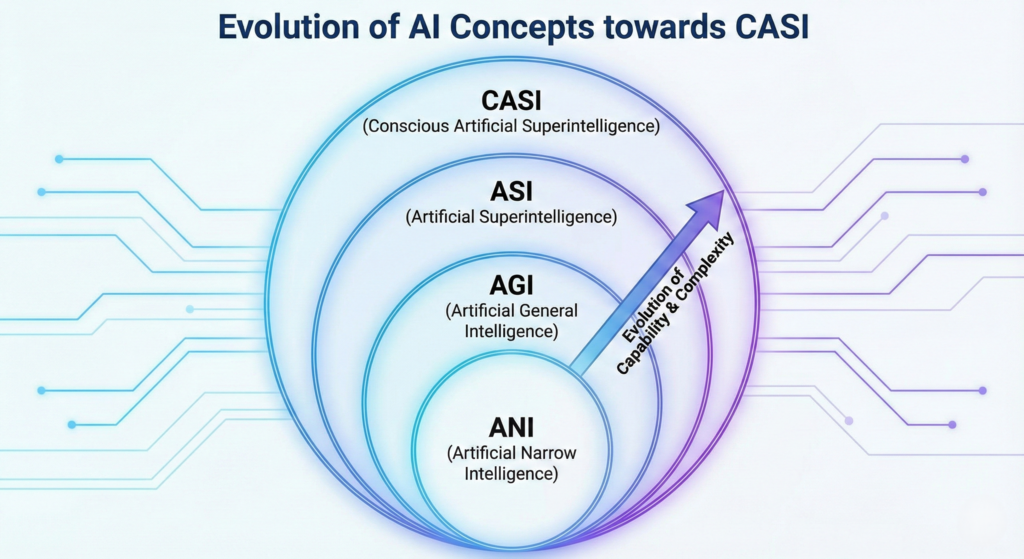
AI is often categorized into three types based on its capabilities. Understanding these distinctions helps clarify what AI can do today and what it might do in the future.
Artificial Narrow Intelligence (ANI)
noun
Sometimes called "Weak AI," this is the only type of AI we have successfully created so far. ANI is designed and trained for one particular task. It can be incredibly effective, but it operates within a limited, pre-defined range.
Your smartphone's navigation app is a form of ANI. It's brilliant at finding the fastest route, but you can't ask it to write a poem or diagnose a medical condition.
Artificial General Intelligence (AGI)
noun
Often called "Strong AI," AGI is the type of intelligence we see in movies. It refers to a machine with the ability to understand, learn, and apply knowledge across a wide range of tasks at a human level. An AGI would be able to do almost any intellectual task that a human being can.
We have not yet achieved AGI. It remains a hypothetical but powerful concept that drives much of AI research.
Artificial Superintelligence (ASI)
noun
ASI is a hypothetical form of AI that would surpass human intelligence and ability in virtually every field. Such an intellect would be far smarter than the most brilliant human minds, capable of scientific creativity, general wisdom, and social skills.
| Type | Capability | Example |
|---|---|---|
| ANI (Narrow) | Performs a single task | Spam filter, chess program, facial recognition |
| AGI (General) | Performs any intellectual task a human can | (Hypothetical) A robot that can cook, code, and compose music |
| ASI (Super) | Surpasses human intelligence in all areas | (Hypothetical) An AI that solves problems humanity cannot |
Why AI Matters Now
AI is no longer a futuristic concept. It's a fundamental technology that powers many of the tools we use every day. From recommending movies on streaming services to helping doctors detect diseases earlier, AI is augmenting human capabilities and automating routine tasks. Its significance lies in its potential to solve some of the world's most complex problems in science, medicine, and environmental sustainability.
By understanding the basics of what AI is, where it came from, and its different forms, you can better appreciate its role in the modern world. It's not about replacing humans, but about creating powerful tools that can help us think smarter, create more, and explore further than ever before.
Now, let's test your knowledge on these foundational concepts.
What is the primary goal of Artificial Intelligence?
The term "artificial intelligence" was officially coined at a workshop held at which institution in 1956?
Grasping these core ideas is the first step in understanding the transformative power of artificial intelligence.