AI Automation Business Strategies
Introduction to AI Automation
What is AI Automation?
Let's start by breaking down the two parts. Automation is about making a process or system operate automatically. Think of a simple factory robot that welds a car door in the exact same spot every time. It follows a script. It's fast and precise, but it can't adapt if something changes.
Artificial intelligence (AI), on the other hand, is about creating systems that can think, learn, and adapt. Instead of just following a script, an AI system can analyze new information and make decisions.
Think of traditional automation as an intern who needs exact instructions for every task. AI automation is more like a senior assistant who can take a goal, reference past projects, check your calendar, and figure out what needs to be done without constantly asking you.
When you combine them, you get AI automation: systems that not only perform tasks automatically but do so intelligently. They can handle unexpected situations, learn from outcomes, and improve over time. It’s the difference between a tool that follows orders and one that solves problems.
A Brief History
The idea of artificial intelligence isn't new. It has been a subject of fascination for decades, evolving from simple rule-based systems to the complex learning models we see today. Early AI was mostly theoretical, confined to academic labs. Automation followed a similar path, starting with mechanical machines on assembly lines and later moving into software that could handle repetitive digital tasks.
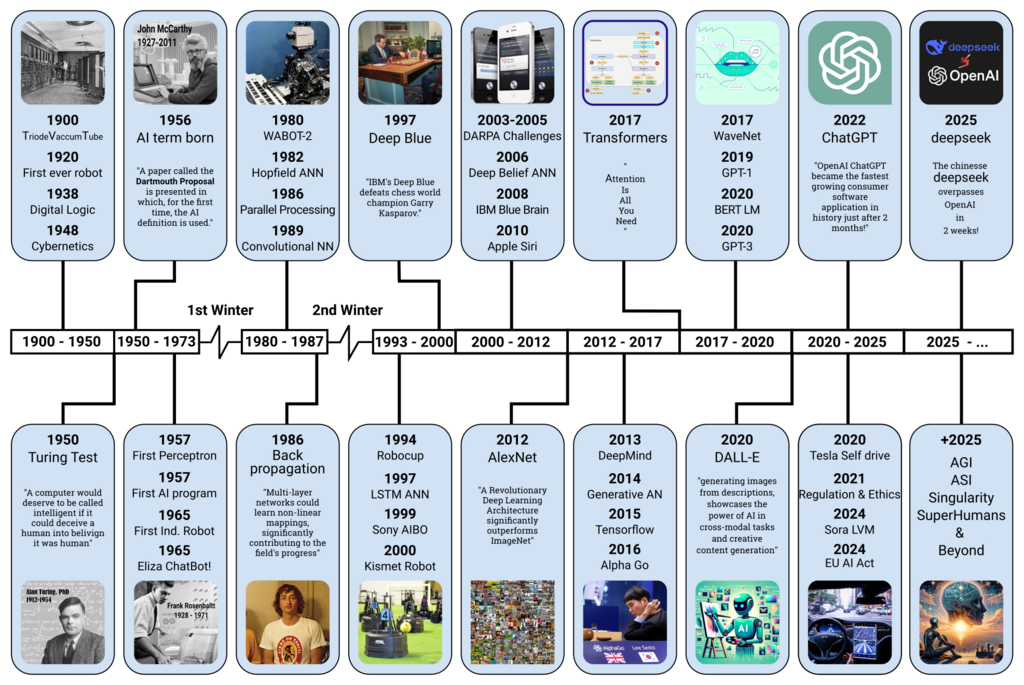
For a long time, these two fields developed in parallel. Automation made processes faster, while AI made them smarter. The real revolution began when we started integrating them. Powerful computing and vast amounts of data allowed AI to move out of the lab and into the real world, enhancing automation in ways that were previously impossible.
The Benefits for Business
Integrating AI into automation isn't just a technical upgrade; it's a strategic business move. By making processes intelligent, companies can unlock new levels of efficiency and innovation. It allows businesses to move beyond simply doing things faster and start doing them better.
| Benefit | Description |
|---|---|
| Increased Efficiency | AI can optimize workflows, predict maintenance needs, and manage resources, reducing waste and downtime. |
| Smarter Decision-Making | By analyzing vast datasets, AI can uncover insights and trends that humans might miss, leading to better strategic choices. |
| Enhanced Customer Experience | AI-powered chatbots can provide 24/7 support, and personalization algorithms can tailor services to individual customers. |
| Innovation | Automating routine tasks frees up human employees to focus on creative problem-solving and developing new ideas. |
Consider a large online retailer. Basic automation might handle packing and shipping orders. But AI automation can do more. It can analyze buying patterns to predict future demand, optimize inventory levels across different warehouses, and even identify potential supply chain disruptions before they happen.
Challenges and Considerations
While the potential is enormous, adopting AI automation comes with its own set of challenges. Implementation can be complex and costly, requiring significant investment in technology and skilled personnel. There's also the critical issue of data. AI systems are only as good as the data they are trained on, and ensuring data quality and privacy is a major hurdle.
Beyond the technical aspects, there are important ethical considerations. AI algorithms can sometimes inherit biases present in their training data, leading to unfair or discriminatory outcomes. For example, an AI tool for screening job applications could unintentionally favor candidates from certain backgrounds if its training data reflected historical hiring biases.
The goal isn't just to build powerful AI systems, but to build trustworthy ones. This requires transparency, accountability, and constant human oversight to ensure these tools are used responsibly and ethically.
Now, let's test your understanding of these foundational concepts.
What is the primary difference between simple automation and artificial intelligence (AI) as described in the text?
A company uses a system that analyzes customer purchase history to forecast future demand and automatically adjusts inventory orders accordingly. Which term best describes this system?
Understanding these core ideas provides a solid foundation for exploring how AI automation is changing the way businesses operate.