AI Automation Business Ideation
Spotting Inefficient Workflows
Finding the Hidden Bottlenecks
Before you can deploy AI to streamline a business, you first need to become a detective. Your mission is to uncover the hidden friction points and time sinks that bog down daily operations. The most powerful AI tool is useless if you apply it to the wrong problem. The first step is to map the flow of value.
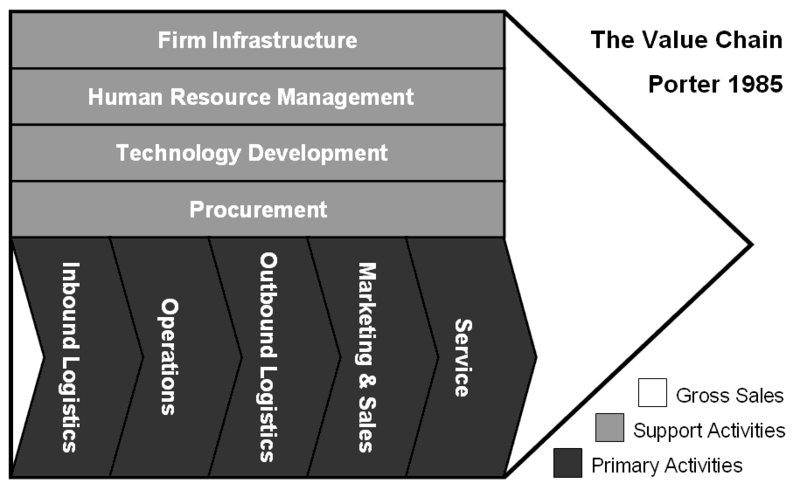
Every business is a series of steps that turns inputs into valuable outputs. This sequence is called a value chain. is the process of diagramming these steps to see exactly how work gets done. It makes the invisible visible.
- In real estate, the chain might start with property acquisition, move through leasing and tenant management, and end with maintenance and financial reporting.
- In a law firm, it begins with client intake, proceeds to case research and document drafting, and concludes with litigation or settlement.
- For e-commerce, it's about product sourcing, inventory management, marketing, order fulfillment, and customer support.
The Enemy: Invisible Drag
Within any value chain, you'll find 'invisible drag.' These aren't catastrophic failures. They are the small, repetitive, manual tasks that seem insignificant on their own but collectively drain hundreds of hours. It's the death-by-a-thousand-papercuts for productivity.
Think of the paralegal who spends two hours every day manually copying data from new client forms into the firm's case management software. Or the e-commerce manager who cross-references three different spreadsheets to update inventory levels. Each action is simple, but the cumulative effect is a massive operational bottleneck.
To find this drag, you need a structured way to investigate. Two simple but powerful frameworks for this are the '5 Whys' and the 'Fishbone Diagram.' The 5 Whys technique involves repeatedly asking "Why?" to get to the root of a problem.
Let's take a real estate example: A property report is late.
- Why? The data wasn't available on time.
- Why? The leasing agent hadn't entered the new tenant information into the system.
- Why? They were busy with property tours.
- Why? They have to manually enter tenant data after each tour, which takes 30 minutes.
- Why? There's no automated way to sync the signed digital lease with the property management software.
We've just uncovered a high-value bottleneck: manual data entry. The problem isn't a lazy agent; it's a broken process.
While these manual methods are effective, modern organizations can go a step further. Many of the tools we use—from CRMs to accounting software—create digital footprints of our actions. uses software to analyze these event logs, automatically creating a visual map of how work actually flows through a company. It can instantly highlight where workflows deviate from the ideal path, where approvals get stuck, and which manual steps are consuming the most time.
High Volume vs. High Complexity
Once you've identified bottlenecks, you must decide which ones to tackle. Not all problems are created equal. It's helpful to categorize them by volume and complexity.
| Task Type | Description | AI Suitability | Example |
|---|---|---|---|
| High-Volume, Low-Complexity | Repetitive, rule-based tasks done many times a day. | Excellent. These are prime targets for automation. | Extracting names and dates from hundreds of lease agreements. |
| Low-Volume, Low-Complexity | Simple tasks that don't happen often. | Good. Can be worth automating if the tools are easy to implement. | Generating a monthly report from a single data source. |
| High-Volume, High-Complexity | Tasks that are frequent and require judgment or nuance. | Moderate. AI can assist, but full automation is difficult. | Responding to complex customer support queries with emotional context. |
| Low-Volume, High-Complexity | Strategic, creative, or nuanced tasks done infrequently. | Poor. This is where human expertise adds the most value. | Devising a novel legal strategy for a landmark case. |
The sweet spot for your first AI automation projects lies in the top left quadrant: High-Volume, Low-Complexity tasks. They offer the biggest return on investment with the lowest risk. Automating the extraction of key terms from legal documents or standardizing customer intake data frees up skilled professionals to focus on the high-complexity work where their judgment truly matters. It's not about replacing humans, but about redirecting their expertise away from mundane tasks and toward value creation.
By applying these frameworks, you can move from guessing where inefficiencies lie to systematically identifying and prioritizing them. This foundational analysis is the most critical step in building an effective AI strategy.