AI Assisted Coding
Introduction to AI-Assisted Coding
What Is AI-Assisted Coding?
AI-assisted coding is the use of artificial intelligence tools to help humans write, debug, and understand computer code. Think of it as having a tireless collaborator or a super-smart pair programmer by your side. You describe what you want to do in plain English or by starting a line of code, and the AI suggests ways to complete it.
In this model, AI tools act as a powerful collaborator or "pair programmer." The user guides the AI but then reviews, tests, and understands the code it generates, taking full ownership of the final product.
The goal isn't to replace the developer, but to augment their skills. The human is still in charge, making the final decisions, checking the AI's work, and steering the project. The AI handles the more repetitive or predictable parts of coding, freeing up the developer to focus on complex problem-solving and system design.
A Brief History
The idea of computers helping programmers isn't new. For decades, Integrated Development Environments (IDEs) have offered features like syntax highlighting and basic autocompletion. These early tools could finish a variable name you started typing, but they didn't truly understand the context or your intent.
The big shift came with the rise of large language models (LLMs). These models are trained on vast amounts of code from public repositories, allowing them to learn the patterns, structures, and idioms of various programming languages. Instead of just completing a word, they can now generate entire functions, suggest bug fixes, and even translate code from one language to another.
AI-assisted coding first emerged in a big way with GitHub Copilot in 2021, and the feature saw a wide release in June 2022.
This breakthrough marked a new era. Today's AI coding assistants are deeply integrated into the development workflow, offering proactive suggestions that feel like a natural extension of the coding process.
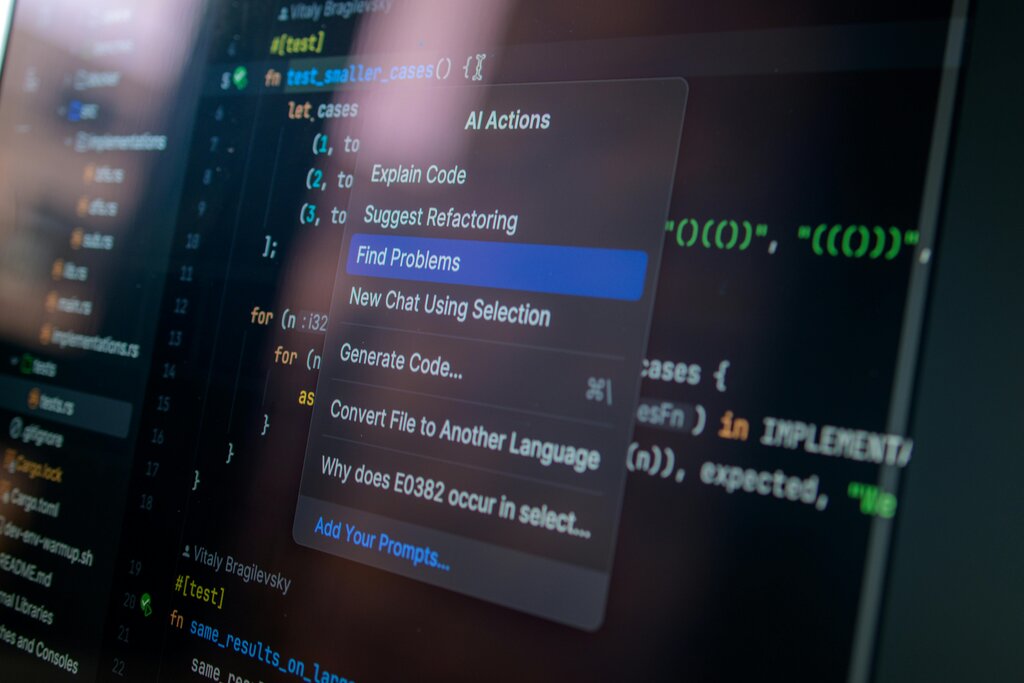
Why Use an AI Assistant?
The benefits of integrating AI into your coding workflow are significant. They generally fall into three main categories: productivity, quality, and learning.
First, there's a major boost in productivity. AI tools can instantly generate boilerplate code, which is the repetitive, standard code required in many projects. This saves countless hours of typing. They can also quickly write functions based on a simple comment, turning an idea into working code in seconds.
Second, these tools can improve code quality. By analyzing the context of your project, they can suggest more efficient algorithms or warn you about potential bugs before you even run the code. This real-time feedback helps catch errors early, when they're easiest to fix.
AI currently helps developers by automating routine coding tasks, suggesting code improvements, and speeding up debugging through predictive analysis.
Finally, AI assistants are powerful learning aids. If you're working with an unfamiliar library or a new programming language, the AI can provide examples and explain complex syntax. It helps you learn by doing, showing you best practices as you work.
Popular Coding Assistants
Several powerful AI coding tools are available today, each with its own strengths. While we won't dive deep into their specific features here, it's helpful to know the names of a few key players in this space.
| Tool | Key Feature |
|---|---|
| GitHub Copilot | Context-aware code and comment completion |
| Tabnine | AI-powered code suggestions that learn from your style |
| OpenAI Codex | The underlying model that powers many coding tools |
| Amazon CodeWhisperer | Real-time code recommendations and security scans |
These assistants integrate with popular code editors, making them a seamless part of the development process. They represent a fundamental shift in how software is created, blending human creativity with the power of artificial intelligence.
What is the primary role of an AI coding assistant in the development process?
The main goal of AI-assisted coding is to make the human developer obsolete.