AI Assistant Identity
Introduction to ChatGPT
What Is ChatGPT?
ChatGPT is a conversational AI, a chatbot designed to understand and generate human-like text. Developed by the research company OpenAI, it can engage in dialogue, answer follow-up questions, and perform a wide range of language-based tasks.
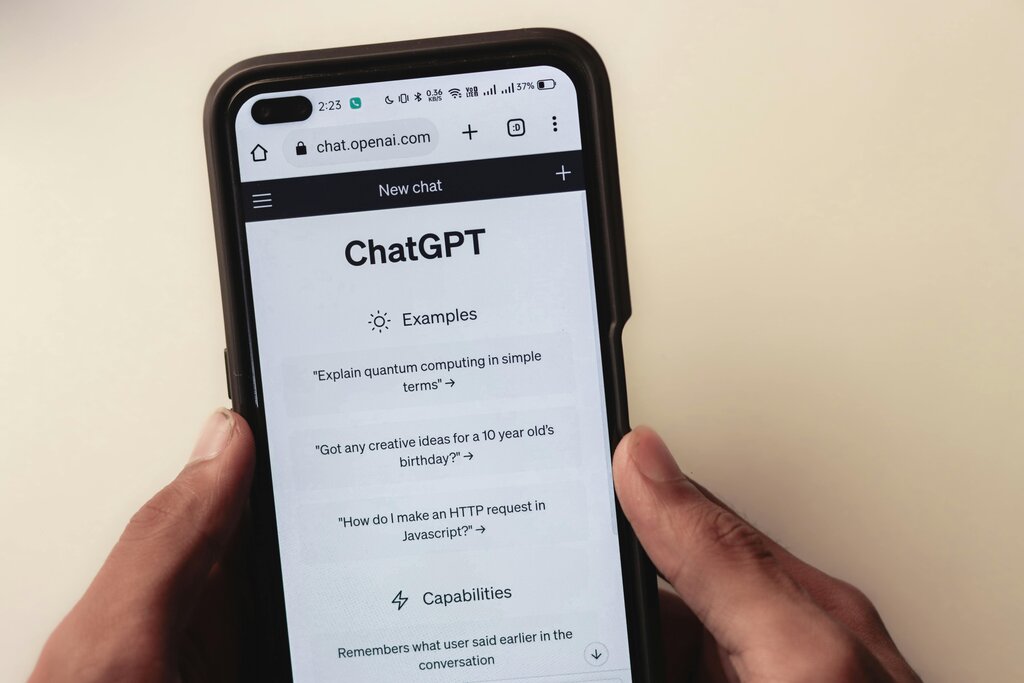
Think of it as a highly advanced virtual assistant. You can ask it to explain complex topics, draft emails, write code, create stories, or even debug a program. The core of its ability lies in its training on a massive amount of text from the internet, which allows it to recognize patterns, context, and nuance in language.
ChatGPT is an artificial intelligence (AI) chatbot built on top of OpenAI's foundational large language models (LLMs) like GPT-4 and its predecessors.
The Technology Behind the Chat
The engine that powers ChatGPT is a series of models called Generative Pre-trained Transformers, or GPTs. These are a type of Large Language Model (LLM), which is a deep learning algorithm that can perform natural language processing tasks.
Transformer
noun
A neural network architecture that learns context and meaning by tracking relationships in sequential data, like the words in this sentence.
Here’s what “Generative Pre-trained Transformer” means:
- Generative: The model creates, or generates, new text that is statistically similar to the data it was trained on.
- Pre-trained: It has already been trained on a vast corpus of text and data, giving it a broad base of knowledge.
- Transformer: It uses a specific type of neural network architecture that is particularly good at handling sequential data like language.
ChatGPT was specifically fine-tuned for conversation. After its initial pre-training, it underwent further training with human AI trainers who provided conversations, playing both the user and the AI assistant. This process, called Reinforcement Learning from Human Feedback (RLHF), helped the model become better at dialogue.
What Can It Do?
ChatGPT's core functionalities are broad, thanks to its powerful language understanding and generation capabilities. It excels at tasks that require manipulating or creating text.
| Functionality | Description | Example |
|---|---|---|
| Text Generation | Creating original text in various styles and formats. | Write a short poem about the ocean. |
| Summarization | Condensing long articles or documents into key points. | Summarize this scientific paper on climate change. |
| Translation | Translating text from one language to another. | How do you say "Where is the library?" in Japanese? |
| Question Answering | Providing direct answers to factual questions. | Who was the first person to walk on the moon? |
| Code Generation | Writing code snippets in various programming languages. | Write a Python function to sort a list of numbers. |
These applications make it a versatile tool for students, professionals, and creatives. It can act as a brainstorming partner, a writing assistant, or a learning aid. Its ability to generate coherent and contextually relevant text has made it a landmark in the field of artificial intelligence.
The significance of ChatGPT lies in its accessibility. While the underlying technology had been developing for years, ChatGPT provided a simple, intuitive interface that allowed millions of people to interact with a powerful AI for the first time. This widespread adoption has accelerated discussions about AI's role in society and has pushed the boundaries of what people thought was possible with artificial intelligence.
Let's review the main concepts.