AI Applications with AWS
Introduction to AWS AI/ML Services
The Cloud Computing Powerhouse
Amazon Web Services, or AWS, is a massive cloud computing platform. Think of it as renting a supercomputer, storage space, and a suite of powerful tools over the internet. Instead of buying and managing your own physical servers, you can use Amazon's infrastructure to build and run applications. This is a game-changer for businesses of all sizes, allowing them to scale up or down as needed without huge upfront costs.
Among its vast catalog of over 200 services, AWS offers a powerful set of tools specifically for Artificial Intelligence (AI) and Machine Learning (ML). These tools are designed to make advanced technology accessible, even if you're not a data scientist with a Ph.D.
Your AI Toolkit
AWS organizes its AI/ML offerings into different layers, catering to various levels of expertise. At the top layer are pre-trained AI services that you can plug directly into your applications. In the middle are services for building, training, and deploying your own custom machine learning models. The bottom layer provides the raw computing power for experts who want to build everything from scratch.
This layered approach means you can start with simple, powerful AI features and gradually move to more complex, custom solutions as your needs grow.
| Service Category | What It Does | Example Use Cases |
|---|---|---|
| AI Services | Adds intelligence to apps with pre-trained models. No ML experience needed. | Image recognition, text-to-speech, chatbots, forecasting. |
| ML Services | Provides tools to build, train, and deploy custom ML models. | Fraud detection models, personalized product recommendations. |
| ML Infrastructure | Offers high-performance computing for expert ML practitioners. | Running large-scale deep learning training jobs. |
AI Services in Action
Let's focus on the most accessible layer: AI Services. These are like ready-made building blocks. You don't need to know how the engine works to drive the car; you just need to know how to use the steering wheel and pedals. AWS has already done the heavy lifting of training complex models on vast amounts of data.
Imagine you're building a mobile app for travelers. You could use:
- Amazon Rekognition to let users take a picture of a landmark and have your app instantly identify it.
- Amazon Translate to translate a restaurant menu from the local language into the user's native tongue.
- Amazon Polly to convert written travel guides into natural-sounding audio so users can listen on the go.
- Amazon Lex, the same technology behind Alexa, to build a conversational chatbot that can help users book hotels or find flights.
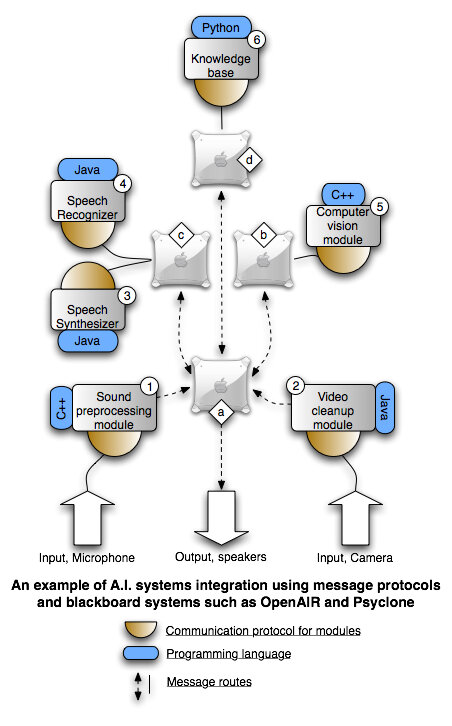
These services are accessed through an API, which is just a way for different software programs to talk to each other. Your app sends a request to the AWS service, like an image to analyze or text to translate, and AWS sends back the result. You pay only for what you use, making it incredibly cost-effective to add sophisticated features to your projects.
Time to test what you've learned about the AWS AI/ML ecosystem.
What is the primary advantage of using a cloud platform like AWS instead of managing your own physical servers?
Which AWS service would you use to build a conversational chatbot for a customer service application?
With these powerful tools, developers can build smarter applications faster, bringing the power of AI to more people and problems.